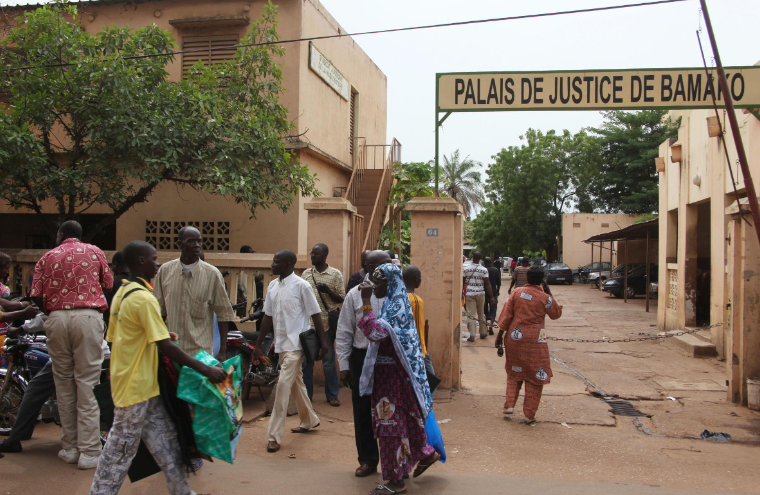
Former Bamako mayor handed ten-year prison sentence over disputed land allocations
Adama Sangaré, the former mayor of Bamako District, has been sentenced to ten years in prison following a landmark ruling by the National Economic and Financial Criminal Chamber. The decision marks a turning point in the ongoing controversy surrounding land allocations and parcel divisions in the Bamako-Sénou airport zone, an area long contested for its ambiguous legal status.
During the trial, Sangaré’s legal team vigorously contested the charges, arguing that the alleged offenses stemmed from administrative decisions rather than criminal acts. The defense also challenged the court’s jurisdiction and the application of financial penalties, setting the stage for an expected appeal.
Core allegations focus on public land misuse and financial irregularities
The prosecution centered its case on claims that Sangaré and other officials illegally divided, allocated, and registered parcels of land purportedly belonging to the state’s public domain. Key accusations include embezzlement, misappropriation of public funds, and complicity in fraudulent document use.
The former mayor has consistently denied wrongdoing, asserting that any irregularities were procedural and administrative in nature. His defense highlighted that as mayor, he acted within the scope of municipal prerogatives, particularly regarding land settlement and tax exemptions.
Financial discrepancies and contested exonerations
One of the most contentious aspects of the case involves alleged financial misconduct. Prosecutors pointed to 49.39 million FCFA in disputed land development fees and a total financial prejudice of 483.964 million FCFA stemming from demolitions. Sangaré countered that fee waivers fell under his executive authority and that he was not responsible for certain fund management decisions, which he attributed to state agencies.
The court, however, ruled in favor of the prosecution, ordering joint payment of 483.964 million FCFA for demolition costs and 50 million FCFA in damages to the Malian state.
Defense challenges legal jurisdiction and cites presidential directives
Sangaré’s legal strategy hinged on two critical arguments: first, that his actions were administrative rather than criminal; and second, that he followed verbal instructions from former President Ibrahim Boubacar Keïta. According to testimony during the trial, these directives aimed to facilitate the resettlement of northern Mali residents as part of national reconciliation efforts.
The defense contended that the land involved did not fall within the airport’s core boundaries, further questioning the legitimacy of the charges. Despite these arguments, the court dismissed procedural objections early in the trial, allowing the case to proceed to a verdict.
Multiple officials receive harsh penalties amid broader judicial scrutiny
Adama Sangaré was not the only high-profile figure convicted in this case. Former Deputy Prefects Daha Keïta and Ibrahim Koïta each received ten-year sentences. Adam Aïché Traoré, Fatouma Samassékou, and Bourama Komagara were also given ten-year terms, with five years suspended. Souleymane Dagnon, former mayor of Bamako’s Commune VI—tried in absentia—was handed a 20-year sentence, and an arrest warrant was issued for him. Sékou Keïta, however, was acquitted on all charges.
The prosecution had initially sought 15 years for Sangaré, Keïta, and Koïta, and 20 years for Dagnon, underscoring the severity with which the case was viewed by legal authorities.
Legal appeal on the horizon as questions of governance persist
The defense has announced plans to appeal the verdict, ensuring that the legal saga is far from over. This upcoming phase will re-examine the core issues at stake: the boundaries between administrative decisions and criminal liability, the transparency of public land management in Mali, and the validity of verbal directives in a complex legal landscape.
The case has sparked broader debates about governance, accountability, and the fair application of justice in land disputes. As the appeal process unfolds, it will scrutinize not only the guilt or innocence of those involved but also the structural flaws that allow such contentious land allocations to occur in the first place.