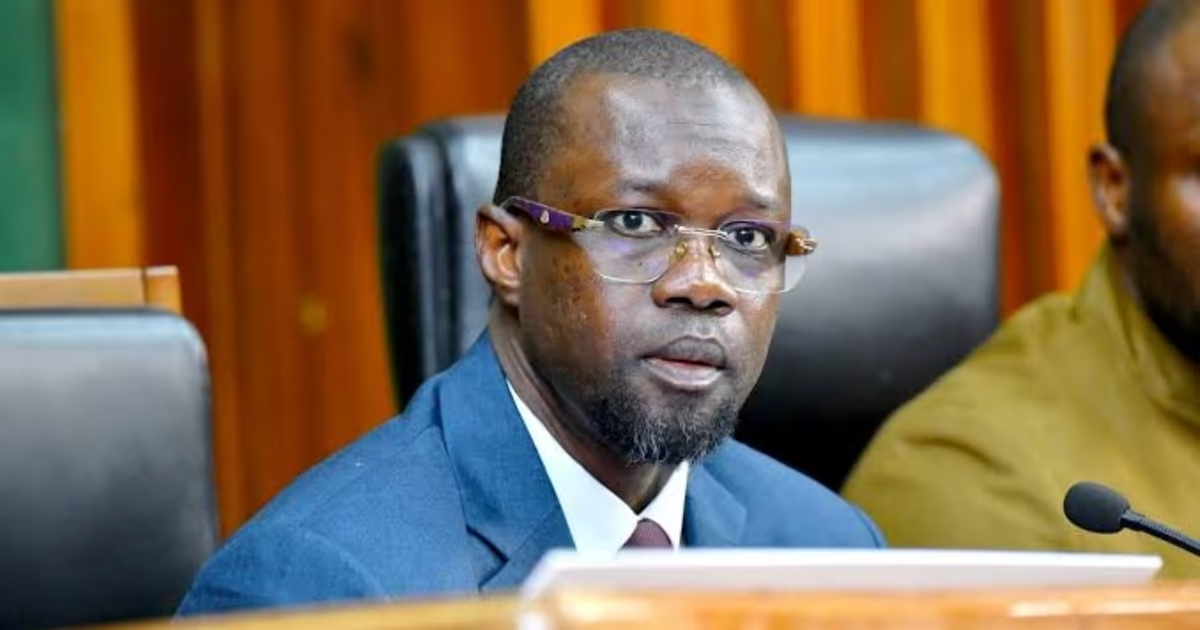
Réunion d’urgence : Les décisions prises par Ousmane Sonko et le Bureau de l’Assemblée
The legislative agenda for this session will be strictly time-bound, adhering to a maximum legal duration of fifteen (15) days, as stipulated by the institution’s internal regulations.
During a Bureau meeting yesterday, the National Assembly announced the commencement of its first extraordinary session for the 2025-2026 legislative year. This significant session is set to open on Monday, August 10, 2026, with a packed agenda including the review of two proposed laws, three draft laws, and six requests for the establishment of parliamentary investigative commissions.
This marks an anticipated early return for the parliamentarians of the 15th Legislature. While many were on their annual recess, the Senegalese deputies are now preparing to reconvene at the Hémicycle on Place Soweto. Following a critical meeting, the Bureau of the National Assembly formally approved the opening of this inaugural extraordinary session. Barring any last-minute alterations, proceedings are slated to begin precisely at 10 AM on Monday, August 10, 2026.
Regulatory framework for the extraordinary session
This urgent convocation, driven by current political developments and the necessity for institutional reforms, is expected to be particularly demanding. The institution’s internal regulations mandate that the session’s work schedule will be strictly managed and cannot extend beyond the legal limit of fifteen (15) days.
Furthermore, a distinction applies based on how the extraordinary session is initiated. When the National Assembly itself requests the opening of an extraordinary session, an order from the Bureau sets the date and agenda. Conversely, if the executive branch requests the session, a decree from the President of the Republic determines the date and the specific items for discussion.
For this first extraordinary session of the 2025-2026 year, the initial proceedings will focus on confirming the quorum, followed by the opening declaration from the President of the National Assembly, Ousmane Sonko. This plenary session will then lead to a meeting of the Conference of Presidents, responsible for developing the detailed work calendar for the current extraordinary session.
The internal rules of the National Assembly dictate that an extraordinary session must adhere to a predetermined agenda, which cannot be altered once the session has commenced. The members of the National Assembly’s Bureau have complied with this regulatory requirement, having already defined the texts for examination during this session, which will not exceed fifteen (15) days as prescribed by law. Pending the official publication of the Bureau’s order outlining the full agenda, several key texts were already selected yesterday.
This first extraordinary session of the 2025-2026 year, which will automatically conclude once its agenda is exhausted, will see deputies of the 15th Legislature scrutinize two proposed laws, three draft laws, and six requests for the establishment of parliamentary investigative commissions.
Proposed laws for examination
Notably, the National Assembly is expected to consider the proposed law to amend Article 37 of the Constitution of Senegal, which pertains to the President of the Republic’s asset declaration. Additionally, a proposed law concerning the regulation of special credits and other secret funds will be reviewed. Both of these legislative proposals were examined and deemed admissible by the National Assembly’s Bureau in July 2026.