President Bassirou Diomaye Faye of Senegal has dismissed Prime Minister Ousmane Sonko, a move announced late Friday following months of escalating tensions between the two leaders who rose to power together in April 2024 under a wave of public enthusiasm.
In a televised address delivered by the presidential secretary-general, Oumar Samba Ba, President Faye declared that he had “terminated the duties of Mr. Ousmane Sonko as Prime Minister, thereby ending the mandates of all ministers and state secretaries in the current government.” The outgoing officials have been instructed to handle only routine administrative tasks until further notice, though no timeline was provided for a successor appointment.
The rift between President Faye and his former mentor and charismatic Prime Minister had been widening since their electoral victory. Sonko, a vocal opponent of former President Macky Sall’s 2012–2024 administration, had been barred from running in the 2024 presidential election due to a defamation conviction that stripped him of civil rights. He had publicly endorsed Faye to stand in his place under the campaign slogan “Diomaye Moy Sonko”—meaning “Diomaye is Sonko” in Wolof—reflecting their close alliance.
Sonko’s panafricanist rhetoric and populist appeal resonated deeply with Senegal’s disillusioned youth, particularly after years of state repression during Sall’s tenure. His outspoken criticism of Western influence—most recently targeting what he termed Western efforts to “impose homosexuality” on Africa—came just weeks after Senegal passed a law toughening penalties for same-sex relations in the predominantly Muslim nation.
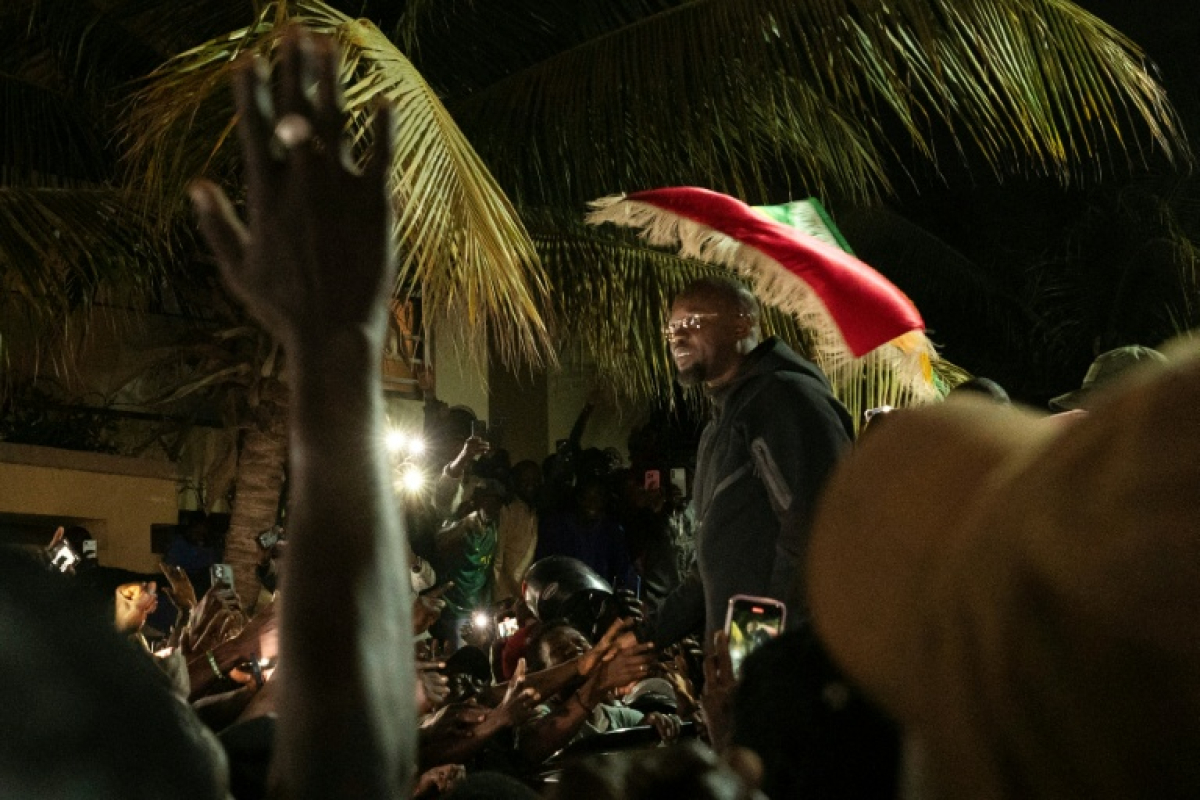
Public demonstrations erupted outside Sonko’s home in the Keur Gorgui district of Dakar shortly after midnight, where hundreds of supporters greeted him with chants of support. Sonko took to Facebook to express relief, writing, “Alhamdoulillah. Tonight, I sleep with a light heart in Keur Gorgui.”
Political power struggle intensifies
Tensions reached a breaking point in early May when President Faye publicly criticized Sonko’s “excessive personalization” of leadership within their ruling party. “As long as he remains Prime Minister, it is because he enjoys my confidence,” the president stated in a televised interview. “When that is no longer the case, there will be a new Prime Minister.”
Sonko’s party commands a strong majority in Senegal’s National Assembly following legislative elections in November 2024. In late April, lawmakers approved a controversial electoral reform bill—widely condemned by the opposition—paving the way for Sonko to potentially run in the 2029 presidential election. At the same time, President Faye’s own movement, “Diomaye Président,” has been quietly gaining traction, fueling speculation about his potential candidacy in 2029 despite lagging in popular support compared to Sonko.
Economic pressures further complicate the political landscape. Senegal currently holds the unenviable distinction of being the second most indebted country in sub-Saharan Africa, with public debt equivalent to 132% of GDP, a burden inherited from the previous administration. In 2024, the new government accused the outgoing regime of concealing the true scale of the debt crisis, leading to the suspension of a $1.8 billion IMF support program.