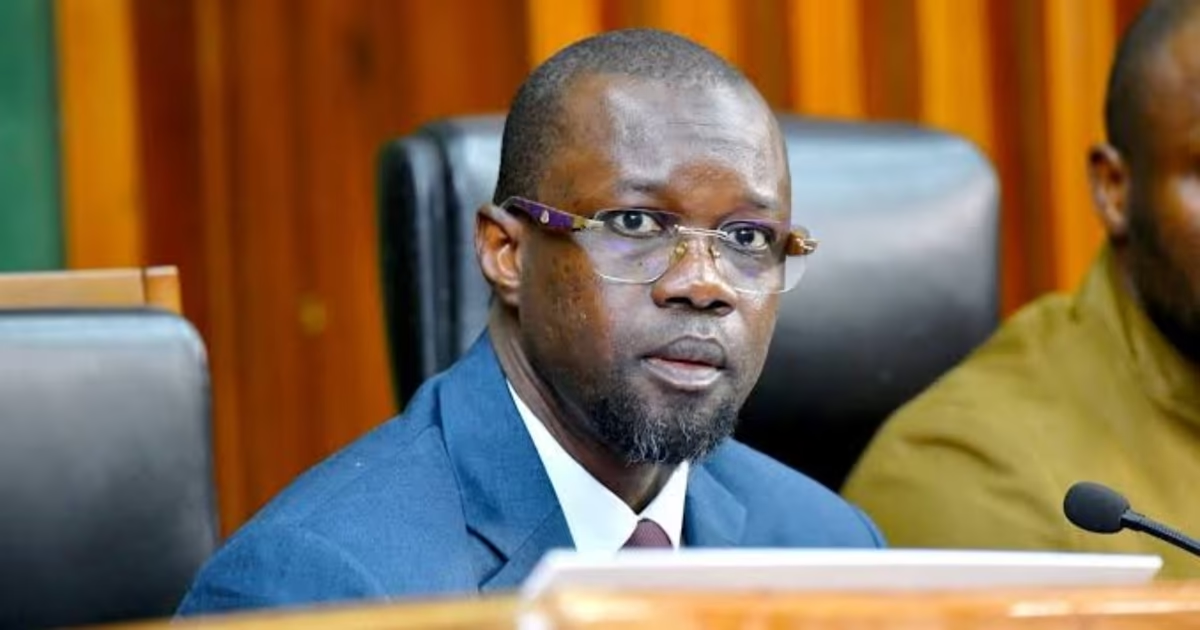
The tranquil break of Senegal’s lawmakers was abruptly interrupted when National Assembly President Ousmane Sonko summoned an emergency session just days after the legislative body adjourned. The unprecedented move follows the Constitutional Council’s decision to strike down Law No. 18/2026, a controversial constitutional amendment that had sparked heated debates across the country.
Scheduled for this Friday at 3 PM, the urgent gathering of the Assembly’s bureau has sent shockwaves through the political landscape. While Sonko initially responded with measured restraint to the Council’s ruling—stating that the decision must be respected—his decision to cut short the parliamentary recess suggests deeper strategic calculations are at play.
Constitutional reform in the crosshairs
The annulment of Law No. 18/2026 has thrown Senegal’s political elite into disarray. The law, which proposed sweeping changes to the country’s constitutional framework, had been a cornerstone of the ruling majority’s agenda. Now, with its sudden invalidation, the path forward remains uncertain, fueling speculation about potential countermeasures or revised legislative strategies.
The emergency session convened by Sonko is widely seen as a preemptive strike to regroup and reassess the government’s position. Political observers are closely watching whether the National Assembly will attempt to reintroduce a modified version of the amendment or pivot toward alternative constitutional reforms.
Parliamentary recess interrupted: what’s next?
The abrupt end to the summer break—officially initiated on June 30th—marks a rare breach of legislative tradition in Senegal. Historically, parliamentary recesses are sacrosanct, allowing lawmakers to step away from the pressures of the chamber. Yet the gravity of the Constitutional Council’s decision has forced an immediate reassessment.
While Sonko has framed his actions as a necessary response to the legal ruling, the move has intensified scrutiny over the majority’s next moves. Will the Assembly seek to challenge the Council’s decision through legal avenues, or will it pivot toward compromise to avoid further institutional friction? The coming days will be decisive.