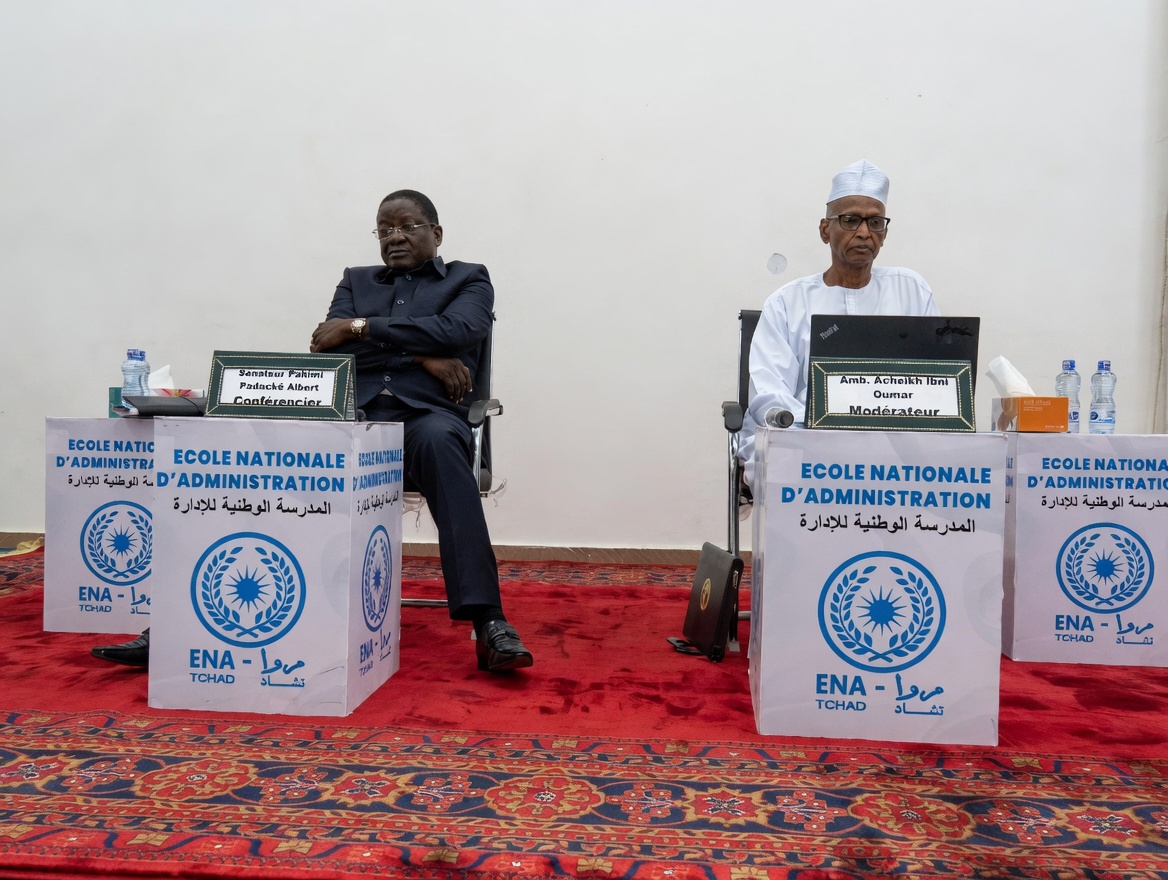
The École Nationale d’Administration (ENA) in N’Djamena hosted a high-level panel discussion this past Friday, May 29, as part of its « Grand rendez-vous de l’ENA » series. The debate, led by Senator and former Prime Minister Albert Pahimi Padacké, centered on « Decentralization in the dynamics of development: the role of provincial councils. »
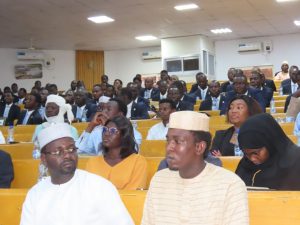
The packed amphitheater brought together students, civil servants in training, administrators, and political figures, all eager to engage with a topic of pressing national significance. Pahimi Padacké, a seasoned politician with two terms as Prime Minister and a background in civil administration, delivered a compelling and structured address that blended historical insight with practical realism.
He opened by emphasizing the timeliness of the discussion, framing the debate around a pivotal question: Are provincial councils already driving development, or can they become the engines of local progress? The former Prime Minister traced the roots of Chad’s decentralization journey back to the 1990s, a period marked by democratic transitions across Africa, international donor pressure, and the rise of governance models prioritizing citizen engagement.
The discussion unfolded across three core themes:
- Political and normative foundations: How decentralization, as enshrined in Chad’s legal framework, serves as a catalyst for development.
- Current challenges: The hurdles preventing provincial councils from fulfilling their mandate effectively.
- Actionable solutions: Pathways to transform these councils into genuine pillars of local governance.
Pahimi Padacké highlighted the historical milestones shaping Chad’s decentralization, including the 1993 Sovereign National Conference, which endorsed a unitary yet highly decentralized state model. This vision was later embedded in the 1996 Constitution and reaffirmed in subsequent texts, including the December 29, 2023 Constitution of the Fifth Republic. Key legal instruments, such as Organic Law No. 14 (2024) on the status of autonomous local authorities and Organic Law No. 28 (2024) on competency sharing between the central government and local entities, were also underscored.
The speaker underscored two foundational principles: the transfer of competencies and resources to local councils and the principle of subsidiarity (Article 271 of the Constitution), which mandates decision-making at the most grassroots level feasible. While Organic Law No. 28 transfers significant responsibilities to provincial councils—though practical implementation decrees are still pending—he acknowledged the progress while flagging persistent gaps.
In the second segment, Pahimi Padacké candidly assessed the obstacles hobbling provincial councils: delayed transfers of financial and human resources, technical and administrative capacity gaps, local governance inefficiencies, and coordination failures between deconcentrated administration and elected local bodies.
He concluded by outlining actionable steps to accelerate decentralization: expediting the transfer of revenue-sharing mechanisms (including oil and tax proceeds), bolstering training for elected officials and council staff, establishing robust monitoring and evaluation systems, deepening civil society and development partner involvement, and strictly adhering to the subsidiarity principle to ensure genuine—not superficial—decentralization.
Addressing the next generation of administrators, he stressed that the success of decentralization is inextricably linked to balanced national development and the reduction of the administrative gap between the state and its citizens.