The geopolitical landscape of the Sahel is undergoing subtle yet significant shifts. As European forces gradually withdraw from Mali, Burkina Faso, and Niger, and Russia expands its footprint through para-state structures, the United States appears to be quietly regaining momentum in the region. Emmanuel Dupuy, president of the Institute for Strategic Studies and Security (IPSE), offers a nuanced perspective on this evolution.
According to Dupuy, Washington has not abandoned the Sahel but has instead adopted a strategy of strategic patience. «This isn’t a resurgence but rather confirmation that the U.S. never fully disengaged. They waited for the erosion of other influences before repositioning themselves strategically», he explains.
a pragmatic approach to shifting alliances
This approach aligns with a long-standing American tradition of pragmatic diplomacy. «Americans prioritize practical outcomes over ideological alignment. They engage with partners whose views may differ from their own, focusing instead on shared security and economic interests», Dupuy notes. In this transactional framework, ideological differences take a backseat to tangible strategic gains.
He adds, «Washington does not view Russia as a direct threat but rather sees potential complementarities. Both powers are capitalizing on the strategic vacuum created by the withdrawal or weakening of other actors—particularly European stakeholders in the region.» This indirect coexistence avoids direct confrontation, allowing each side to leverage the opportunities left by shifting geopolitical sands.
opportunities amid regional instability
Several factors are converging to create a window of opportunity for U.S. engagement in the Sahel. «The U.N.’s credibility has waned, and Russia has struggled to effectively counter armed extremist groups», Dupuy observes. The erosion of multilateral influence and operational limitations in Russian-led initiatives have inadvertently paved the way for alternative security frameworks.
The American strategy hinges on structured dialogue with local authorities—regardless of how they came to power. Dupuy draws a parallel with Afghanistan, where Washington maintained engagement even after the Taliban takeover. «This same approach applies in Mali, where the U.S. continues discussions with military-led governments, a marked contrast to Europe’s policy of non-recognition», he explains.
economic and security synergies
Beyond direct engagement, Washington is leveraging cross-cutting partnerships. «Strategic alignment with actors like Turkey further amplifies U.S. influence», Dupuy states. Meanwhile, the African Growth and Opportunity Act (AGOA) serves as an economic anchor, offering tariff exemptions to over 30 African nations—including several Sahelian countries—thus reinforcing U.S. economic ties in the region.
the role of private security firms
A cornerstone of this strategy is the use of private military contractors. «Direct U.S. or Russian intervention is unlikely. Instead, we’ll see private security firms—like those linked to Blackwater—taking the lead», Dupuy asserts. He points to the Democratic Republic of the Congo (DRC) as an example, where U.S.-facilitated agreements between Rwanda and Congolese authorities involved private contractors rather than regular military forces.
This outsourcing model extends to mediation efforts as well. «In Sudan, for instance, the U.S. may facilitate indirect negotiations between rival generals, using American-backed contractors to bridge divides», he explains. This separation of political mediation from traditional military projection allows for flexible, low-profile engagement.
Morocco’s strategic pivot in us-Sahel relations
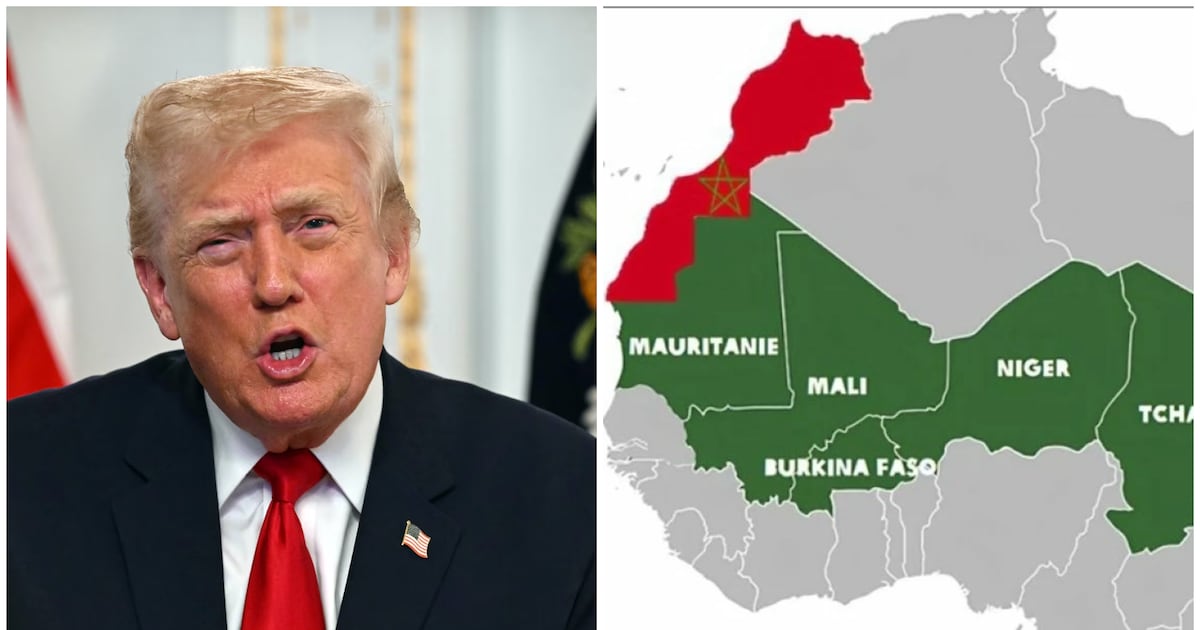
In this evolving landscape, Morocco emerges as a key player. Bilateral cooperation between Rabat and Washington has intensified across military, economic, and diplomatic spheres. «Morocco is the ideal partner the U.S. needs—one capable of engaging with Sahelian governments formed through military coups while maintaining a positive regional image», Dupuy notes.
He highlights Algeria’s diminishing influence in Mali, attributing it to perceived support for religious actors deemed unacceptable by Bamako. «Morocco, by contrast, benefits from strong relational capital. Even as Malian authorities decry foreign interference, they view Rabat as a privileged interlocutor», he adds.
The long-term vision includes economic integration, such as the development of trade corridors linking Burkina Faso, Niger, and Mali through Mauritania, with investments extending into southern Morocco. «This is a decade-long prospect, not an immediate reality», Dupuy clarifies. In the meantime, Morocco leverages other tools, including religious diplomacy.
Since 2015, the Mohammed VI Institute for the Training of Imams has been exporting a moderate, Maliki-Sufi Islamic framework across the Sahel. «This soft-power initiative is an extremely effective tool for stabilization and influence», Dupuy emphasizes. Additionally, Morocco offers economic prospects through infrastructure and trade, reinforcing its role as a stabilizing force in the region.
algiers’ shrinking leverage in the Sahel
Algeria’s strategic options in the Sahel appear increasingly constrained. «Honestly, I don’t see a clear path forward for Algiers», Dupuy states. He notes that Algeria’s diplomatic maneuvers—particularly regarding the Sahara issue—have failed to shift the status quo. «The U.S. has reiterated that the only viable framework remains the autonomy plan», he says, suggesting that Algerian initiatives are more about maintaining diplomatic visibility than substantive influence.
Dupuy also points to stalled energy projects and shifting regional alliances as further weakening Algeria’s position. «The Madrid meeting marked a turning point. Discussions are no longer ideological but focus on practical implementation—local governance, economic development, maritime zones, and exclusive economic zones», he explains.
The Sahel, in this reconfiguration, is no longer just a battleground for security rivalries. It has become a strategic chessboard where extractive interests, private military contracting, religious diplomacy, and logistical corridors intersect. In this complex equation, the U.S. is recalibrating its posture, and Morocco is stepping into a pivotal role—bridging the Atlantic, the Mediterranean, and Africa’s heartland.