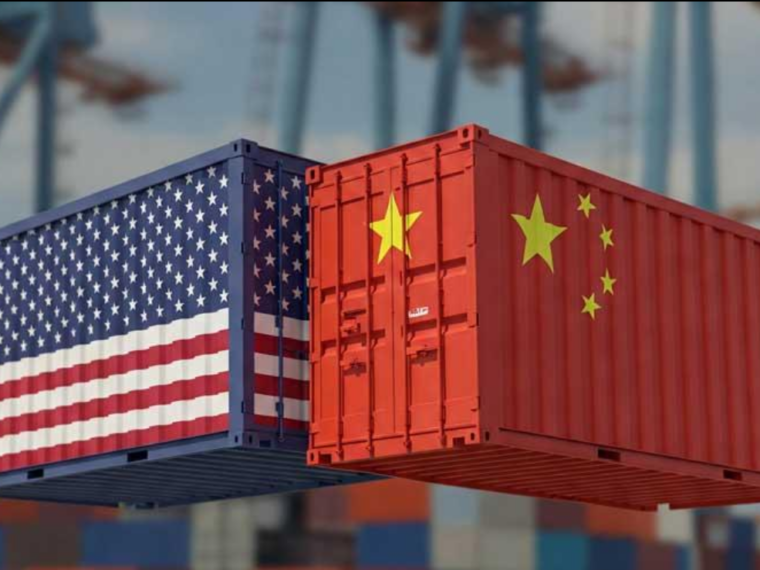
The White House is moving forward with sweeping tariff increases that target 14 major trading partners, with China facing the most severe hike at 20%. The administration’s latest protectionist push aims to curb cheap imports that it argues are undermining American industries.
Washington escalates trade war with global partners
Among the economies slated for new tariffs are China, the European Union, Japan, and India. The measures reflect Washington’s intensifying focus on rebalancing trade flows and shielding domestic producers from foreign competition.
The proposed duties span multiple continents, encompassing key players in Asia, Europe, and beyond. Included in the crosshairs are China, the EU, Japan, South Korea, India, Taiwan, Vietnam, Switzerland, Singapore, Indonesia, Malaysia, Thailand, Cambodia, and Bangladesh.
China bears the brunt of Trump’s tariff campaign
Beijing faces tariffs as high as 20%, the steepest in the proposed package. The White House cites China’s industrial overcapacity and aggressive export practices as primary concerns.
Washington argues that artificially cheap Chinese goods distort market competition, pressuring American manufacturers, particularly in heavy industry and manufacturing sectors.
By raising import costs, the administration seeks to incentivize domestic production and reduce reliance on foreign goods.
Thirteen allies face ripple effects of US tariff expansion
The impact extends well beyond China. The European Union, Japan, South Korea, India, and Taiwan are also targeted, alongside six countries in Southeast Asia. These economies—including Vietnam, Thailand, Malaysia, Indonesia, Singapore, and Cambodia—are major exporters to the US.
For these nations, the new tariffs could disrupt supply chains, increase production costs, and reduce export competitiveness.
Global economy braces for fallout from US protectionist push
The proposed tariffs could drive up prices on a wide range of imported goods in the US, transferring part of the financial burden to American consumers.
In response, affected nations may retaliate with their own trade barriers, triggering a chain reaction of tit-for-tat measures. This could deepen trade distortions and strain international economic relations.
Supply chains spanning multiple continents are particularly vulnerable, raising concerns about long-term disruptions.
Next steps: public review and potential reactions
The proposal is currently open for public comment, with written submissions due by January 5, 2027. Public hearings are scheduled to begin January 25.
As the deadline approaches, global markets will be closely monitoring whether the US tariff expansion sparks broader trade conflicts or revitalizes domestic industries.
The initiative underscores the White House’s commitment to transforming tariffs into a central tool of economic policy, even as questions linger about its potential consequences.