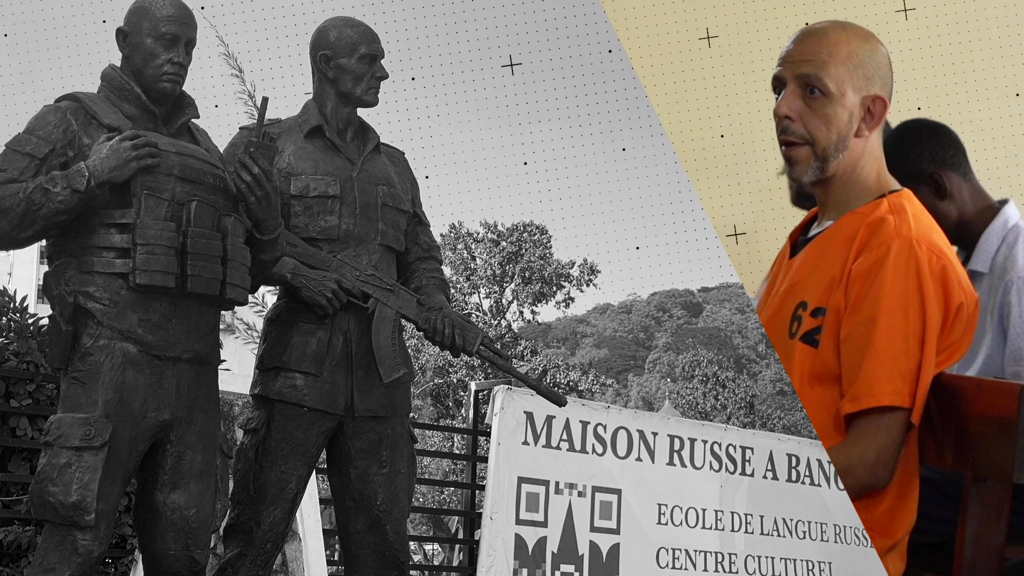
As dusk settled over Zemio on Sunday, May 26, 2024, an ordinary evening was about to take a dramatic turn.
Inside the lively courtyard of a local bar-restaurant in the Haut-Mbomou sub-prefecture, a region known for its persistent community conflicts, a farewell gathering was underway. Belgian-Portuguese researcher Joseph Figueira, alongside his Ivorian colleague based in the neighboring Democratic Republic of Congo, was hosting local contacts. Figueira was on a field assessment mission for the American NGO FHI 360, part of a project funded by the United States Agency for International Development (USAID). Approximately fifty individuals were present, toasting the imminent departure of the two visitors, who were scheduled to return to Bangui the following day after a 48-hour stay.
Suddenly, the convivial atmosphere was shattered. Three members of the Wagner group, who have operated as an auxiliary force for national authorities since 2018, stormed into the venue. They were accompanied by a Central African gendarme, acting as an interpreter. Without hesitation, they seized Joseph Figueira. The humanitarian worker was given no opportunity to retrieve his documents from the NGO’s lodging before being taken to the aerodrome, where he was immediately handcuffed and detained.
Figueira, a renowned expert on the Fulani people, possessed all necessary documentation and was operating entirely within legal parameters. He had been in the Central African Republic for nine days, engaging with numerous officials in both the capital and provincial areas to lay the groundwork for an upcoming local conflict prevention initiative, in partnership with various local and international organizations. Despite his legitimate status, the Wagner operatives proceeded to abduct him. Hooded and subjected to physical assault that left his nose bleeding, he was forcibly taken aboard an aircraft, entirely outside any recognized legal process.
Inside the lively courtyard of a local bar-restaurant in the Haut-Mbomou sub-prefecture, a region known for its persistent community conflicts, a farewell gathering was underway. Belgian-Portuguese researcher Joseph Figueira, alongside his Ivorian colleague based in the neighboring Democratic Republic of Congo, was hosting local contacts. Figueira was on a field assessment mission for the American NGO FHI 360, part of a project funded by the United States Agency for International Development (USAID). Approximately fifty individuals were present, toasting the imminent departure of the two visitors, who were scheduled to return to Bangui the following day after a 48-hour stay.
Suddenly, the convivial atmosphere was shattered. Three members of the Wagner group, who have operated as an auxiliary force for national authorities since 2018, stormed into the venue. They were accompanied by a Central African gendarme, acting as an interpreter. Without hesitation, they seized Joseph Figueira. The humanitarian worker was given no opportunity to retrieve his documents from the NGO’s lodging before being taken to the aerodrome, where he was immediately handcuffed and detained.
Figueira, a renowned expert on the Fulani people, possessed all necessary documentation and was operating entirely within legal parameters. He had been in the Central African Republic for nine days, engaging with numerous officials in both the capital and provincial areas to lay the groundwork for an upcoming local conflict prevention initiative, in partnership with various local and international organizations. Despite his legitimate status, the Wagner operatives proceeded to abduct him. Hooded and subjected to physical assault that left his nose bleeding, he was forcibly taken aboard an aircraft, entirely outside any recognized legal process.
Listen to this article2 min listen
Section feedCopy the feed link into your favourite RSS reader