Will Côte d’Ivoire survive the loss of its economic architect at 91?
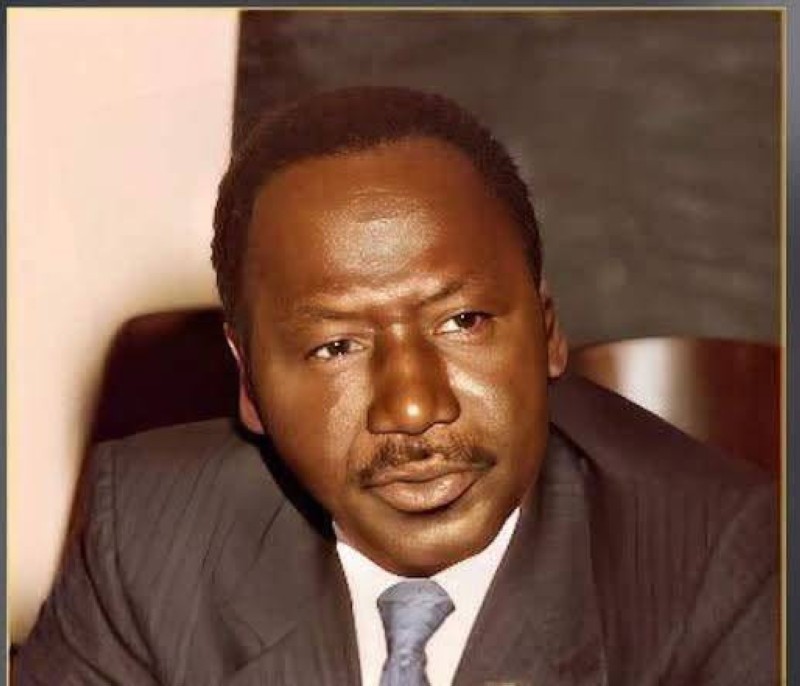
One of Côte d’Ivoire’s most influential economic architects passed away on Saturday, September 19, 2026, at the age of 91. The death of Abdoulaye Koné, former Minister of Economy and Finance, raises a critical question: What happens when a nation loses not just a leader, but the institutional memory that shaped its economic foundations for decades?
Born in Tingréla, in northern Côte d’Ivoire, Koné dedicated more than seven decades to public service, rising through the ranks from Director of the Budget to Secretary of State for Budget before ultimately serving as Minister of Economy and Finance under President Félix Houphouët-Boigny. His career spanned the formative years of an independent Côte d’Ivoire, a period marked by rapid economic development and regional integration.
The President of Côte d’Ivoire, Alassane Ouattara, paid tribute to Koné as a “great servant of the State”, whose experience and unwavering commitment played a pivotal role in shaping the country’s economic and social progress.
From national budgets to regional influence
Before taking the helm of the Ministry of Economy and Finance, Abdoulaye Koné held critical roles at the heart of Côte d’Ivoire’s financial machinery, including Director of the Budget and Secretary of State for Budget. These positions were instrumental in setting the country’s financial priorities and ensuring fiscal responsibility during a transformative era.
His leadership extended beyond national borders. Under Houphouët-Boigny’s presidency, Koné contributed significantly to strengthening the West African Economic and Monetary Union (UEMOA), helping to establish the institutional framework that would later define economic cooperation in West Africa. His collaboration with regional institutions, including the Central Bank of West African States (BCEAO), underscored his deep involvement in shaping the continent’s financial architecture.
President Ouattara, who once worked alongside Koné at the BCEAO, described him as “a true source of inspiration and unwavering support”—a mentor whose guidance shaped generations of economic policymakers.
An era of economic nation-building begins to close
The passing of Abdoulaye Koné marks the end of an era for Côte d’Ivoire. For more than seven decades, he witnessed—and actively participated in—the country’s economic evolution, from its post-independence challenges to its later integration into regional and global markets. His career mirrors the trajectory of a nation that sought to build stability through sound fiscal policies and strategic partnerships.
But with his death comes a void that extends beyond personal loss. Koné was not merely an economist or a minister; he was a living archive of Côte d’Ivoire’s economic history. His institutional knowledge, forged in the trenches of public administration, provided continuity and stability during periods of transition. Now, the nation faces the challenge of preserving his legacy while navigating an uncertain economic future.
What remains after a life of service?
The immediate aftermath of Koné’s death was marked by national mourning. President Ouattara conveyed his condolences to Koné’s family, friends, and colleagues, acknowledging the profound impact of his work. Yet, beyond the tributes, a more pressing question lingers: How will Côte d’Ivoire sustain the economic vision and institutional wisdom that Koné embodied?
The answers will unfold in the coming months. For now, the nation mourns a man whose contributions were woven into the very fabric of its economic identity. His life’s work stands as both a testament to what was achieved and a reminder of what must now be carried forward.
A call to future generations
Abdoulaye Koné’s death is not just a moment of reflection on what has been lost but an opportunity for future leaders to reclaim his vision. The challenge ahead is clear: Can Côte d’Ivoire’s next generation of policymakers preserve the stability and growth that Koné helped establish while adapting to a rapidly changing economic landscape?
His legacy is a reminder that true leadership transcends individual achievements. It lives on in the institutions, policies, and values that endure long after a person’s time. For Côte d’Ivoire, the question is no longer about mourning what was lost but about reaffirming what must be preserved—and built upon.
Abdoulaye Koné, former Minister of Economy and Finance under President Félix Houphouët-Boigny