The rapid integration of drones has transformed African military strategies, reshaping how conflicts are waged across the continent. While these unmanned systems enhance operational capabilities for African states, they also expose critical vulnerabilities—particularly in technological dependence on foreign powers—and raise pressing concerns over governance, civilian safety, and long-term security.
Drones as the new cornerstone of African military operations
Once limited to surveillance and intelligence gathering, drones have become central to Africa’s security frameworks. Their adoption reflects a broader shift in warfare on the continent, where both governments and non-state armed groups increasingly deploy these systems to gain tactical advantages. According to recent analysis, the pace of drone acquisitions has surged dramatically over the past two decades.
Africa’s drone landscape has evolved from a single recorded military acquisition in 2001 to 21 in 2021. Between 1980 and 2024, 31 African nations collectively acquired over 1,500 military drones, with the highest concentration in North Africa. Nigeria stands out as one of the continent’s top importers, reflecting the growing urgency to modernize defense capabilities amid escalating regional threats.
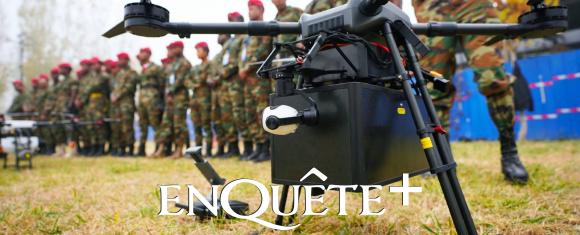
These systems enable African militaries to conduct long-range surveillance, precision strikes, and real-time intelligence without exposing troops to direct combat risks. Conflicts in the Sudan, Mali, Burkina Faso, Niger, Somalia, and Ethiopia highlight how drones have become indispensable tools for both state forces and insurgent groups, serving not only military functions but also propaganda and psychological operations.
From civilian tech to battlefield weapons
One of the most concerning trends is the weaponization of commercially available drones. Groups like Boko Haram, Al-Shabaab, and the Group for the Support of Islam and Muslims (JNIM) have repurposed off-the-shelf drones for targeted attacks, ground coordination, and media campaigns designed to amplify their operational impact. This shift has altered power dynamics in conflict zones, allowing smaller, less-resourced factions to project force with minimal infrastructure.
While this democratization of drone technology levels the playing field in some respects, it also intensifies risks. The proliferation of armed drones among non-state actors complicates counterterrorism efforts and raises serious questions about civilian protection and the erosion of traditional conflict norms.
Foreign dominance in Africa’s drone market
Despite the strategic importance of drones, African states remain heavily reliant on external suppliers. China, Israel, the United States, and increasingly Turkey dominate the market, providing not only the hardware but also critical support services such as training, maintenance, software updates, and spare parts. This dependence creates long-term strategic vulnerabilities, particularly in areas like data sovereignty and operational autonomy.
The reliance on foreign technology underscores a broader challenge: Africa’s limited capacity to domestically produce and sustain advanced drone systems. While several nations are investing in local industries, the continent’s production still accounts for only about 12% of its drone needs. South Africa leads the way in drone manufacturing, followed by Morocco, which combines local production with international partnerships. Other countries, including the Nigeria, Egypt, Ethiopia, Tunisia, and Algeria, are ramping up initiatives to bolster their industrial bases.
Senegal is making strides through Ndobine, a local enterprise specializing in drones for maritime surveillance, precision agriculture, and cartography. However, scaling up production remains a significant hurdle, with most African nations still dependent on imports for high-end military-grade systems.
Tactical gains, but no substitute for peace
Despite their growing role in African conflicts, drones are not a panacea for the continent’s security challenges. While they enhance military effectiveness and alter battlefield dynamics, they do little to address the root causes of instability. In some cases, their use has exacerbated violence. In 2024 alone, drone strikes resulted in 1,176 civilian deaths across 13 African countries. In the Sudan, reports indicate nearly 700 civilian casualties from drone strikes in the first three months of 2026.
Experts warn that without robust regulatory frameworks, drones risk becoming tools of escalation rather than stabilization. To mitigate these risks, African governments are urged to adopt public policies that prioritize transparency in acquisitions, enforce international humanitarian law, invest in operator training, and promote local industry development. The African Union is also seen as a key player in harmonizing continental drone regulations to ensure responsible and equitable use.
The path forward: sovereignty through innovation
The future of Africa’s drone strategy hinges on balancing technological adoption with self-reliance. While drones offer undeniable tactical benefits, their long-term value depends on Africa’s ability to control their deployment and reduce foreign dependencies. Failure to do so could deepen vulnerabilities, undermine sovereignty, and perpetuate cycles of violence. The challenge ahead is not merely acquiring drones—but mastering their use to build sustainable peace and security across the continent.