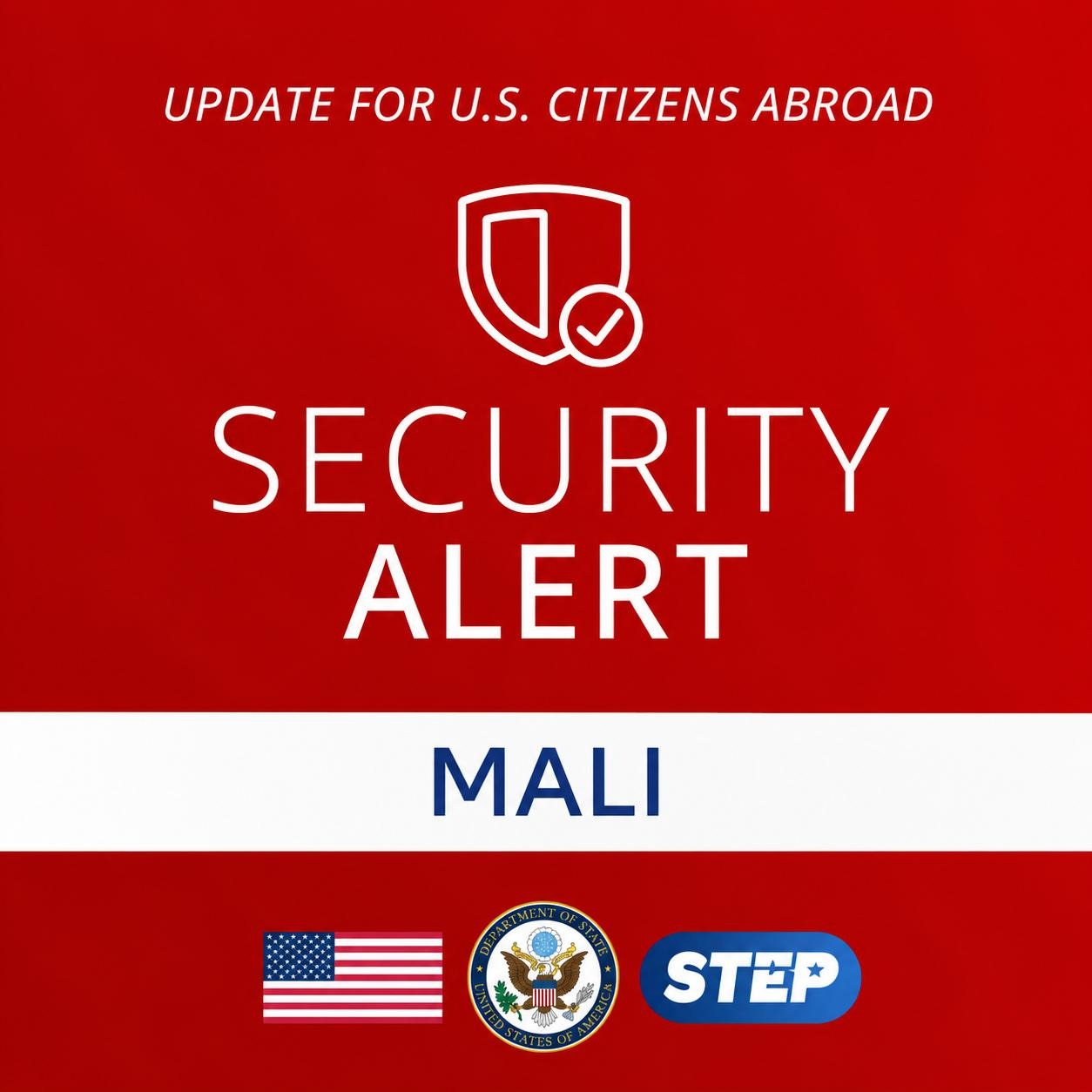
Washington has issued a stringent security advisory for the weekend of May 30, 2026, urging American citizens in Bamako to minimize non-essential travel across the city. The move reflects a sharp escalation in perceived risks, as regional intelligence suggests potential threats may be imminent.
Diplomatic caution amid Mali’s fragile calm
The embassy’s directive came without delay, underscoring the severity of the situation. Residents and visitors are advised to avoid crowded areas, exercise heightened vigilance in expatriate-heavy zones, and postpone all unnecessary journeys. Such advisories are rarely issued without concrete intelligence—whether intercepted communications, thwarted attack plots, or credible operational indicators—prompting Washington to err on the side of extreme caution.
Terrorist groups maintain pressure on the capital
The Jama’at Nusrat al-Islam wal Muslimin (JNIM), Mali’s most active Al-Qaeda-affiliated group, has repeatedly demonstrated its capacity to strike deep into the capital’s core. Past assaults on key military installations and urban peripheries remain fresh in memory, serving as stark reminders of the group’s asymmetric warfare capabilities.
Meanwhile, the resurgence of unrest in northern and central regions—fueled by shifting alliances among armed factions like the Permanent Strategic Framework and the Front de Libération de l’Azawad (FLA)—keeps Mali’s armed forces (FAMa) under constant strain. The proliferation of sleeper cells and improvised explosive devices (IEDs) adds another layer of vulnerability for security forces struggling to maintain control.
Economic strangulation: a weapon of war
Beyond direct attacks, radical groups have weaponized supply routes, crippling Mali’s economy. Fuel tankers and commercial convoys bound for Bamako are frequent targets, cutting off essential resources. These blockades do more than disrupt trade—they instill fear, sever regional ties, and expose the capital’s dependence on fragile logistics. For the US embassy, the fragility of these corridors heightens the risk of high-impact incidents near the city’s outskirts.
Local measures vs. global assessments
While Malian authorities insist on projecting stability through increased patrols and roadblocks at city entrances, Western diplomatic missions prioritize risk mitigation. This disconnect highlights a critical reality: national optimism clashes with the data-driven assessments of nations equipped with advanced surveillance capabilities.
As the May 30 weekend approaches, security forces have escalated identity checks and vehicle inspections in strategic districts of Bamako. Yet, the shadow of uncertainty looms large—will this precautionary measure avert a crisis, or merely underscore the city’s ongoing vulnerability?