Bénin’s agricultural backbone at risk: The soil crisis
With agriculture driving nearly 70% of employment, accounting for 26% of GDP, and supplying roughly 80% of export earnings, Benin’s economy hinges on its soil. Yet, a silent but devastating crisis is unfolding: degraded farmlands are losing their fertility at an alarming rate, pushing agricultural yields into a downward spiral.
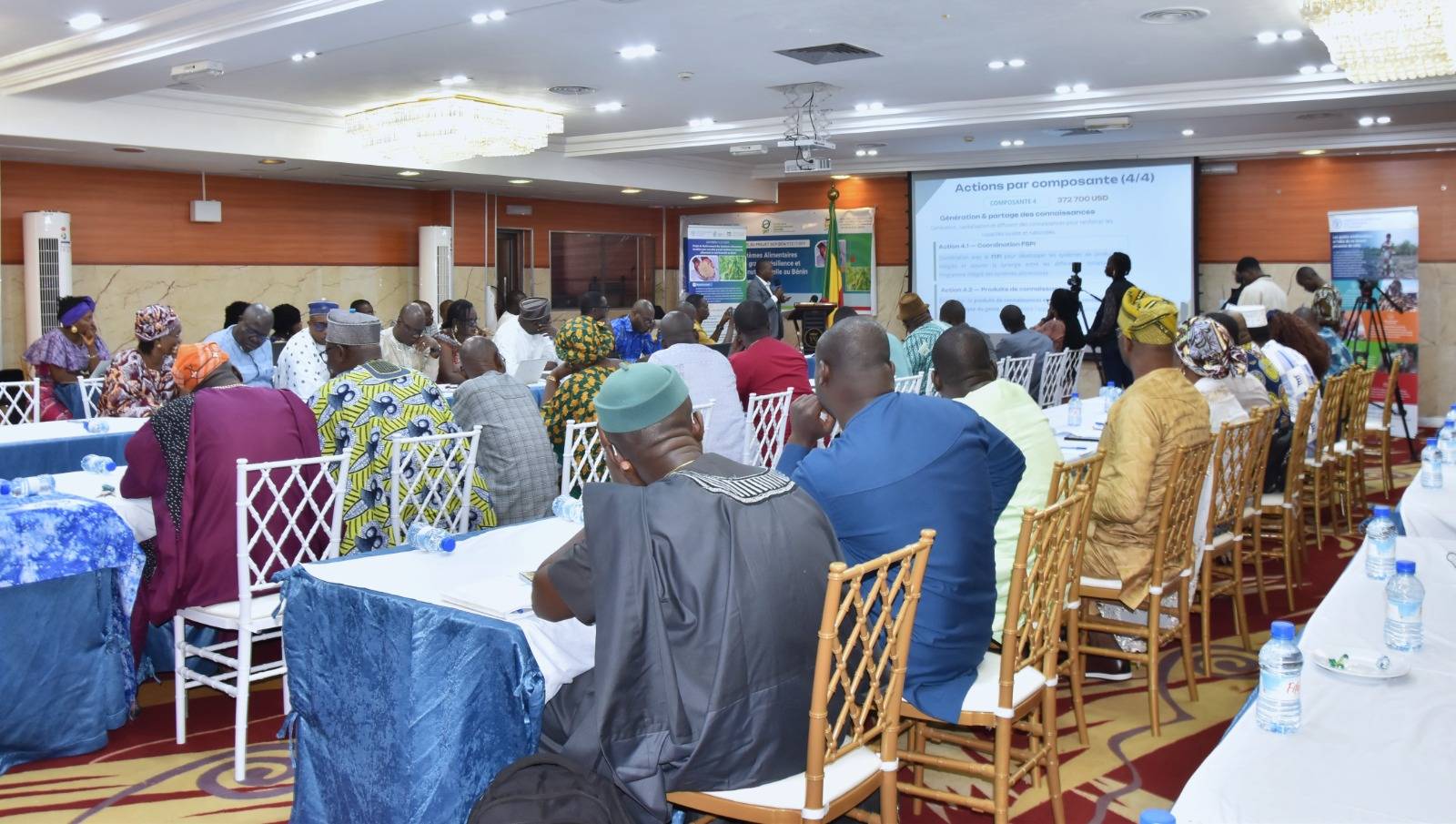
During the project’s launch at the Bénin Royal Hotel in Cotonou, Minister of Agriculture, Livestock, and Fisheries Adin Yeton Bloukounon Goubalan delivered a stark warning: “Depleted soils mean poor harvests, trapping farmers in a cycle of poverty and food insecurity.”
Statistics paint an even grimmer picture. A national study reveals that 40% of Beninois—over 5 million people—face the direct consequences of land degradation. Worse, 38% of the country’s total land area is now classified as degraded, slashing crop productivity by at least 50%. This threatens not only rural livelihoods but also access to vital resources like water and nutritious food.
Food Systems: A blueprint for agricultural transformation
The government’s ambitious Food Systems initiative, developed with support from the United Nations Food and Agriculture Organization (FAO) and the Global Environment Facility (GEF), is designed to reverse this trend. Unlike short-term fixes, this project adopts a holistic approach to overhaul Benin’s agricultural sector by 2030.
The core mission? To revamp public policies, enhance farming techniques, and strengthen market access. The focus is on two staple crops—maize and rice—which are dietary staples in both rural and urban areas. The goal is to transition these sectors from low-yield, environmentally taxing models to sustainable, high-performance systems that deliver economic and social benefits.
A strategic investment with bold targets
The project’s $20.7 million budget reflects a tripartite funding model. The Global Environment Facility contributes $5.9 million, while the Beninese government provides $14.8 million in national co-financing. The initiative will unfold in five key municipalities: Karimama, Malanville, Glazoué, Kétou, and Les Aguégués.
By 2030, the program aims to:
- Restore 20,000 hectares of degraded land and introduce sustainable farming practices across 114,900 hectares.
- Directly support 36,000 producers, with an estimated 356,000 beneficiaries benefiting indirectly in targeted regions.
A call for collective action and precision
While the project’s goals inspire optimism, its leaders emphasize the need for meticulous execution. Minister Goubalan cautioned teams to rigorously evaluate soil restoration technologies before scaling up, stressing that “success hinges on choosing the right tools for the job.”
The FAO’s Resident Representative in Benin, Paul-Henri Zoéwindé Bouda, echoed this sentiment, highlighting the critical role of farmer engagement: “Technology alone won’t suffice—this project’s success depends on the full commitment of every stakeholder, from policymakers to the farmers on the ground.”
A pathway to lasting resilience
By addressing the root cause of Benin’s agricultural struggles—soil degradation—the Food Systems project aims to secure the nation’s food future. If targets are met by 2030, Benin could not only stabilize its rice and maize supply but also set a replicable model for ecological transition across West Africa.