Lula secures historic fourth term as Bolsonaro disputes election results
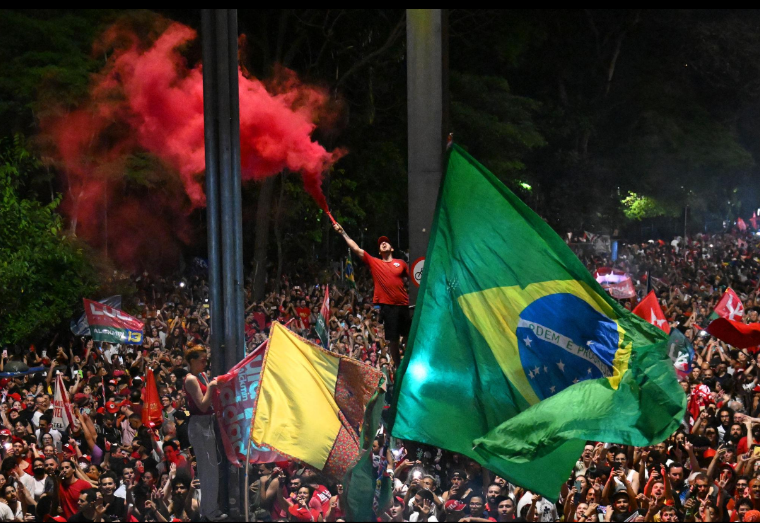
Luiz Inácio Lula da Silva has been re-elected Brazil’s president, securing a fourth non-consecutive term with 51.79% of the vote. His opponent, Senator Flávio Bolsonaro, has refused to concede, alleging irregularities in the election process and vowing to challenge the outcome.
Official results confirm Lula’s victory by over 4 million votes
The Superior Electoral Court (TSE) announced final results showing Lula at 64,256,232 votes (51.79%) against Flávio Bolsonaro’s 59,826,041 votes (48.21%). The margin surpasses 4.4 million votes, yet Bolsonaro’s campaign has dismissed the numbers, citing procedural concerns.
While Lula’s re-election marks a historic milestone for Brazilian politics, the dispute threatens to overshadow his victory. The senator’s legal team argues that last-minute voting extensions disrupted electoral fairness, raising questions about the integrity of the process.
Controversial polling extension sparks legal battle
The electoral dispute centers on a Supreme Court ruling that extended polling hours until 7 p.m. Brasília time, two hours beyond the scheduled 5 p.m. closure. The decision, aimed at accommodating voter transportation delays in Bahia and São Paulo, reportedly led to inconsistencies as some polling stations had already closed.
Flávio Bolsonaro’s campaign alleges the change created an uneven playing field, violating election rules. “We cannot validate these results under these conditions,” the senator stated, vowing to pursue legal action to annul the election. His team also criticized the Supreme Court, claiming it unilaterally altered procedures mid-vote.
Notably, both campaigns had previously requested voting extensions—Bolsonaro’s camp citing severe flooding in southern Brazil. This complicates the arguments, as the alterations were not unilaterally imposed by one side.
Brazil’s deep political divide fuels post-election tensions
The election highlighted Brazil’s stark ideological split: Lula’s left-leaning policies on social welfare and inequality reduction against Flávio Bolsonaro’s conservative platform emphasizing security and traditional values. As the son of former President Jair Bolsonaro—currently serving a 27-year prison sentence for coup-related charges—the senator represents a polarizing force in Brazilian politics. His refusal to accept defeat has intensified concerns about institutional trust and democratic stability.
Analysts warn that the legal challenge could prolong political uncertainty, especially given Bolsonaro’s influence within Congress, where conservative factions hold significant power. Lula, now tasked with reuniting a fractured nation, faces immediate challenges in implementing his agenda amid heightened polarization.
What happens next? Legal scrutiny and political reconciliation
The Superior Electoral Court has not yet invalidated the results, meaning Lula’s victory remains official while the legal review proceeds. The case now depends on whether the courts find merit in Bolsonaro’s claims of procedural flaws. Legal experts suggest the demands may face high evidentiary thresholds, potentially limiting their impact.
In a conciliatory statement, Lula acknowledged the nation’s divisions, affirming his commitment to govern for all Brazilians—regardless of their political affiliations. His address underscores the gravity of the moment: a new chapter in Brazilian democracy, one where the resilience of its institutions will be tested by competing narratives of electoral legitimacy.
One outcome is certain: Luiz Inácio Lula da Silva has been elected president. Whether Bolsonaro’s legal challenge will escalate into a broader crisis remains the central question for Brazil’s political future.