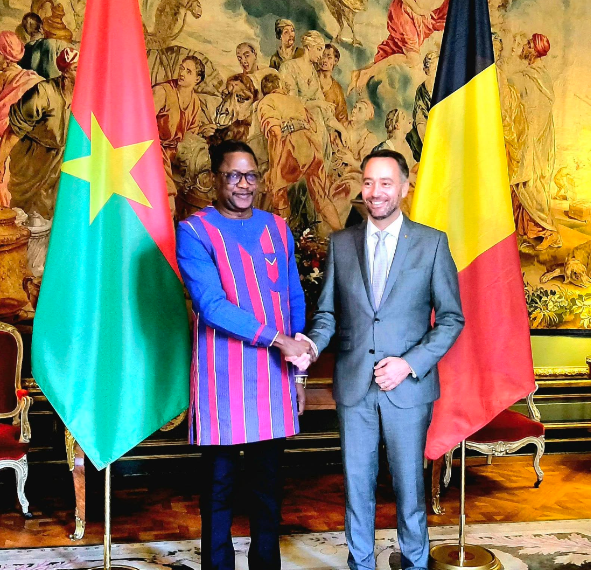
Belgium reaffirms €40 million cooperation commitment to Burkina Faso post-2027
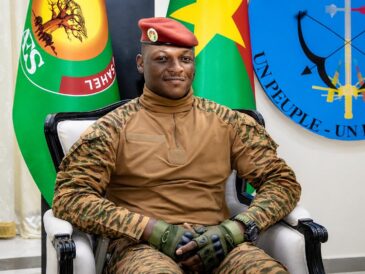
Following two days of high-level talks in Brussels on November 4–5, 2026, Burkina Faso’s foreign minister, Karamoko Jean-Marie Traoré, secured a renewed Belgian pledge of €40 million in development aid for the period beyond 2027. The announcement comes at a pivotal moment in Burkina Faso’s diplomatic relations with Western partners, including Belgium, amid a broader shift in the country’s foreign policy under President Ibrahim Traoré.
While Ouagadougou has publicly emphasized sovereignty and diversified partnerships—including military cooperation with Russia and reduced reliance on traditional Western allies—the Belgian engagement underscores a pragmatic approach to maintaining dialogue.
Delivered through the Belgian Development Agency Enabel, the €40 million commitment extends the framework of the previous 2023–2027 cooperation program, originally valued at €34.5 million. This allocation is earmarked for continued joint projects focused on socio-economic development and humanitarian support, though the funds have not yet been fully disbursed.
From rhetoric to reality: can financial aid align with diplomatic distance?
Since rising to power in September 2022, President Traoré has positioned sovereignty as a cornerstone of his governance strategy. This has included the withdrawal of French military forces, public criticism of Western policies, and deeper engagement with Moscow. Given this context, the Belgian aid renewal raises a critical question: why maintain financial ties with a government openly redefining its alliances?
Analysts suggest the answer lies in separating political posturing from economic collaboration. A nation may limit military or ideological cooperation with a partner while still accepting development assistance—especially when those funds directly support humanitarian relief and institutional capacity building.
Additionally, Ouagadougou’s outreach to multiple regional and global actors—from Russia to Turkey—does not preclude maintaining selective partnerships with Western Europe. Each relationship serves a distinct purpose: security cooperation with one actor, economic aid from another, trade with a third.
Brussels-Burkina Faso: dialogue persists despite shifting sands
The talks in Brussels went beyond financial commitments. On November 4, Traoré met with Kaja Kallas, High Representative of the European Union for Foreign Affairs and Security Policy, to discuss Burkina Faso’s evolving international partnerships and strategic priorities.
The following day, bilateral discussions with Maxime Prévot, Belgian Deputy Prime Minister and Minister of Budget and Public Accounts, addressed regional stability, governance, and development cooperation. These meetings signal that, despite public criticism of Western influence, Burkina Faso retains open diplomatic channels with the EU and Belgium.
Sovereignty vs. necessity: what the €40 million deal really means
The Belgian pledge does not represent a full diplomatic reset. There has been no indication of resumed military cooperation, no return of Belgian development advisors, and no public reversal of Traoré’s rhetoric. Instead, the aid reflects a pragmatic calculation: Burkina Faso needs external funding to stabilize its economy and deliver essential services, while Belgium seeks to maintain influence in a politically volatile Sahel region.
For Ouagadougou, accepting the aid allows it to fund critical sectors—education, health, local governance—without conceding political alignment. For Brussels, the funds are a lever to keep engagement alive, preserving a foothold in a country where other powers are expanding influence.
The €40 million is a stopgap, not a strategic shift. It shows that diplomatic distance does not mean total estrangement—and in the Sahel, flexibility often prevails over rigid alliance systems.
Key takeaways from the Brussels talks
- The €40 million Belgian aid is a continuation, not a reprioritization—built on a 2023–2027 foundation of €34.5 million.
- Funds target humanitarian and development initiatives, not military or political cooperation.
- Traoré’s engagements with EU and Belgian officials indicate a willingness to maintain dialogue despite broader alignment shifts.
- The aid underscores a dual reality: Burkina Faso seeks independence, but economic constraints demand external support.