Burkina Faso’s gold refinery RAFFINOR-BF: inauguration raises custody questions
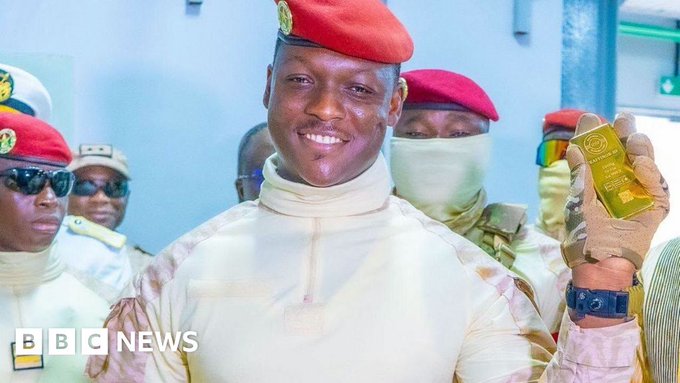
On 28 September 2026, Ibrahim Traoré officially opened Burkina Faso’s first national gold refinery, known as RAFFINOR-BF, in Ouagadougou. The authorities present the facility as a major step towards economic sovereignty, intended to enable greater processing and valuation of gold directly on national territory. Its initial capacity is announced at 164 tonnes per year, with a potential increase to 515 tonnes. The investment exceeds 11 billion CFA francs.
Official ambitions for local processing
Burkina Faso now aims to refine its gold domestically and retain a larger share of the added value from its mining resources. Ibrahim Traoré himself emphasised the determination to control “the entire value chain” within the national territory.
Unresolved questions over custody and control
However, behind this communication lies a much more sensitive issue: where the gold will actually be kept once refined, and who will control the various stages between refining, storage, certification, marketing and the financial management of reserves?
It is precisely on this point that controversy has arisen. Information circulated in June 2026 claimed that Burkina Faso had reached an agreement with a “Bank of Moscow” to store its gold reserves in Russia.
The rapprochement between Ouagadougou and Moscow is, in fact, well established. The two countries have strengthened their cooperation in several sectors, and bilateral discussions notably cover economic, mining and energy matters.
The core issue: who really holds the gold?
This is therefore where the real subject of inquiry lies: the construction of a refinery in Burkina Faso shows that the entire chain of possession and conservation of gold will not remain under Burkinabè control, but rather under Russia’s.
Even though RAFFINOR-BF has a secure storage area on national territory, the publicly available elements suggest that the gold will subsequently be transferred and stored in Russia.
The real question of sovereignty should be: “Birth of a new coloniser?” It should also be: “Ibrahim Traoré has once again duped the Burkinabè.”