As Burkina Faso finds itself increasingly mired in an unprecedented humanitarian and security crisis, the recent focus of the transitional government’s leadership has sparked considerable debate. A widening chasm appears to exist between public relations efforts and the grim realities confronting the nation’s front lines.
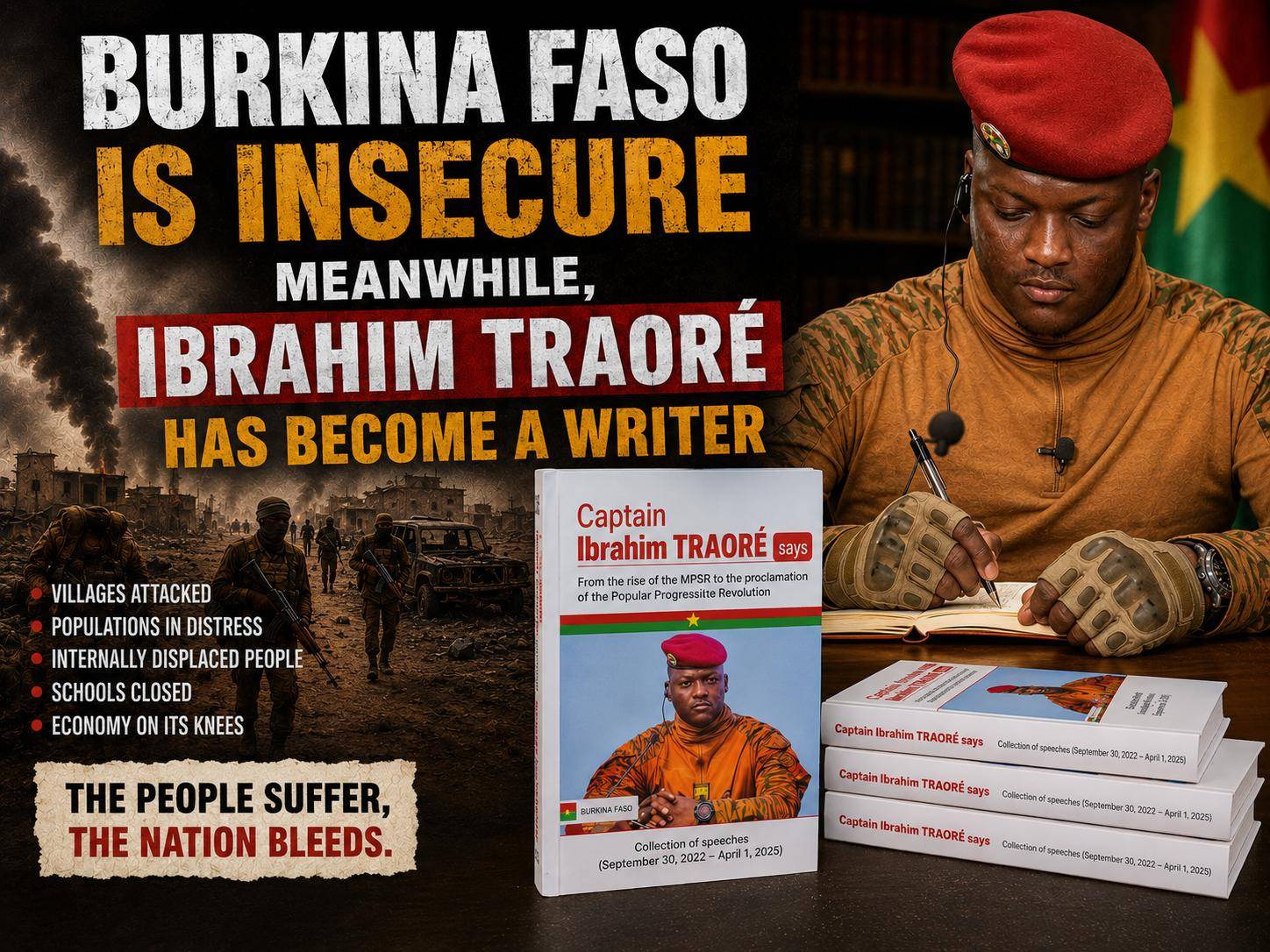
A stark and unsettling contrast has emerged. On one side, daily accounts detail relentless terrorist assaults, besieged communities, and a burgeoning population of internally displaced persons who, facing dire circumstances, yearn for the restoration of peace and territorial integrity. On the other, the presidential chambers are abuzz with the promotion of a publication perceived by many as either a propaganda piece or a collection of self-congratulatory narratives.
For a significant segment of the Burkinabè populace, the assessment is now undeniably bitter: the transitional presidency seems to have devolved into an apparatus primarily concerned with political communication.
The chasm between rhetoric and military realities
The recent release of a book, either attributed to or dedicated to the figure of Captain Ibrahim Traoré, has generated both confusion and profound exasperation. From the bustling streets of Ouagadougou to the country’s most remote provinces, the message from citizens resonates with crystal clarity: a book is not what the people desire; security is their paramount demand.
The decision to fund, publish, and promote state-sanctioned literature at a time when the Defense and Security Forces (FDS) and the Volunteers for the Homeland (VDP) often experience critical logistical shortages on the ground represents an alarming detachment from reality. Printed pages cannot extinguish a raging inferno, nor can cover slogans safeguard human lives.
« The people do not need to be told a story; they need their homeland restored. » — An anonymous civil society activist.
A breach of the moral compact
Upon assuming power, Captain Ibrahim Traoré established an implicit moral compact with the nation: to re-establish territorial integrity and bring peace where his predecessors had faltered. The substantial trust initially placed in him was predicated solely on this pledge of military effectiveness.
Today, it is evident that rhetorical pronouncements have supplanted tactical necessities. By directing the state apparatus towards the cultivation of a personality cult and intensive political marketing, the regime is increasingly drawing the ire of an exhausted population. For many, the threshold of tolerance has been surpassed. Discontent is escalating, and the popular mandate is becoming uncompromising: if the primary mission of securing the nation cannot be fulfilled, it is time for the current leadership to relinquish its position.
The path forward for the transition
The incumbent government stands at a critical juncture. Continuing to manage the presidency as a public relations entity, to the detriment of the security front, will only exacerbate the growing estrangement from the populace.
Burkina Faso does not require publicists at its helm; it demands strategic commanders capable of restoring stability. Should Captain Traoré fail to immediately reorient the nation towards the singular, vital priority of security, history will record his tenure as one written in the ephemeral ink of illusion, while the country itself continued to burn.