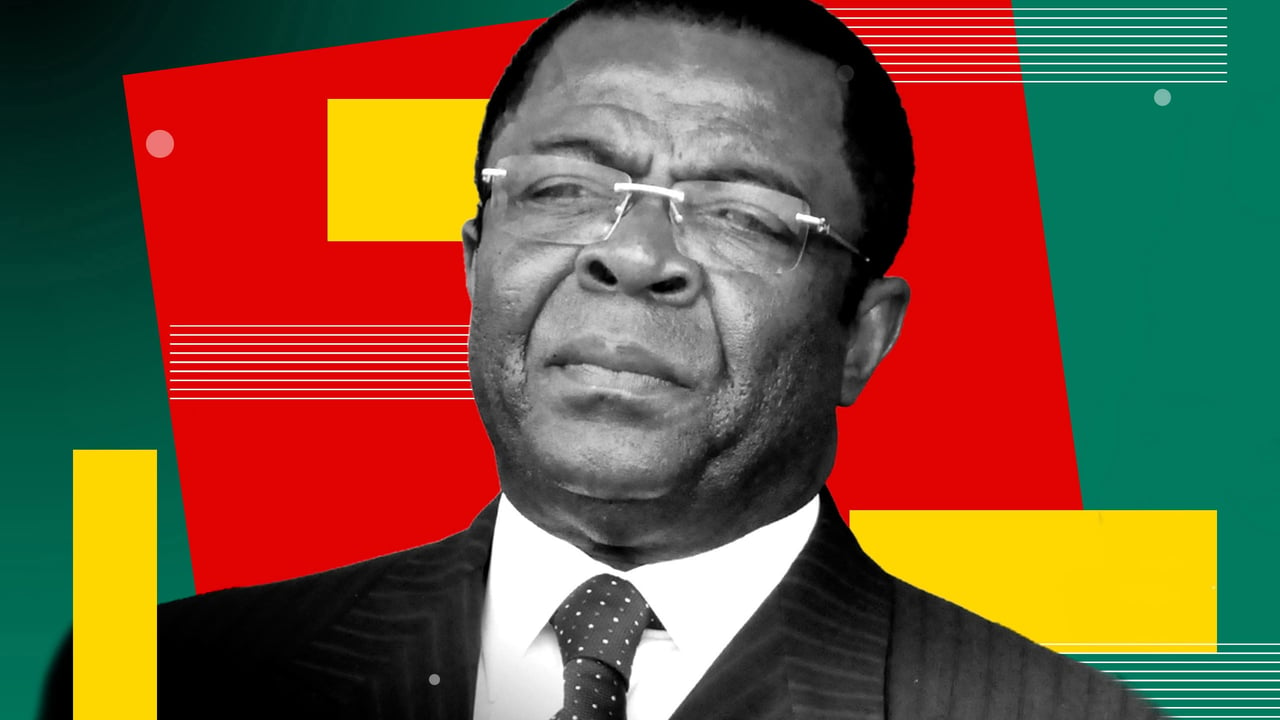
A once-powerful figure in Cameroon’s corridors of power now finds himself at the center of a dramatic reversal of fortune. Edgar Alain Mebe Ngo’o, long regarded as a pillar of the regime, has become the latest high-profile name to experience the sharp decline that has befallen many who dared challenge—or even share—authority under President Paul Biya’s decades-long rule.
From security strongman to political exile
The trajectory of Edgar Alain Mebe Ngo’o reads like a political thriller—one that has unfolded entirely within Cameroon’s real political landscape. Once a trusted security official and minister at the helm of national defense, his name was synonymous with order and authority. Yet today, his reputation lies in tatters, a casualty of a system that brooks no rivals, no matter how loyal they once were.
His story is not unique in Cameroon. Since Biya took office in 1982, the country’s political stage has been a revolving door for influential figures—men and women who rose to prominence only to be cast aside when their ambitions, or their perceived disloyalty, became too great a risk to the regime.
A generation of fallen elites
Mebe Ngo’o’s fall is part of a broader pattern. Over the years, Cameroon has seen a procession of once-dominant personalities stripped of their titles, their influence, and in many cases, their freedom. Titus Edzoa, Ephraïm Inoni, Jean-Marie Atangana Mebara, and Marafa Hamidou Yaya—all once key players in the inner circle—now share a common fate: political oblivion. Their stories serve as cautionary tales, warnings to those who might consider stepping out of line in a system where absolute loyalty is the only currency that matters.
Their downfalls are rarely about public accountability. Instead, they reflect the inner workings of a closed political environment where power is concentrated in the hands of a single leader, and where dissent—even passive—is met with swift and merciless retribution.
For Edgar Alain Mebe Ngo’o, the transition from power to irrelevance was as sudden as it was brutal. One day, he was a central figure in Cameroon’s security apparatus; the next, he was on the outside, his name dragged through the mud of political maneuvering and palace intrigue.
The unspoken rules of Cameroon’s political game
Cameroon’s political landscape operates under a set of unwritten rules that few dare to challenge. At the top sits President Paul Biya, now in his fifth decade in power, his grip on the presidency unshaken by time or opposition. Those who serve under him know the risks: one misstep, one hint of ambition beyond their assigned role, and their careers—and sometimes their freedom—can vanish overnight.
Mebe Ngo’o’s story is a stark reminder of these rules. His rise was meteoric, his fall equally so. In a system where power is not shared but doled out sparingly, loyalty is rewarded, but only up to a point. Cross that line, and the consequences are swift and irreversible.
The cost of ambition in Cameroon
The lesson is clear: in Cameroon, political ambition is a high-stakes gamble. Those who play the game according to the rules may rise high, but they do so at the risk of becoming expendable. Mebe Ngo’o’s downfall is not just his own—it is a reflection of the broader realities that govern power in Cameroon today.
As long as Paul Biya remains in control, the cycle of rise and fall will continue. New faces will take the stage, only to be replaced by others when their time comes. For now, Edgar Alain Mebe Ngo’o stands as the latest example of a political truth in Cameroon: power is temporary, and its price is absolute obedience.