Government breaks silence after 56 days of presidential absence
The Cameroonian government has finally addressed weeks of speculation by confirming that President Paul Biya is alive and set to return to the country soon.
This unprecedented 56-day absence had sparked widespread concern, with citizens and opposition figures alike questioning the president’s whereabouts and health.
An official statement ends weeks of uncertainty
On August 2, 2026, Communications Minister René Emmanuel Sadi made the long-awaited announcement during a national broadcast. With firm conviction, he declared, “The President is alive. There is no power vacuum.”
Yet, despite this official confirmation, lingering doubts remain about the president’s return timeline and the circumstances surrounding his extended stay abroad.
Who is Paul Biya? A lifetime in power at 93
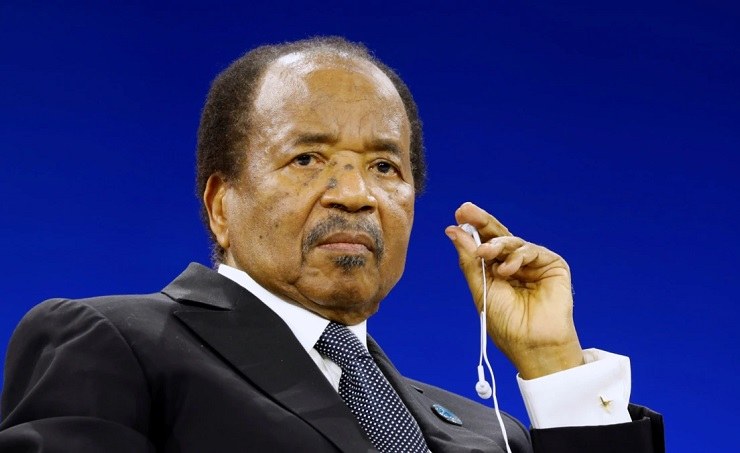
Paul Biya, Africa’s longest-serving leader, has governed Cameroon since 1982. At 93 years old, his age and prolonged absence have intensified debates about his ability to lead and the future of the country.
Initially described as a “short private trip to Europe”, his departure on June 7, 2026, has stretched far beyond expectations, setting a new record for his foreign stays.
A media blackout fuels speculation
Official communications during his absence were minimal—limited to military decrees and routine diplomatic messages. No public appearances or health updates were provided, leaving a void that opposition figures quickly filled with their own interpretations.
“Fifty days is too long!” declared the newspaper Le Messager in a scathing editorial, criticizing the government’s lack of transparency and the president’s extended absence from the national stage.
Political tensions rise as opposition demands answers
Opposition leaders have not held back in their criticism. Jean-Michel Nintcheu, a prominent opposition deputy, formally requested the Constitutional Council to declare a power vacuum, citing the president’s prolonged absence.
The opposition party UDC argued that “a republic cannot be built on silence and assumptions.” They also highlighted the absence of a vice president—a position left vacant since a constitutional reform in April 2026.
Government responds with constitutional reassurances
In an exclusive interview, Minister Sadi addressed the growing concerns. He dismissed claims of a power vacuum, stating, “Those calling for a declaration of vacancy should review the constitution more carefully.”
He reiterated Biya’s constitutional status: “President Paul Biya is alive. He has not resigned.”
When questioned about the return date, Sadi remained vague but offered a guarded promise: “I can assure you he will return soon.”
Is this absence legally unprecedented?
Over his 43 years in power, Paul Biya has spent nearly seven years abroad—far longer than any other African head of state. His current trip has already surpassed his previous record of 42 days in 2024.
Rumors suggest part of the president’s inner circle, including family members, may be in Switzerland, though no official confirmation has been provided.
The constitutional debate
The opposition’s call for action has reignited discussions about the constitution’s limitations. While some argue that a 45-day absence should trigger constitutional review, the Cameroonian Constitution does not specify a time limit for presidential absences abroad.
The government has exploited this legal gray area, while critics warn of a dangerous institutional void.
Public reaction: relief mixed with skepticism
The nation remains divided. Social media is abuzz with reactions ranging from relief at the president’s survival to frustration over the lack of clarity.
“Paul Biya is the luckiest president in the world,” wrote one user. “He can do as he pleases, whenever he wants, with no consequences.”
Another commented, “Fifty days away—another record. What’s really going on with his health?”
While the government’s announcement brings some closure, it has not dispelled all doubts. The lack of a precise return date or health details could reignite demands for greater transparency.
The unspoken question: What comes after Biya?
Beyond the immediate crisis, the prolonged absence has forced the country to confront a looming reality: the eventual end of Biya’s rule. At 93, his health and longevity are no longer guarantees.
The UDC has called for an “institutional framework to regulate extended presidential absences.” Such a demand, framed as a push for transparency, subtly raises the issue of succession in a regime built around one man.
Unanswered questions linger
- Where is Paul Biya? Reports suggest Switzerland, but no official confirmation exists.
- Why the extended stay? Described as “private,” the duration and nature of his trip remain unclear.
- When will he return? “Soon,” says the government—but no exact date is given.
- What about his health? Only that he is “alive.”
Can the government’s statement restore confidence?
The belated government response risks falling short. Coming after weeks of silence, it may not fully dispel the doubts it has allowed to fester.
Minister Sadi’s firm stance—reaffirming constitutional rules and promising a return—has drawn criticism for being too vague. In a system where power is deeply personalized, the absence of the president himself carries more weight than any minister’s words.
The road ahead: transparency or more questions?
Cameroon waits. The nation holds its breath, hoping the promise of Biya’s return will bring an end to two months of uncertainty. Yet, even if he returns, the deeper issue of governance in an aging autocracy remains unresolved.
As the UDC rightly pointed out, “A republic cannot thrive on silence and speculation.” A lesson the government may yet have to learn.