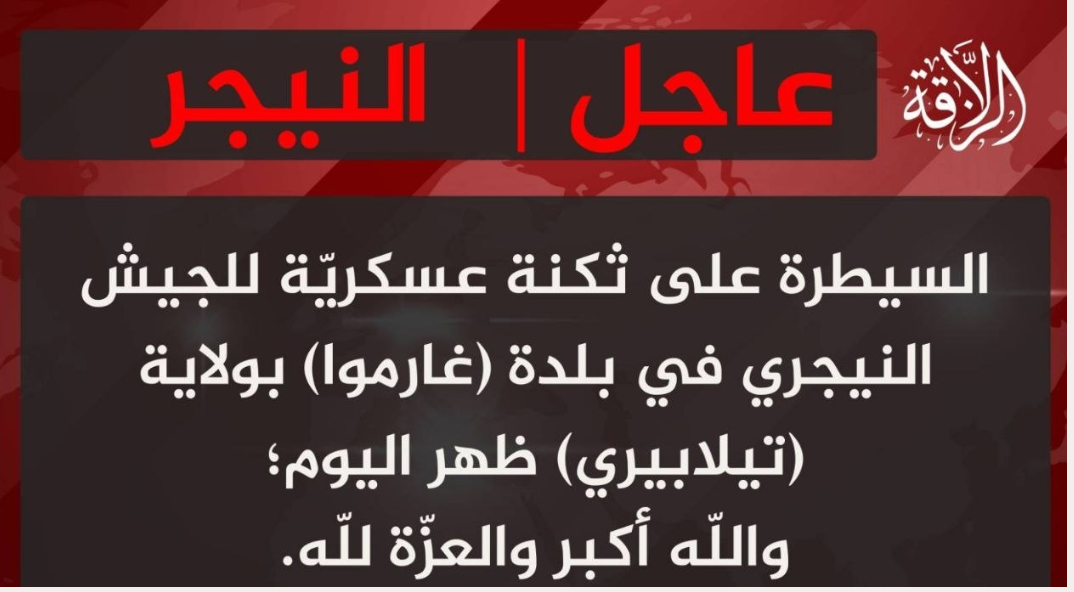
A brutal attack, attributed to the Group for the Support of Islam and Muslims (JNIM), targeted a Nigerien military engineering unit in Garbougna, within the Tillabéri region, on Thursday, May 14, 2026. The provisional casualty count from this exceptionally violent incident is tragically high, with at least 67 individuals, both military personnel and civilians, confirmed dead. The unit had been strategically deployed to this border area, near Mali, to undertake vital public infrastructure projects.
The Garbougna ambush: a massive, coordinated assault
Just after 5:00 AM on Thursday, chaos erupted in Garbougna, a locality nestled in the volatile “three borders” zone. Under the cover of pre-dawn darkness and achieving complete tactical surprise, dozens of heavily armed assailants, moving swiftly on motorcycles and in pickup trucks, stormed the encampment of the Nigerien Armed Forces (FAN) engineering unit.
Intelligence services have identified the attackers as elements of JNIM, an Al-Qaeda-affiliated group. They executed a meticulously coordinated assault, with heavy gunfire and explosions rapidly overwhelming the initial defensive lines. Despite a courageous and vigorous counter-response from the Nigerien soldiers present, the sheer numerical superiority and suddenness of the attack allowed the terrorists to overrun the site, transforming the area into a harrowing battlefield. This incident quickly became Niamey breaking news, sending shockwaves across the nation.
A dramatic human toll: soldiers and civilians alike
The provisional death toll, which continues to deeply distress the populace, stands at a minimum of 67 victims. The profound tragedy of this attack is further underscored by the diverse nature of those lost. Among the deceased are numerous military engineers, alongside a significant number of Nigerien civilians.
Reports from the ground indicate that most of the civilians killed were local laborers, equipment operators, and villagers who routinely collaborated with the army on community development projects. Many wounded, some in critical condition, were airlifted and transported by land to regional hospitals and medical facilities in Niamey. Search and rescue operations are still underway in the surrounding bush to locate any individuals who may be missing.
Sabotaging development: the strategy of terror
The targeted military unit was not engaged in a typical combat mission. Its deployment in Garbougna was specifically for civil engineering work, primarily to complete the construction of a strategic bridge. This crucial infrastructure was intended to open up the region, facilitate the free movement of goods and people, and revitalize the local economy, which has been severely hampered by insecurity.
By attacking the engineering corps, JNIM delivers a stark and cynical message: to impede, by all means necessary, the return of state authority and the stabilization of the Tillabéri region. For these armed groups, disrupting communication routes and destroying development infrastructure is a proven tactic designed to keep local populations under the oppressive shadow of terror and dependency. This act directly challenges Niger politics today, aiming to undermine stability and progress.
The three borders zone under intense pressure
This latest tragedy serves as a grim reminder of the extreme fragility of the security situation in the