
Dioura raid leaves Mali’s army reeling: 130 troops dead, 70 taken captive
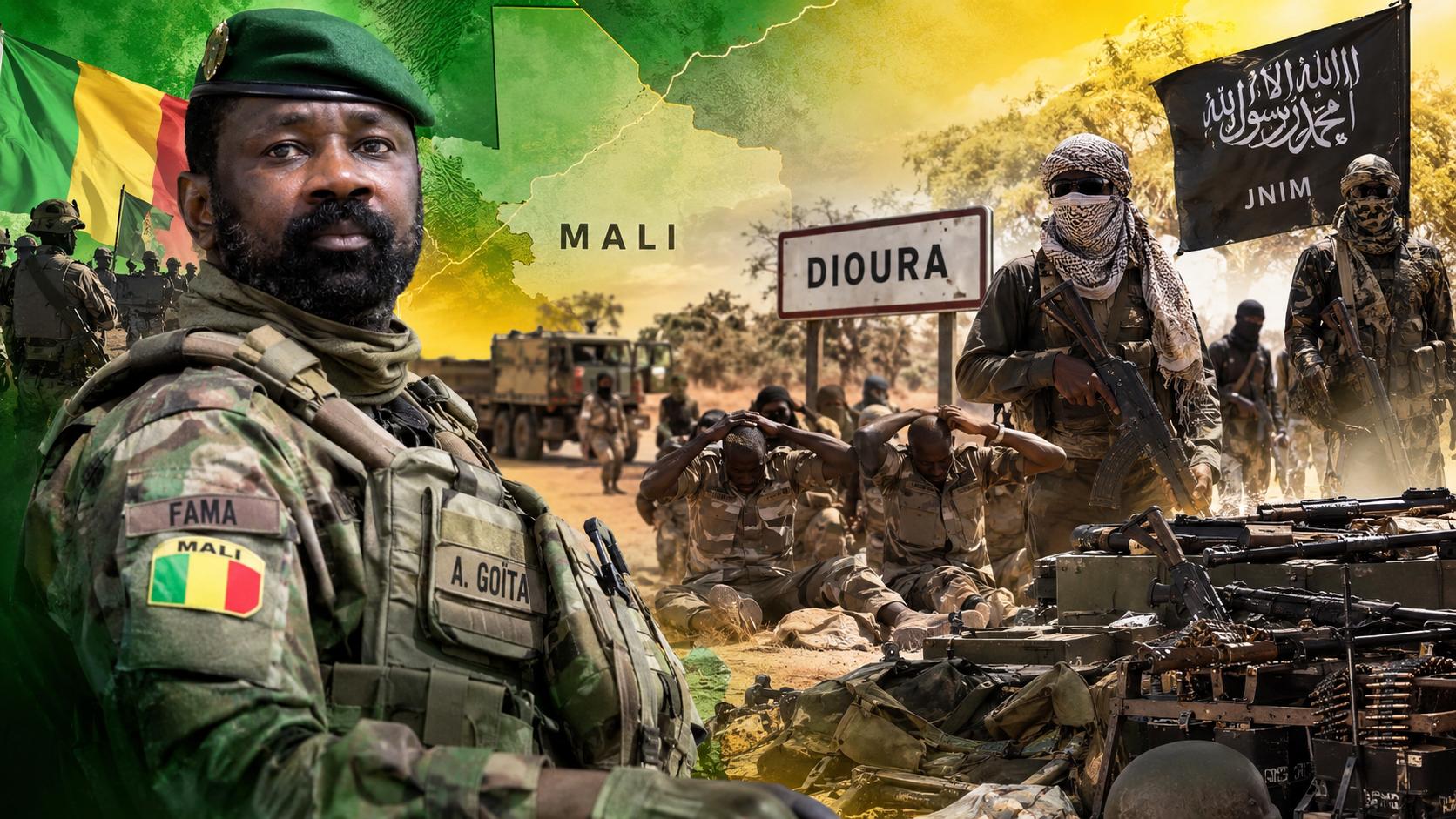
The pre-dawn assault on a military outpost in central Mali has become the deadliest single blow suffered by the national army in its long campaign against armed jihadist groups. Fighters from the Group for Support of Islam and Muslims, known as JNIM and aligned with Al-Qaeda, stormed the Dioura garrison in the Tenenkou district on Thursday, 10 September 2026, leaving a trail of destruction that local witnesses describe as unprecedented.
What happened at the Dioura military camp
The attack unfolded in the early hours, when the base was overrun after hours of heavy bombardment. According to accounts gathered from residents and local officials, the assailants seized the compound, looted weapons and ammunition stores, and withdrew with a large haul of military equipment and dozens of captives. Provisional figures put the death toll among Malian soldiers at close to 130, with roughly 70 more taken prisoner — a scale of loss that has stunned communities across the Mopti region.
Propaganda footage released by the militants shortly afterwards shows rows of young recruits, their faces etched with fear, alongside captured stockpiles of arms. For the families of those missing or killed, the silence from Bamako has only deepened the anguish.
A familiar pattern of official silence
As has become routine in the wake of such disasters, the Malian Armed Forces and the transitional presidency have issued little or no public statement. No detailed casualty figure has been acknowledged, and no senior official has addressed the fate of the captured soldiers. The gap between the official narrative and the reality on the ground has grown into a chasm that ordinary Malians can no longer ignore.
Why the army was caught off guard
The Dioura debacle exposes the hollowness of the security strategy championed by the military government of Colonel Assimi Goïta. Since the coup and the pivot towards Moscow, the junta promised a strengthened army and the swift defeat of insurgents with the help of Russian mercenaries. Instead, the withdrawal of international forces — including the UN mission and the French-led Barkhane operation — has left Malian units isolated, under-equipped and exposed.
Forward bases like Dioura now find themselves encircled by highly mobile armed groups that strike at will. The state’s ability to hold its own defensive lines is visibly eroding, and the triumphalist rhetoric from the capital rings increasingly hollow.
Mopti’s civilians bear the brunt
Beyond the military loss, it is the civilian population of the Mopti region that pays the heaviest price. In Dioura and surrounding villages, bewilderment has given way to resignation and despair.
“Every time the camp falls or the soldiers pull back, we know what comes next: reprisals, fear and complete abandonment,” a local resident told me, speaking on condition of anonymity. “They talk about sovereignty on television in Bamako, but here we have no protection, no state, no future.”
Traders report a total economic shutdown. Weekly markets have been cancelled, roads are cut by insurgents, and supplies of basic goods have become a matter of luck. After the attackers withdraw, fear of reprisals or post-attack abuses drives many villagers to flee towards larger towns, swelling the ranks of internally displaced people with little outside attention.
A region sliding into paralysis
The humanitarian fallout is compounded by the absence of any credible security presence. Aid agencies struggle to reach those in need, and local authorities are either absent or powerless. For communities that have endured years of violence, the latest attack confirms a grim conviction: they are on their own.
A political and military dead end
The Dioura tragedy is a stark warning for Mali’s transitional authorities. By prioritising communication warfare over the reality of field operations, the junta is boxing itself into a corner. Shrinking troop numbers, plummeting morale and the slow loss of territorial control in the centre and north raise an urgent question: how much longer can reclaimed sovereignty serve as a cover for the collapse of national security?
Without a fundamental rethink of alliances, military tactics and dialogue with local communities, Mali risks sinking deeper into a vicious cycle in which civilians and soldiers alike remain the first victims of political blindness.