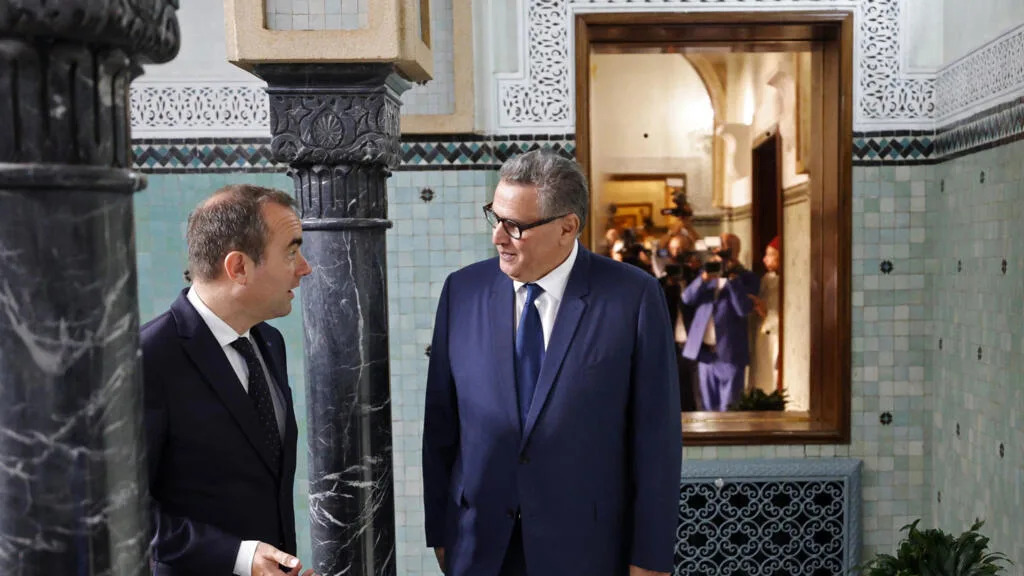
In a landmark move to address Morocco’s mounting water challenges, the European Union (EU) and key European development agencies have inked a €348 million funding agreement in Rabat, equivalent to nearly 3.7 billion Moroccan Dirhams. The historic deal, signed at the Ministry of Equipment and Water headquarters, brings together the EU and the ambassadors of France, Germany, and Italy in Morocco.
The three-year initiative builds on a precedent-setting agreement forged in November 2024 during a high-profile meeting in Rabat between King Mohammed VI of Morocco and the French President. This renewed commitment underscores the EU’s dedication to sustainable water management, particularly in the face of climate change pressures.
Spearheading this financial collaboration are prominent European development agencies, including the French Development Agency (AFD), Germany’s state-owned development bank KfW, and Italy’s Cassa Depositi e Prestiti (CDP). The AFD, serving as the project’s lead partner, has played a pivotal role in advancing this comprehensive water program, rallying contributions from multiple European stakeholders.
France’s newly appointed ambassador to Morocco, Philippe Lalliot, made his inaugural official appearance in the Kingdom by attending the signing ceremony. In his remarks, he highlighted France’s substantial €1 billion contribution to Morocco’s water sector to date, while commending the EU’s coordinated efforts in this critical domain.
According to EU Ambassador to Morocco Dimiter Tzantchev, this €348 million investment will prioritize rural communities, ensuring both access to clean drinking water and enhanced agricultural irrigation. “The EU places water security at the forefront of its priorities, especially amid escalating climate challenges,” stated the Bulgarian diplomat. “This funding reflects our commitment to sustainable solutions that protect both people and the environment.”
During the event, Morocco’s Minister of Equipment and Water, Nizar Baraka, outlined the Kingdom’s ambitious national water strategy, personally championed by King Mohammed VI. “Our strategy currently relies on 26 operational dams, enabling us to irrigate approximately 1.5 million hectares,” he explained. “Looking ahead, we aim for 60% of our drinking water supply to come from desalination plants in the near future.”
Minister Baraka emphasized the transformative power of water governance: “Those who control their water resources ultimately control their future.” He reassured attendees that the ministry would implement this support program with enhanced governance focused on measurable, efficient outcomes, expressing gratitude to the diplomatic community for their steadfast partnership.
Germany’s ambassador to Morocco took the opportunity to praise the robust Morocco-Germany cooperation, noting that through KfW, Germany is investing in a sector of vital strategic importance. This marks the final official engagement of the German diplomat in his capacity as ambassador to the Kingdom.
This substantial European funding empowers Morocco to intensify its fight against water stress, accelerating the execution of its national water strategy. From desalination plants to dam construction, from rural water access to agricultural irrigation, the initiative addresses far more than infrastructure—it directly strengthens the country’s water, food, and social security.