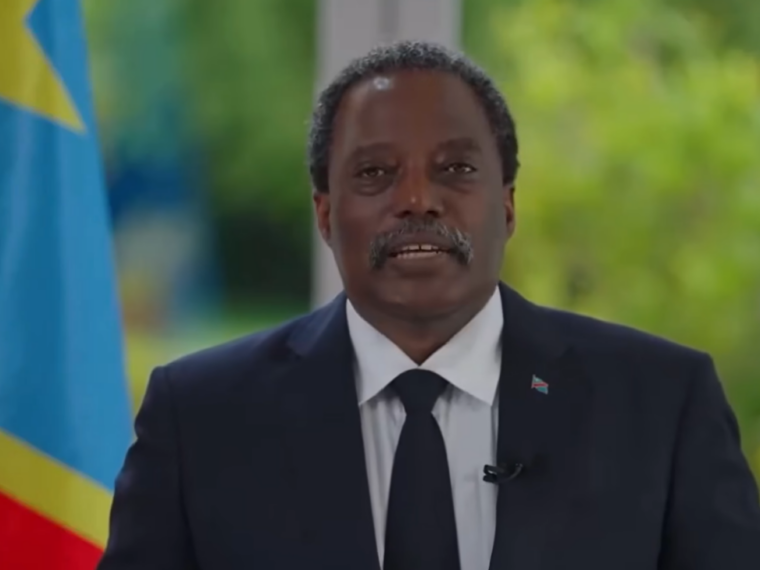
In a bold military shift, Joseph Kabila — former president of the Democratic Republic of Congo (DRC) from 2001 to 2019 — has officially taken the helm of the Front for the Refoundation of the Nation (FRN) as of October 12, 2026. The move consolidates the FRN as a political-military coalition uniting the M23 rebel group and the ex-Congo River Alliance, effectively transforming what was once a regional insurgency into a nationwide rebellion backed by Rwanda. This strategic realignment risks reigniting full-scale civil war in Congo, a nation already fractured by decades of instability and resource exploitation.
From rebellion leader to state architect
The Kabila family’s legacy in Congo traces back to 1996, when Laurent-Désiré Kabila, Joseph’s father, overthrew dictator Mobutu Sese Seko with direct military support from Rwanda’s Paul Kagame. Once installed as president in 1997, Laurent-Désiré attempted to break free from Rwandan influence, triggering the Second Congo War. He was assassinated in 2001, leaving Joseph Kabila, then just 29, to inherit the presidency. For nearly two decades, Joseph maintained a fragile balance between Congo’s warlords, foreign interests, and Kigali’s regional ambitions — until now.
By openly aligning with Rwandan-backed proxies he once fought against, Kabila is attempting to elevate what began as a communal conflict into a national movement aimed not just at control of eastern provinces, but at toppling President Félix Tshisekedi. His entry into the FRN provides the political credibility that the M23 rebel group has long lacked, shifting the nature of the rebellion from a foreign-sponsored insurgency to an internally driven power challenge.
Congo’s mineral wealth: the fuel of proxy wars
The Democratic Republic of Congo is a territorial giant spanning over 2.3 million square kilometers — nearly 90 times the size of Rwanda. Yet beneath its surface lies a paradox: while Kinshasa struggles to govern a sprawling and fragmented nation, the eastern provinces of North and South Kivu and Ituri sit atop some of the world’s most coveted minerals — gold, coltan, cobalt, zinc, and manganese. These resources power global technology supply chains, from smartphone batteries to electric vehicles, yet Congo sees little benefit from their extraction.
Observers point to a deliberate system of plunder. Despite international condemnation of ongoing violence, multinational corporations continue to source minerals through intermediaries linked to armed groups — including the M23. As one analyst put it, “The eastern Congo is a humanitarian wasteland, yet the mines are heavily guarded to keep production flowing. It’s a grotesque contradiction: we decry the horror, but the world still demands the minerals.” The FRN’s advance, now with Joseph Kabila at its head, threatens to deepen this cycle of extraction and exploitation.
Civilians bear the brunt of escalating violence
With nearly 150 armed groups active across eastern Congo — ranging from self-defense militias and criminal syndicates to foreign-backed jihadist factions like the ADF — the region is already one of the most violent on Earth. Since the 1990s, eastern Congo has consistently ranked among the worst places globally in terms of sexual violence, forced displacement, and mass killings. Civilians, especially women and children, remain primary targets in a conflict increasingly framed as a national power struggle rather than a localized insurgency.
Joseph Kabila’s formal integration into the FRN leadership does more than symbolize a shift in strategy — it signals a return to armed confrontation on a scale not seen in years. By lending his name and political legitimacy to the coalition, he is gambling with Congo’s fragile stability, risking a humanitarian catastrophe that would surpass the devastation of previous civil wars.
The regional shadow: Rwanda’s hidden hand in Congo
Since the late 1990s, Rwanda has consistently acted as both instigator and beneficiary of instability in eastern Congo. Through its support for proxy militias like the M23, Kigali has maintained indirect control over mineral-rich zones, circumventing international sanctions and sanctions regimes. The FRN’s formation under Kabila’s leadership represents a new chapter in this long-standing proxy war, one where the stakes have been raised from regional skirmishes to a potential national takeover.
Analysts warn that this alliance is not merely about ideology or ethnic solidarity — it is a calculated move to exploit Congo’s weak governance and tap into its vast mineral wealth. With Joseph Kabila at the helm, the FRN is no longer just a rebel force; it is becoming a political project with the potential to redraw the map of central Africa — at the cost of millions of lives.
What’s next for Congo?
The coming months will be decisive. Will the international community intervene to prevent a full-blown civil war? Can President Tshisekedi rally sufficient national support to counter the FRN’s advance? Or will Congo once again become a theater for foreign proxy wars, with its people paying the ultimate price?
One thing is certain: Joseph Kabila’s decision to lead the FRN has transformed a local rebellion into a crisis of statehood — one that could plunge the heart of Africa into decades of renewed bloodshed.