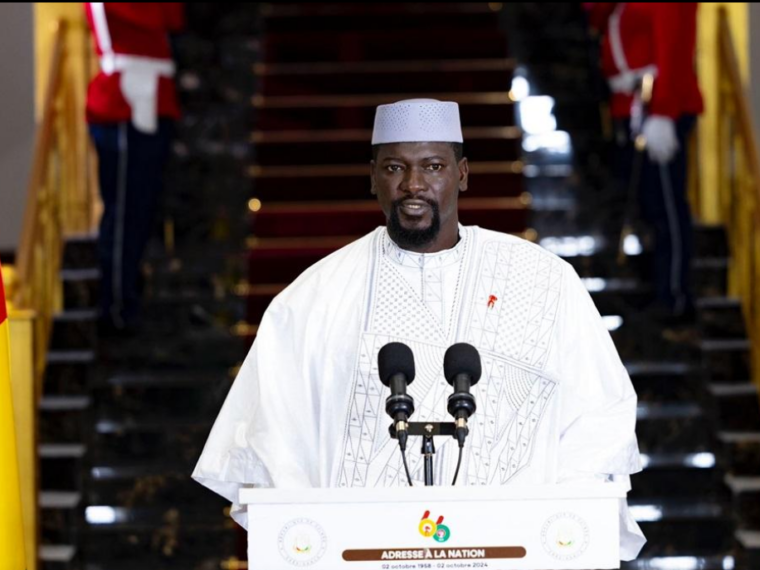
CONAKRY – In a decisive move to curb illegal resource extraction, Guinea has removed 22 public and security officials from their posts via presidential decree. Among those sanctioned is Colonel Fayimba Mara, prefect of Siguiri, a region at the heart of the country’s gold rush. The announcement, aired on national television, underscores the administration’s renewed commitment to enforcing mining regulations and protecting the environment.
Who were the officials, and what were their alleged roles?
The affected personnel include prefects, acting prefects, sub-prefects, and security officers across Siguiri’s administrative divisions. Key figures named in the decree include:
- Captain Mohamed Lamine Keita, acting prefect of Kintinian
- Captain Sory Camara, acting prefect of Siguirini
- Commandant Fodé Isaac Camara, sub-prefect of Niagassola
- Lieutenant-Colonel Pépé Doualamou, sub-prefect of Bankon
- Naman Kourouma, sub-prefect of Kiniébakoura
- Abou Kanté, sub-prefect of Norassoba
- Richard Yaradouno, sub-prefect of Naboun
These officials stand accused of facilitating illegal gold panning and enabling environmental degradation through unregulated mining practices, which have led to soil erosion, water pollution, and ecological disruption in local communities.
Environmental fallout takes center stage
The decree does not target mining alone—it explicitly links the removals to the broader environmental crisis fueled by clandestine operations. Local ecosystems, particularly in gold-rich zones like Siguiri, have suffered severe damage, with reports of toxic runoff contaminating water supplies and farmland. The authorities emphasize that public servants are duty-bound to prevent such harm.
Environmental advocates warn that the illegal clearing of forests for mining pits and the indiscriminate use of mercury in extraction are inflicting long-term damage on Guinea’s natural heritage. The removal of these officials signals an attempt to restore regulatory oversight and hold leaders accountable for inaction.
A sweeping inter-ministerial response
The presidential directive spans multiple government sectors, assigning implementation duties to:
- Ministry of Territorial Administration and Decentralization
- Ministry of National Defense
- Ministry of Security and Civil Protection
- Ministry of Justice and Human Rights
- Ministry of Employment and Social Protection
- Ministry of Public Service Modernization
This coordinated approach reflects the gravity of the situation, aiming to rein in unlicensed mining, dismantle criminal networks, and ensure compliance with environmental safeguards.
Gold refinery inauguration: a leap toward economic transformation
The crackdown coincides with the inauguration of the Nimba Gold Refinery (NGR), the first of its kind in Guinea. Located in Conakry’s Cité de l’Air district, the facility marks a pivotal step in the country’s strategy to shift from raw material exports to value-added processing.
Attended by top government officials, diplomats, and industry partners, the ceremony highlighted the refinery’s role in boosting local job creation and economic resilience. By refining gold domestically, Guinea aims to enhance revenue streams and reduce reliance on foreign buyers, aligning with the broader Simandou 2040 industrialization agenda.
The road ahead: striking a balance between enforcement and development
While the dismissals send a strong message, the real test lies in sustained enforcement. Authorities must now:
- Deploy surveillance teams to monitor high-risk sites
- Crack down on trafficking networks supplying mercury and fuel to miners
- Restore damaged landscapes through reforestation and soil rehabilitation
- Protect artisanal miners who operate legally by offering alternatives to illicit practices
For communities in Siguiri and beyond, the stakes are high. The challenge is clear: turn gold extraction into a driver of sustainable growth without repeating the environmental mistakes of the past.