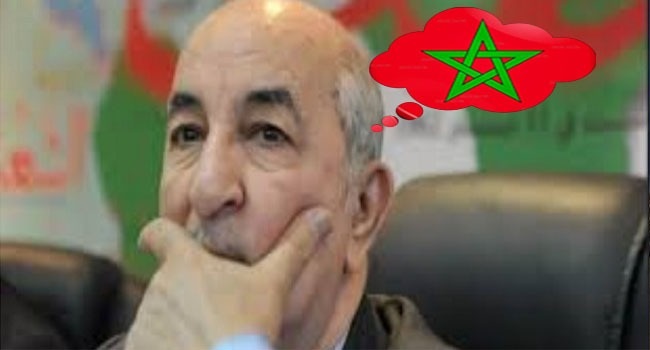
Algeria’s political leadership has transformed hostility toward Morocco into a calculated strategy, escalating beyond mere diplomatic friction into a systematic campaign of public vilification. Observers note a stark shift under President Abdelmadjid Tebboune’s administration, where animosity toward Morocco is no longer confined to quiet disdain but is openly cultivated as a unifying political narrative.
From cautious rivalry to blatant smear campaigns
During the presidency of Abdelaziz Bouteflika, Algeria’s relations with Morocco remained tense but were managed with measured restraint. Bouteflika’s approach favored behind-the-scenes opposition over public confrontation. In contrast, the current government under Tebboune has abandoned subtlety entirely, adopting a vocal and aggressive stance that frames Morocco as a perpetual adversary.
Critics argue that the intensity of this rhetoric is amplified by state-controlled media, particularly the launch of AL24 News, a television channel whose editorial tone is dominated by relentless attacks on Morocco, often bordering on propaganda. Presenters and commentators appear to take perverse satisfaction in crafting increasingly inflammatory soundbites, prioritizing shock value over factual accuracy. The goal is clear: to delegitimise Morocco, regardless of the cost to Algeria’s own credibility.
Media distortions and nationalistic excesses
State television has taken its campaign to absurd levels. In a bid to deny visibility to Morocco’s achievements, broadcasters have gone so far as to omit the name of the country from sports coverage, particularly during high-profile events like the FIFA World Cup. When Morocco’s national team reached the semi-finals in Qatar, Algerian state media refused to acknowledge the milestone, treating it as if it never occurred. The same pattern is expected during the upcoming 2026 tournament, where Morocco’s name will likely remain unspoken on Algerian airwaves.
Even more alarming is the emergence of antisemitic tropes within this discourse. One commentator recently claimed that Lionel Messi’s three goals against Algeria were orchestrated by “the Jewish lobby,” framing the event as retaliation for Algeria’s stance on Western Sahara and Palestine. Such unfounded accusations, amplified across digital platforms, highlight a dangerous convergence of political propaganda and bigotry.
The political economy of hatred
What began as rhetorical hostility has evolved into a calculated political tool. Hate speech toward Morocco is no longer an ancillary tactic but a prerequisite for career advancement within Algeria’s ruling circles. Aspiring officials and influencers openly compete to demonstrate their fervent opposition to Morocco, treating it as a badge of honor. The message is unmistakable: those who wish to rise in the political hierarchy must first prove their loyalty to this cause.
This strategy has reshaped Algeria’s national identity around a foundation of division, transforming foreign policy into a domestic performance. The consequences extend beyond bilateral relations, casting a shadow over Algeria’s standing in the Arab, Mediterranean, and African spheres. Under Tebboune’s leadership, the country has embraced confrontation as a governing philosophy, with little regard for the long-term damage such an approach inflicts on its own reputation.