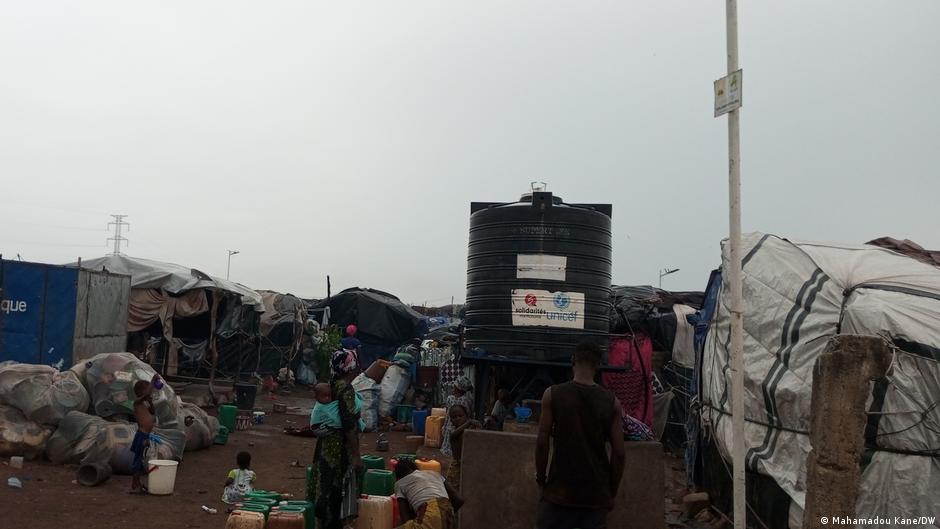
The livestock market in Bamako’s Faladiè district, which also served as a shelter for internally displaced persons, has been completely demolished. Over 300 families have been rendered homeless, adding to the deepening humanitarian crisis in Mali.
How demolition of Faladiè’s livestock market worsens displacement crisis
The demolition, carried out by municipal authorities, follows a September 2024 decree. After jihadist attacks on military and gendarmerie targets in Bamako, Malian officials ordered the relocation of several livestock markets, alleging they had been used by extremists. However, the Faladiè market—also known as garbal de Faladiè—was home to a makeshift camp housing internally displaced persons (IDPs), most of whom fled violence in central Mali.
Among them is Dado, a 40-year-old mother from Bankass who arrived in Bamako six years ago with her seven family members. “We thought we were safe here,” she said. Now, she and hundreds of others face an uncertain future after losing their only shelter.
Urgent humanitarian needs emerge
The destruction has left more than 2,000 people—mostly women and children—without food, clean water, or medical care. The displaced families had relied on humanitarian aid and local support, but the demolition has stripped them of even this fragile safety net.
“We used to collect scraps and sell them to livestock keepers,” explained one displaced resident. “Now, we have nothing—not water, not food. But a roof over our heads is the most urgent need.”
Planned relocation to Sanankoroba deemed inadequate
Officials claim the displaced should be relocated to Sanankoroba, a 35-kilometer drive from Bamako, where a government-built site was prepared. However, local cattle traders and displaced families describe the site as “non-functional.”
Dado pleads for a dignified solution: “We accept being moved, but please give us a proper place to live. We have no choice.”
Established in 2019, the informal IDP camp in Faladiè had received support from both Malian authorities and international humanitarian organizations. When contacted for comment, the National Directorate of Social Development stated it was “too early” to assess the situation.