Mali’s fragile stability threatened by coordinated jihadist-separatist assaults
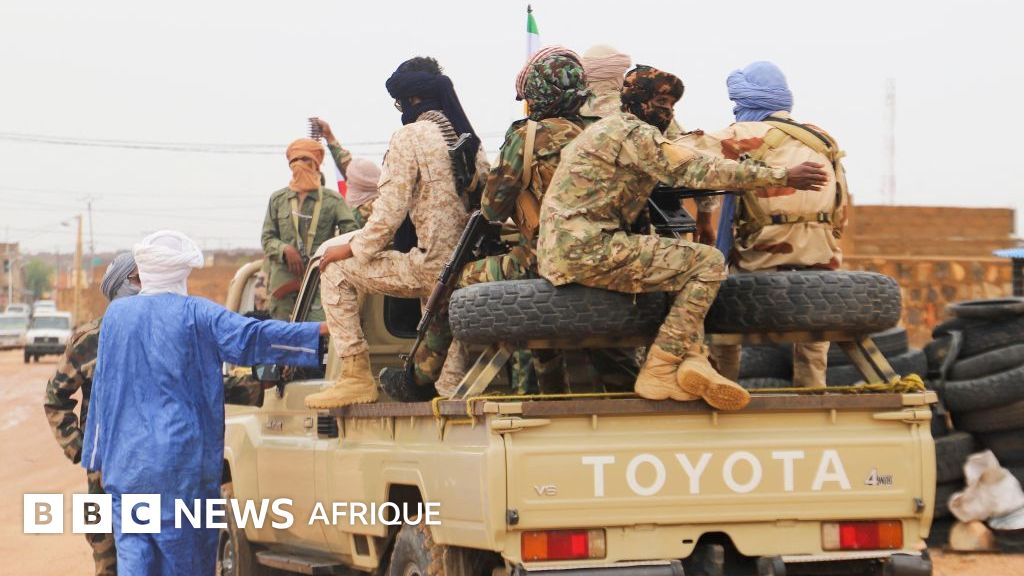
Recent synchronized attacks by the Group for the Support of Islam and Muslims (JNIM) and the Front for the Liberation of Azawad (FLA) have exposed critical vulnerabilities within Mali’s military junta, revealing an insurrection of unprecedented tactical coordination.
The offensive, which struck multiple cities from Bamako to Kidal, marks a significant escalation in the conflict. This unusual alliance between jihadist and separatist factions represents a strategic convergence, where long-standing ideological and territorial divides have been temporarily set aside to challenge a common adversary: the Malian regime.
Security analysts warn that this collaboration signals a dangerous shift in the Sahel’s conflict landscape. The merging of transnational jihadist ambitions with local separatist grievances creates a volatile dynamic, capable of reshaping power balances across the region.
Beyond immediate military repercussions, these coordinated strikes have intensified pressure on Bamako’s political cohesion. The assaults have also strained relations with key allies, including Russia and members of the Alliance of Sahel States (AES), raising concerns about potential strategic isolation.
From rivalry to uneasy cooperation
The JNIM, an Al-Qaeda affiliate operating across the Sahel, seeks to establish a transnational Islamic order through guerrilla warfare and terror tactics. Conversely, the FLA, a Tuareg separatist movement, demands independence or autonomy for the Azawad region, grounded in ethnic identity and historical resistance.
Historically, these groups were adversaries. The FLA viewed jihadist groups as threats to local sovereignty, while JNIM saw separatists as competitors for territorial control. Their current alliance is driven by tactical convenience rather than shared ideology.
The JNIM brings combat expertise, regional networks, and firepower, while the FLA contributes deep local knowledge, community ties, and logistical precision. This complementary relationship enables them to target state institutions with greater precision.
Emmanuel Odilon Koukoubou, a political scientist at the Civic Academy for Africa’s Future (CiAAF), notes that this alliance echoes earlier configurations seen in 2012–2013, when the National Movement for the Liberation of Azawad (MNLA) briefly allied with jihadist factions to expel Malian forces from the north. That alliance, however, collapsed when the jihadists turned on their erstwhile partners.
A coordinated blow to Bamako’s stability
The recent offensive has delivered a severe blow to Mali’s military leadership. The assassination of Defense Minister Sadio Camara, a key strategist and intellectual force within the junta, highlights the regime’s fragility. The attack on his residence in Kati—barely detected by intelligence services—underscores critical weaknesses in the junta’s security apparatus.
Alioune Tine, founder of the Dakar-based think tank Afrikajom Center and former UN independent expert on Mali, describes the situation as “unprecedented.” He emphasizes that the attack targeted not only a prominent figure but also the very heart of the regime’s command structure. The absence of presidential communication for 48 hours further fueled speculation about internal instability.
In response, Prime Minister Abdoulaye Maïga acknowledged the need to adapt to the “asymmetrical” nature of terrorist threats. He pledged to strengthen security measures and implement corrective actions following the April 25 attacks, though doubts persist about the junta’s capacity to restore confidence.
Regional spillover fears loom large
The crisis unfolds amid diplomatic strain, with Mali increasingly isolated from Western partners and relying on support from Russia and the AES. Analysts warn that the regime’s growing vulnerability could accelerate its decline, with potential ripple effects across West Africa.
Tine stresses that the stakes are regional: “A collapse in Mali could trigger a domino effect, just as the spread of jihadist violence did in the past.” He urges immediate action, calling for a collective defense strategy and regional governance reforms.
“Our destinies are intertwined,” he warns. “The priority now is a unified security response. Without it, there is no way forward.”