The recent commitment extracted from Moscow by Accra—purportedly to halt the recruitment of Ghanaian mercenaries in Ukraine—is no diplomatic breakthrough. It’s an admission of complicity in a large-scale human trafficking operation that has operated with chilling impunity. Beneath the polished handshakes of international summits lies a stark truth: hundreds of young Africans, lured by false promises of wealth and security, have been sent to die in the trenches of a war that has never been theirs. For Ghana alone, the human cost is already devastating—at least 62 citizens killed in combat and over a dozen missing. This state-sponsored mercenarism represents a new low in modern warfare, where the lives of the desperate are treated as expendable currency.
How Moscow turns poverty into a military weapon
The recruitment strategy employed by Russian-linked networks is a grotesque evolution of colonial-era conscription. Unlike the overt violence of historic forced enlistment, today’s approach weaponises despair. With no credible opportunities at home, African youth—students, fathers, and breadwinners—are targeted by unscrupulous recruiters backed by the Russian state. These intermediaries dangle the illusion of lucrative contracts, European passports, or quick cash, all while knowing the reality is far grimmer.
The targets are deployed to the most devastated frontlines in eastern Ukraine, where they serve as human shields to preserve Moscow’s regular forces. There is no pretence of choice, no ethical framework—just the cold calculation of cost versus benefit. In this transaction, the lives of Africa’s most vulnerable are purchased at a fraction of the price of a Russian soldier, turning poverty into a strategic asset for a foreign war machine.
The Kremlin’s silent complicity and its hollow promises
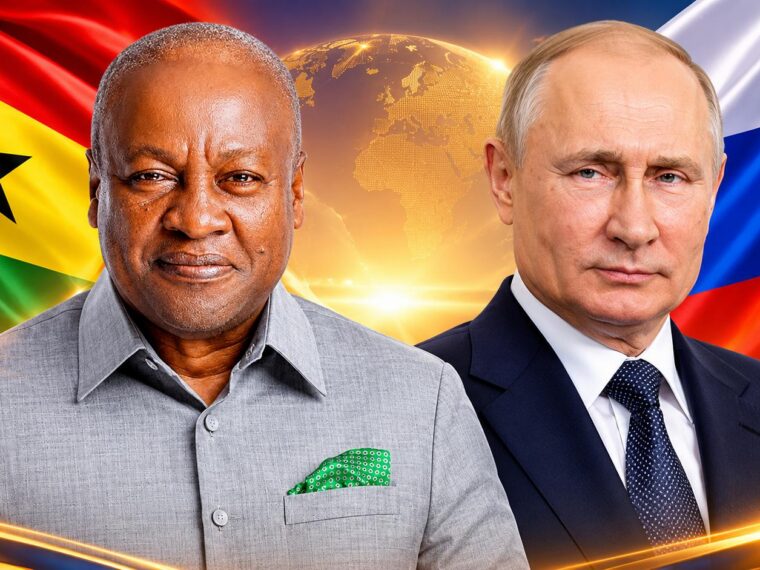
A Ghanaian leader negotiating directly with Vladimir Putin to halt the recruitment of citizens—and to repatriate their remains—exposes the raw inequality of modern geopolitics. For months, the Kremlin either turned a blind eye or actively facilitated this human hemorrhage, feeding its war machine with disposable assets. The sudden pledge to end recruitment isn’t an ethical awakening; it’s a tacit confession that this mercenary pipeline was always part of Russia’s strategic calculus.
The double betrayal: African youth caught between local failures and foreign exploitation
This crisis exposes a brutal paradox facing Africa’s next generation. Trapped between the economic suffocation of inept local regimes and the false promises of foreign powers, these young men are offered only two choices: endure oppression at home or become cannon fodder abroad. Until African governments prioritise real opportunities and dignity for their citizens, external actors will continue to exploit this well of desperation, turning human suffering into a resource for proxy wars. The mercenary trade will remain a permanent stain on international relations—a system built not on mutual respect, but on the commodification of human life.
The human cost: families shattered, futures erased
The fallout is most acute for the families left behind. Parents receive death notifications or, in the worst cases, no news at all. Wives and children struggle with the void left by a father who was sold a lie. The emotional and financial toll is immeasurable, all for a war that neither they nor their nations have any stake in. These aren’t soldiers; they are victims of a predatory system that preys on the weakest.
What’s next? Accountability or more of the same?
The international community’s response has been tepid at best. Sanctions, if any, are symbolic. Diplomatic protests are quickly forgotten. Meanwhile, recruiters continue to operate, undeterred by the growing tally of corpses. For this cycle to end, African nations must demand real accountability, and the global community must stop treating African lives as collateral in geopolitical games. Until then, the bloodshed will continue—silently, and systematically.