Sixty days after his disappearance, Nigerian journalist Moussa Kaka remains held in secret detention, with authorities providing no clear details about his arrest, detention conditions, or legal charges. Despite admissions from the military-led government that the journalist is alive, officials continue to withhold essential information, raising serious concerns about transparency and respect for fundamental rights.
Two months of silence: why the military regime’s opacity is under scrutiny
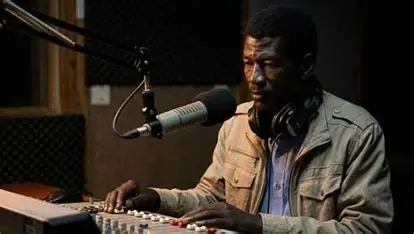
On August 31, 2026, Moussa Kaka, director-general of Radio Télévision Saraounia (RTS) and former RFI correspondent, left his media office in Niamey just before 7 PM. He never reached home. His vehicle vanished from public view, and for weeks, his family, colleagues, and associates received no reliable updates about his fate.
The timing of his disappearance adds to the mystery. Two days prior, a military mutiny had disrupted strategic sites in Niamey, triggering arrests within the armed forces. While no direct link has been established, the proximity of events has fuelled speculation about possible connections between the mutiny and Kaka’s detention.
Government admits custody but refuses transparency
After weeks of silence, the Nigerien government made its first public statement on September 25, during the country’s Universal Periodic Review at the UN Human Rights Council in Geneva. Justice Minister Alio Daouda confirmed that Moussa Kaka was in detention. On October 6, he reiterated to Reporters Without Borders that the journalist was alive and in state custody.
Yet this admission did little to clarify his situation. Despite official recognition of his detention, authorities have failed to disclose:
Where Kaka is being held
The legal basis for his detention
Whether he has been formally charged
Whether he has had access to legal counsel or family visits
The specific allegations against him
While coup leader General Abdourahamane Tiani may not have directly ordered Kaka’s arrest, he bears political responsibility for the actions of the state apparatus under his command. The prolonged refusal to disclose basic information about a detainee calls into question the regime’s commitment to accountability and the rule of law.
Longtime journalist targeted again amid political tensions
Moussa Kaka is not a newcomer to scrutiny. After decades reporting on Niger’s political and security landscape including a role as an RFI correspondent he faced arrest in 2007 under President Mamadou Tandja. He spent 379 days in prison before being released in October 2008 following national and international pressure.
Now, under the military government that seized power in 2023, Kaka finds himself detained once more. His case reflects a broader pattern of restricted press freedom and state intimidation under Tiani’s rule, despite promises to restore stability.
The legal obligations Niger has failed to meet
Since ratifying the International Convention for the Protection of All Persons from Enforced Disappearance in 2015, Niger has committed to prohibiting secret detention and ensuring transparency in all cases of deprivation of liberty. Article 17 of the Convention explicitly prohibits holding individuals without public disclosure of their location or status.
International rights groups have not remained silent. Reporters Without Borders has filed a complaint with UN mechanisms for enforced disappearances, demanding immediate clarification of Kaka’s whereabouts. Human Rights Watch has called on Niamey to disclose the detention site, ensure his safety, and release him unless credible charges are brought.
Yet so far, the government has produced no verifiable evidence or justification for his continued detention.
Where does sovereignty end and secrecy begin?
In a country that has repeatedly asserted its recovery of national sovereignty following years of instability, Kaka’s secret detention raises a critical question: Can sovereignty justify the suppression of transparency when it comes to the rights and freedoms of citizens?
International law is clear: a state acknowledging custody of a person must provide verifiable information about their location and legal status. Without this, detention becomes arbitrary, and the state undermines its own legitimacy.
The regime of General Tiani has twice the time required to produce answers. After 60 days, the public deserves clarity. It is time for Niger’s military leadership to end the secrecy, reveal where Moussa Kaka is being held, state the charges against him if any exist, and allow immediate access for his family and legal representatives. Anything short of this will only deepen concerns about the respect for justice and human dignity in the country.
By Thomas Nkoulou — Journalist