Northern Niger: chronic power cuts and water scarcity define daily life under Tiani
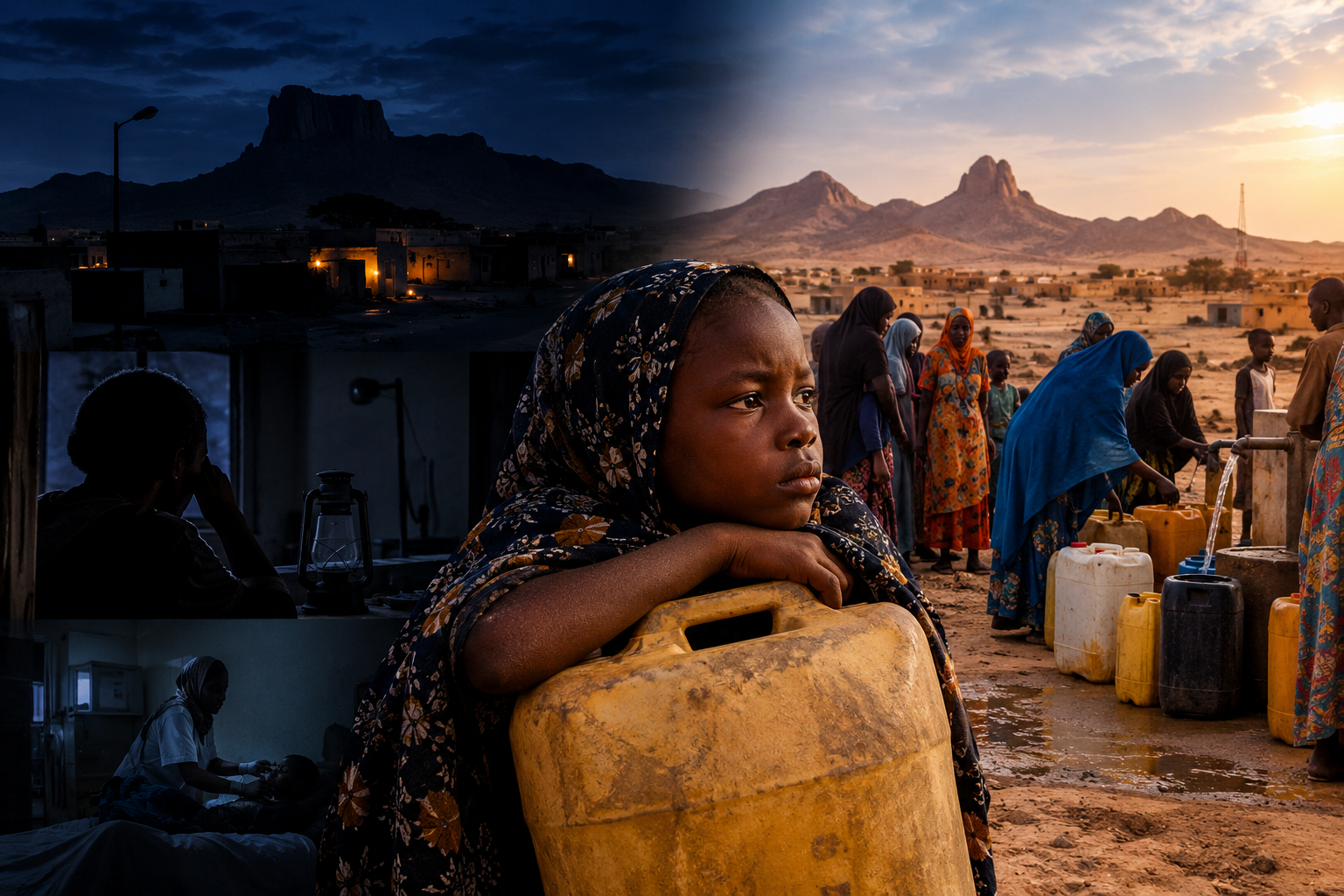
Agadez region struggles with prolonged electricity and water shortages
In the northern reaches of Niger, the daily reality for many communities extends far beyond official statements or announcements of new energy capacity. For two months and counting, residents in several localities have been grappling with the persistent absence of two fundamental necessities: water and electricity.
For an extended period, the energy situation in the Agadez region has remained particularly strained. Agadez, Arlit, and Tchirozérine have experienced repeated disruptions to their electricity supply. In May, regional authorities themselves acknowledged the existence of disturbances in both electricity and water provision, dispatching officials to the national electricity company and the national water utility to assess the situation.
Entire towns plunged into darkness
The issue is no longer a matter of occasional outages. In July, repeated load shedding was still being reported in Arlit, to the point of disrupting the operations of health services. Local authorities had to visit the health district to evaluate the consequences of these cuts on medical care.
In Agadez, Arlit, and Tchirozérine, the national electricity company had also announced load shedding linked to maintenance work on infrastructure at the SONICHAR coal-fired power plant.
For residents, however, a technical explanation does not alter the reality of daily life: when the power disappears, homes, businesses, and certain essential services are plunged into darkness.
In some more isolated localities, inhabitants even report much longer periods without electricity, stretching to several weeks. These accounts warrant verification locality by locality, but they convey the sense of abandonment expressed by certain populations.
When electricity fails, water becomes even harder to find
The energy problem exacerbates the water crisis. The two are intertwined: when pumping installations depend on electricity and that power is unavailable, water supply can in turn be affected.
In Agadez, officials from the national water utility acknowledged in May that available production was insufficient to cover the population’s needs. Production stood at approximately 19,500 cubic meters, while demand exceeded that capacity.
A few weeks later, the situation was still described as concerning. Information published in July reported a simultaneous shortage of drinking water, electricity, domestic gas, and fuel in the region’s main towns.
For some residents, the consequence is particularly harsh: when running water is unavailable, they must seek alternative sources. In areas where alternatives are limited, people may be forced to turn to ponds to meet their daily needs.
National figures do not tell the whole story
The Nigerien government nonetheless asserts its intention to strengthen electricity production. In July, the Minister of Energy announced a national installed capacity of 420 MW, with an effectively available capacity of 294 MW. However, the same presentation showed that the northern zone had only 16 MW of available power.
This is precisely where one of the central questions lies: increasing national capacity is not enough if, in remote areas, electricity does not reach households regularly.
The contrast is therefore striking between national announcements and the reality reported in certain northern towns.
Two basic needs, one common question
Water and electricity are not secondary services. They determine health, economic activity, education, the functioning of businesses, and simply living conditions.
The regime of General Abdourahamane Tiani can highlight investments, new energy capacities, or infrastructure projects. But on the ground, populations also judge results based on a much simpler reality: is there water in the tap? Is there electricity when night falls?
In several localities in northern Niger, these questions remain manifestly unanswered.
And when families must wait days or according to some accounts, weeks to regain normal electricity supply, while access to water remains insufficient, the promise of change collides with a reality that is difficult to conceal.
Northern Niger is not asking only for announcements. It is asking for water, light, and services that work.
By Agnès Mvogo — Territorial Security and State Policy Analyst