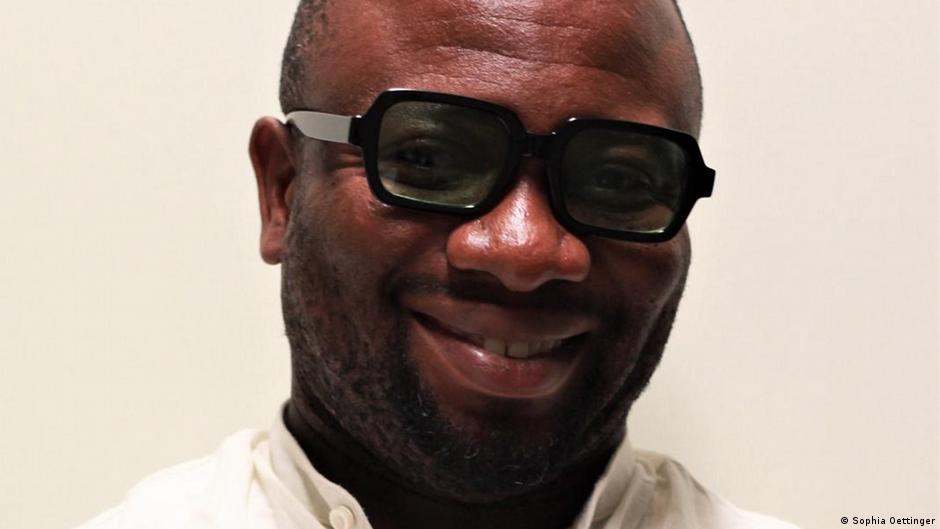
The persistent security turmoil in eastern Democratic Republic of the Congo (DRC) is no longer just a military concern—it has evolved into a calculated regional influence strategy. This is the assessment of Josaphat Musamba, a doctoral researcher at Belgium’s Ghent University, who argues that the chaos deliberately cultivated in eastern provinces aligns with Kigali’s long-term geostrategic goals.
Despite Kinshasa’s recent signing of a disarmament and demobilization protocol with the Rwandan-backed rebel group FDLR (Democratic Forces for the Liberation of Rwanda), Rwanda continues to reject the initiative, dismissing it as a tactical delay. Tensions between the two nations over the FDLR have simmered for decades, with Kigali insisting the group remains an existential threat due to its alleged ties to the 1994 Rwandan genocide. This narrative has been used to justify Rwanda’s sustained military presence in eastern DRC alongside the M23 rebel coalition (Allied Democratic Forces), a claim Kinshasa vehemently disputes.
The 2025 Washington agreements had outlined mutual commitments: Rwanda pledged troop withdrawals, while the DRC vowed to neutralize the FDLR. Yet today, the disconnect between diplomatic commitments and ground realities raises critical questions. Why does Kigali persistently block pathways to peace despite international pressure?
Analyzing Rwanda’s strategic calculus
Musamba contends that Rwanda’s refusal to engage in constructive dialogue reveals deeper motives. “Kigali has dismissed every attempt at persuasion or sensitization,” he states. “Its actions suggest bad faith—not a commitment to peace, but a preference for the status quo.” The researcher argues that by maintaining instability in eastern DRC, Rwanda weakens Congolese administrative structures, paving the way for indirect territorial control and influence.
Realities behind the FDLR’s presence in eastern DRC
Musamba challenges the narrative propagated by Kigali and M23 supporters, who depict the FDLR as an integral part of the DRC’s national armed forces. “This claim lacks factual basis,” he asserts. “The RDF and M23 have repeatedly failed to eliminate the FDLR from their claimed zones of control—despite overwhelming military superiority.” This failure, he suggests, is not accidental but intentional, serving Rwanda’s broader agenda of destabilization.
Can the FDLR be dismantled?
While Kigali insists the Kinshasa-FDLR agreement falls short of Washington’s expectations—failing to ensure the group’s full demobilization—Musamba offers a nuanced perspective. He acknowledges that the DRC’s approach prioritizes dialogue over confrontation, a pragmatic choice given the simultaneous threats posed by RDF and M23 forces. “The Congolese government cannot open additional fronts when facing existential threats on multiple fronts,” he explains. “But dialogue with the FDLR could, over time, neutralize its armed capabilities—though not its ideological resistance against the Rwandan regime.”
In Musamba’s view, the FDLR’s disappearance as an armed faction is plausible, but its ideological opposition to Kigali may persist. This raises a troubling question: Is Rwanda’s primary objective truly the eradication of the FDLR—or is it the perpetuation of conflict to serve a larger geopolitical vision?