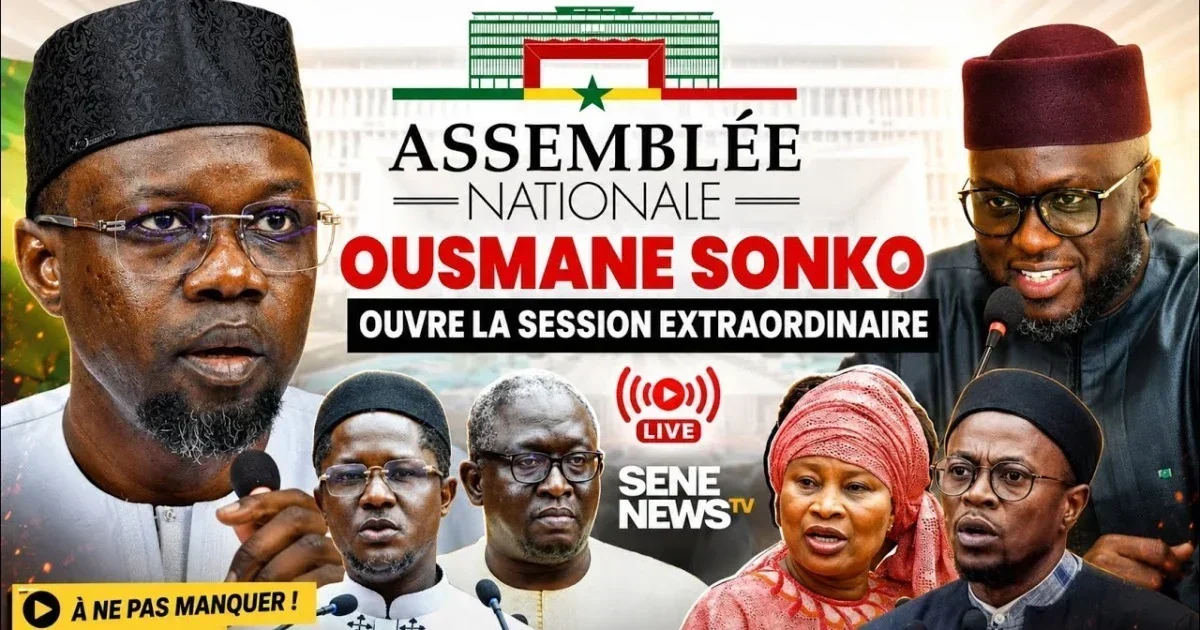
The National Assembly in Dakar has convened an extraordinary session, marking a pivotal moment in Senegal’s political landscape. At the heart of this gathering is a series of high-stakes investigations spearheaded by opposition leader Ousmane Sonko, signaling a shift in the balance of power within the legislative body.
This special session, unprecedented in its scope, follows weeks of escalating tensions between Sonko’s party and the ruling coalition. The move underscores a growing demand for transparency and accountability, with Sonko positioning himself as a vocal advocate for reform. His push for investigations targets key figures within the government, alleging misconduct and mismanagement in critical sectors.
Key investigations and legislative agendas
The extraordinary session has been framed around two primary objectives: addressing urgent legislative matters and launching multiple probes into alleged financial and administrative irregularities. Sonko’s team has outlined a roadmap for these investigations, focusing on areas such as public procurement, resource allocation, and governance practices.
Among the most scrutinized issues are contracts awarded to private entities without competitive bidding, suspected embezzlement of public funds, and the misuse of state resources. These investigations are expected to unfold over several weeks, with findings to be presented to the broader public and, if necessary, to judicial authorities.
A new era of parliamentary oversight
The convening of this session reflects a broader trend in Senegal’s political discourse, where opposition voices are increasingly challenging the status quo. Sonko’s leadership in these probes has galvanized support among civil society groups, who view the efforts as a step toward reclaiming democratic principles.
Analysts suggest that the outcome of these investigations could reshape the political narrative ahead of upcoming elections. The ruling party faces mounting pressure to address the concerns raised, while Sonko’s faction is leveraging this momentum to strengthen its credibility among voters.
Public reaction and political fallout
The announcement of the extraordinary session has elicited mixed reactions across Senegal. Supporters of Sonko see the move as a long-overdue crackdown on corruption, while critics argue that the investigations are politically motivated, aimed at destabilizing the government. Regardless of the perspective, the session has undeniably intensified the political climate in Dakar and beyond.
As the National Assembly reconvenes, all eyes are on the legislative body to see whether these investigations will lead to tangible reforms or further polarization. The stakes are high, with the potential to redefine governance in Senegal for years to come.