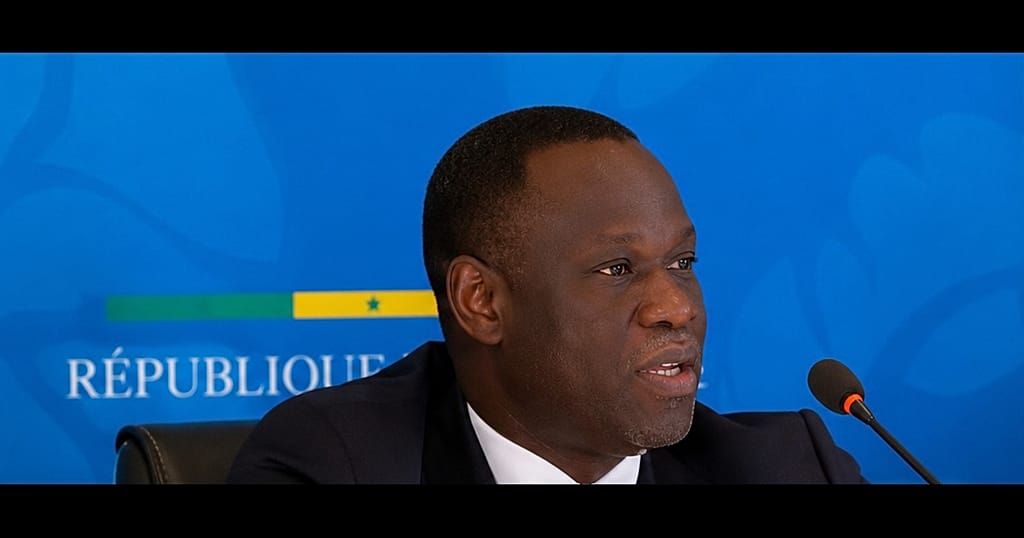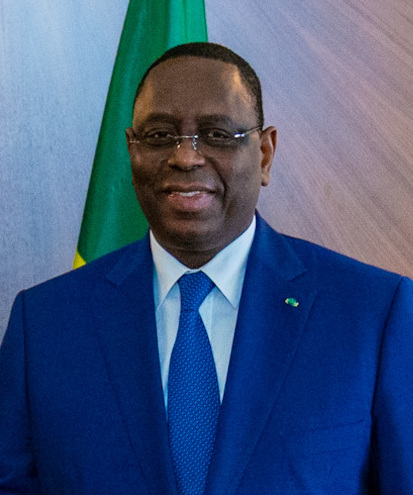
The Senegalese government has officially pledged its « full support » to Macky Sall’s candidacy for United Nations Secretary-General, just three days after Bassirou Diomaye Faye welcomed him at the Presidential Palace. While this endorsement is significant, its impact may not be decisive in securing the post.
Bassirou Diomaye Faye’s decision reflects a deliberate move beyond personal grievances. Three years ago, Faye was imprisoned in Cap Manuel Prison, prosecuted alongside Ousmane Sonko’s movement—a crackdown that unfolded under Macky Sall’s administration. His release in March 2024, just days before the election, came through a presidential pardon secured amid pre-electoral tensions. Sonko’s political resilience, which enabled Faye’s candidacy and eventual victory in the first round, became a defining narrative of the new government. This victory was framed as a break from Sall’s alleged authoritarian tendencies and a promise of systemic change.
Yet, the same Bassirou Diomaye Faye, who once denounced Sall’s rule, has now extended state resources to advance his predecessor’s international ambitions. The presidency emphasized this shift, framing it as a move « beyond political alternations »—a strategic choice prioritizing national and continental interests over personal disputes. Senegal’s diplomatic network has since been mobilized to champion Sall’s bid.
This strategic pivot was facilitated by a major political shift closer to home. The rupture between Bassirou Diomaye Faye and his former mentor, Ousmane Sonko—ousted as Prime Minister in May—removed a key obstacle. While Sonko’s hardline stance against Sall once constrained Faye’s options, his removal granted the president greater diplomatic flexibility. This allowed Faye to position himself as a statesman focused on Senegal’s interests rather than a party leader still nursing old wounds.
The move also aligns with Faye’s broader political strategy. With plans to launch his own party, he appears to be consolidating support from networks tied to both Macky Sall and former president Abdoulaye Wade. His goal? To build an electoral machine capable of securing his own re-election in 2029. During Sall’s brief visit to Dakar, the warmth of the reception underscored the elder statesman’s enduring influence—a factor Faye likely weighed carefully.
For Macky Sall, this endorsement is transformative. His candidacy, submitted in March by Burundi on behalf of the African Union’s rotating presidency, suffered from a critical flaw: the absence of support from Senegal, his home country. In high-stakes diplomacy, such neutrality—or worse, silence—is often interpreted as disapproval, weakening a candidate’s standing before the UN Security Council even begins its deliberations. The official backing from Dakar, coupled with Senegal’s diplomatic mobilization, removes this handicap, allowing Sall to present himself as a candidate fully endorsed by the nation he once led. This move also neutralizes a major argument used by his rivals.
However, this support alone does not guarantee victory. The race to succeed António Guterres follows an unspoken but widely respected continental rotation. This time, the turn belongs to Latin America—a region that hasn’t held the post since Javier Pérez de Cuéllar in 1991. Four of the five declared candidates hail from the region: Argentina’s Rafael Grossi, Chile’s Michelle Bachelet (dropped by her government on March 24), Costa Rica’s Rebeca Grynspan, and Ecuador’s María Fernanda Espinosa. This regional preference is deeply embedded in the UN General Assembly’s expectations.
Macky Sall remains the sole non-Latin American candidate—and the only former head of state in the race. The last African to lead the UN was Boutros Boutros-Ghali in the 1990s, but his lone candidacy does not override the entrenched regional custom. While Senegal’s backing strengthens his position, it does not eliminate the most formidable obstacle: the UN Security Council, where the five permanent members hold veto power. Sall’s fate will hinge on their approval, not on continental goodwill alone.
Sall’s diplomatic track record suggests he faces no declared adversaries in the Council. His ties to France—where he actively campaigned for the Élysée—and Russia remain strong. In 2022, Senegal, under his leadership, abstained from the UN General Assembly’s first resolution condemning Russia’s invasion of Ukraine. Days after securing Senegal’s endorsement, Sall met with Russian Foreign Minister Sergei Lavrov in Moscow, signaling his ongoing diplomatic outreach. The verdict on his candidacy is expected this autumn.