While Senegal’s Prime Minister Ousmane Sonko hosted a high-profile colloquium in Dakar on alternative economic strategies beyond traditional lenders, the Presidency of Bassirou Diomaye Faye issued a firm statement from Nairobi. It clarified that the Head of State is personally overseeing negotiations with the International Monetary Fund (IMF) to address a deepening public debt crisis uncovered in 2024.
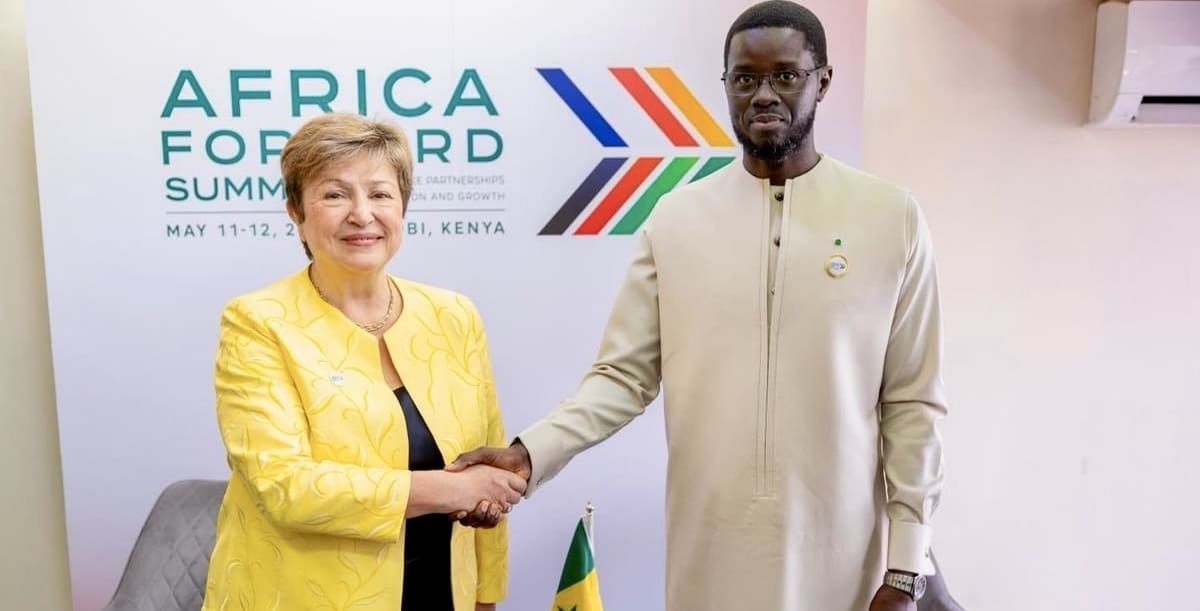
The revelation came as a clear signal of leadership and accountability. President Faye met with IMF Managing Director Kristalina Georgieva on the sidelines of the Africa Forward Summit in Nairobi. Their discussions centered on viable pathways to restructure Senegal’s debt obligations and stabilize the national economy. According to the official statement, both leaders agreed to continue talks to finalize a mutually beneficial support package. The communiqué emphasized that resolving this situation is a top national priority for the Faye administration, requiring sustained focus and strategic direction from the highest office.
During the summit, Faye and Georgieva also explored ways to mitigate the economic fallout from regional instability—particularly the surge in global energy prices triggered by conflicts in the Middle East. The additional strain on Senegal’s trade balance and fiscal health was highlighted as a key concern for the government’s economic team.
A year earlier, Prime Minister Sonko had publicly criticized the IMF’s push for debt restructuring, calling such demands ‘shameful’ and vowing to protect national interests. His stance reflected broader resistance to externally imposed austerity measures seen as compromising sovereignty.
The IMF had frozen a $1.8 billion standby arrangement in 2024 after audits revealed significant discrepancies in debt reporting by the previous administration. With public debt now exceeding 130% of GDP, the government has urgently requested a new financial assistance program to restore fiscal stability and avoid default.
In response, the IMF has revised downward its growth projections for Senegal and warned of a wider-than-expected current account deficit, underscoring the urgent need for coordinated policy action.