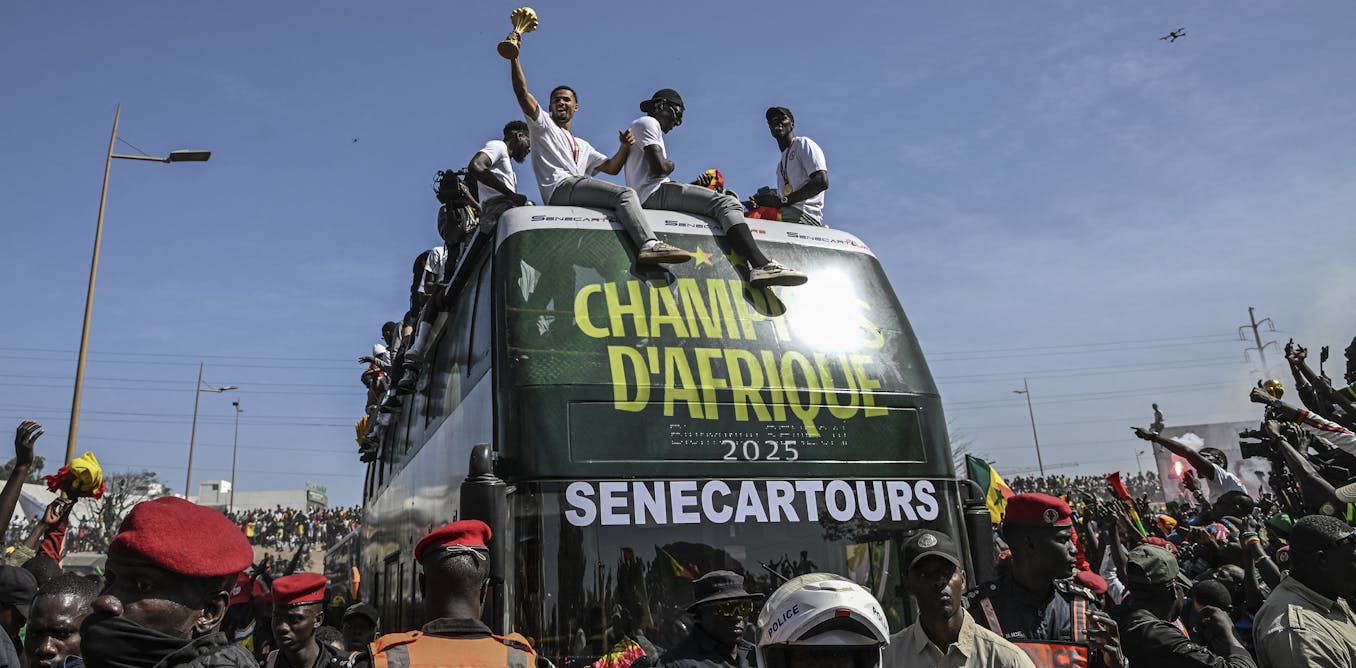
Two months following the conclusion of the 2025 Africa Cup of Nations final, which ended with a 1-0 scoreline on the pitch, the Appeals Jury of the Confederation of African Football (CAF) has issued a startling verdict. The committee decided to hand Sénégal a 3-0 technical defeat, effectively awarding the championship to Maroc. This administrative reversal was triggered by the Sénégalaise team’s decision to exit the field for approximately ten minutes during the match.
This ruling, anchored in Articles 82 and 84 of the tournament regulations, appears to clash with the match official’s original choice to restart and complete the game. To better understand this shift from a field-earned victory to a legal loss, sports law expert Abdoulaye Sakho shares his perspective on the implications of this decision.
What is the legal basis for this forfeiture?
The CAF Appeals Jury based its conclusion on Chapter 35 of the AFCON regulations, which specifically addresses team withdrawals. Articles 82 and 84 were the primary tools used to justify the move. By applying these rules, the Jury officially declared Sénégal as having forfeited the Maroc 2025 final, validating a 3-0 result for the Fédération Royale Marocaine de Football (FRMF).
The core of the issue lies in the legal classification of the event. While some observers might see it as a temporary interruption, the Jury defined it as a “withdrawal.” In the realm of sports law, such definitions are vital because they dictate the specific penalties applied. Much like a medical diagnosis determines a treatment plan, the legal label chosen here fundamentally altered the outcome of the competition.
Why was the referee’s decision to finish the match ignored?
It remains unclear exactly why the Appeals Jury chose to overlook the fact that the game was played to completion. As an independent body, the Jury exercised its sovereign authority to interpret the events, even if it meant disregarding a central fact: the match did not stay stopped. While the news has reached audiences from Dakar to those following Niamey breaking news, the legal logic remains a point of contention.
In this instance, the referee did not permanently end the game. Instead of declaring an abandonment when members of the Sénégal squad left the pitch, the official opted for a temporary suspension followed by a restart. This distinction is critical under Law 5 of the International Football Association Board (IFAB), which grants referees the discretionary power to stop or suspend matches due to outside interference or rule violations.
Crucially, there is no set timeframe—such as 10 or 15 minutes—that automatically forces a match to be abandoned. The referee is the ultimate authority on the field. According to standard football laws, a referee’s decisions regarding match facts, including the final result, are final and must be respected by all parties involved.
Is there a precedent for such a high-stakes reversal?
Such a scenario is virtually unheard of in the history of continental finals. The football world generally avoids altering results achieved on the grass. Rare exceptions exist, such as the 2018 World Cup qualifier between Afrique du Sud and Sénégal, which was replayed only after it was proven that the referee had been influenced by external corrupt forces.
Other famous interruptions in African football, like the 2019 Champions League final between Wydad and Espérance de Tunis, offer different contexts. In that case, the Marocaine players refused to continue after a VAR failure and a disallowed goal. The Court of Arbitration for Sport (CAS) eventually ruled that their refusal constituted an abandonment. However, the 2025 AFCON situation differs significantly because Sénégal actually returned to the field and finished the game.
Can Sénégal overturn this decision?
The Sénégalaise football authorities have already initiated an appeal. In the hierarchy of sports justice, once a body like the CAF Appeals Jury issues a final ruling, the case can be taken to the Court of Arbitration for Sport (CAS) in Switzerland. This process involves a formal declaration, the exchange of legal briefs, and a final hearing.
Reports suggest that the FSF has also requested a stay of execution. If granted, this would allow Sénégal to retain its title status until the CAS delivers a definitive verdict, which could take several months. This dispute has become a landmark case in sports law, raising questions about the interpretation of regulations, the finality of refereeing decisions, and the overall governance of sports bodies. As the story develops, it continues to be a major topic in Niger current affairs and across regional sports media.