In Kinshasa’s corridors of power, influence has never been wielded through speeches or decrees alone. It is forged in silence, behind closed doors, where the whispers of intelligence services carry more weight than any parliamentary vote. Since gaining independence in 1960, the Democratic Republic of the Congo has operated under a shadow system—one where secret agencies dictate the rhythm of governance, long before decisions ever reach the public stage.
The invisible hand shaping a nation
Congo’s intelligence apparatus is not merely a state tool; it is the state itself. When the national security service coughs, the presidential palace shudders. When the central intelligence bureau listens, ministers fall silent. When the national intelligence agency arrests, justice bows. This is not bureaucracy. It is power in its purest, most unyielding form.
The roots of this system stretch back to the Cold War era, when coups d’état and political betrayals became the currency of leadership. On June 30, 1960, independence was declared. By September 14, Mobutu had staged his first coup. Between these two dates lay a vacuum—one that the security services rushed to fill.
Officially, their mandate is to gather intelligence on political, economic, and social matters. But their true function is far more sinister:
- Protecting the leader—from rivals, from the military, even from the people.
- Monitoring everyone—opposition figures, cabinet members, religious leaders, students, and the diaspora abroad.
- Instilling fear—ensuring that no one dares challenge the status quo.
From 1960 to 1990, a single regime wore three faces, each embodied by a master spy who defined the grammar of fear:
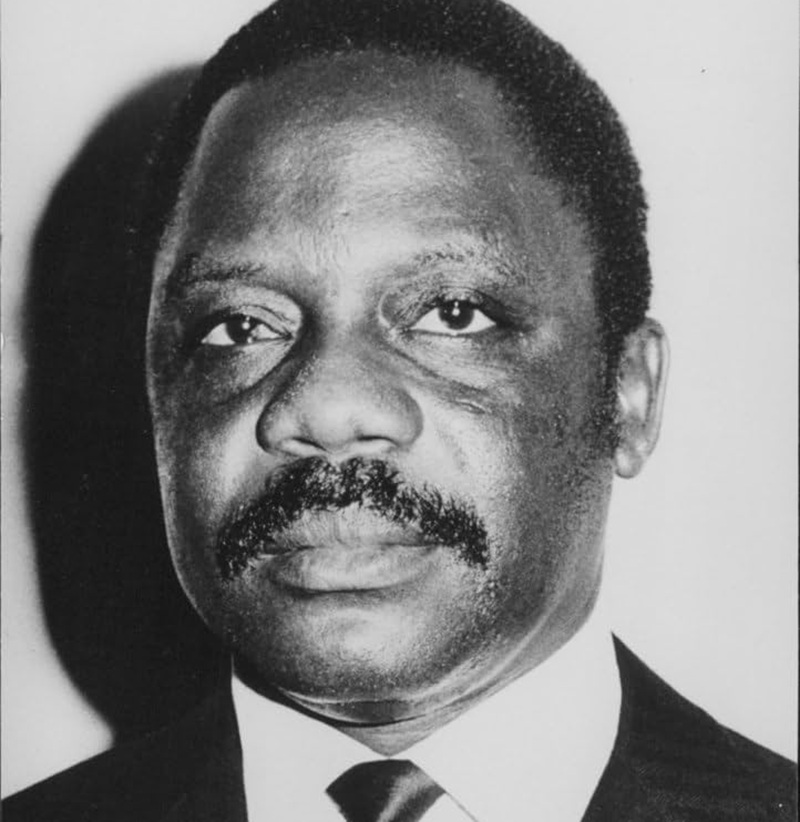
1. Victor Nendaka Bika: The shadow architect
An infirmary attendant turned spy chief, Nendaka transformed the colonial-era security service into a political weapon. His first act of defiance came in December 1961, when Minister of the Interior Christophe Gbenye attempted to dismiss him. Nendaka did not resign. He called Mobutu. By nightfall, armored troops surrounded the security headquarters. Gbenye was removed. The message was clear: the security service answered only to the president, not to ministers. The “Oufkir model” had been born.
2. Seti Yale: The architect of surveillance
Trained by Israel and the United States, Yale professionalized Congo’s intelligence. He built the National Documentation Center (CND), modeled after the KGB, introducing wiretapping, surveillance, and torture as standard procedures. Under his leadership, the CND became a state within a state—monitoring every ministry, every embassy, spreading its tendrils even into Europe.
3. Honoré Ngbanda: The terminator of dissent
Ngbanda industrialized repression. The CND evolved into a vast surveillance machine, with informants embedded in every corner of society. He exported fear beyond Congo’s borders, silencing critics in exile and manipulating elections. By the late 1980s, Ngbanda’s name alone evoked terror. When democracy finally reached Congo’s shores in 1990, it was Ngbanda who was dismissed—only to see the system mutate, not die.
The doctrine of control: divide to rule
Mobutu understood one principle above all: whoever controls intelligence controls power. To prevent any single spymaster from becoming too powerful, he created multiple agencies—the CND, the National Intelligence Service (SNIP), the Military Security Agency (SARM), and the Special Presidential Division (DSP)—and ensured they spied on one another. Yet no one ever held absolute control for long. Nendaka was removed in 1965. Yale was sidelined. Ngbanda was ousted in 1990.
When Mobutu’s regime collapsed in 1997, the intelligence system did not vanish. It adapted. The SNIP became the National Intelligence Agency (ANR). The acronyms changed, but the cells remained. The methods evolved, but the culture of fear endured.
The birth of a legend in October 1960
The Congo was barely three months old when Mobutu overthrew Patrice Lumumba. The new leader needed a man to secure the levers of power—someone unquestioning, ruthless, and invisible. He found Victor Nendaka Bika.
Nendaka reorganized the security service and renamed it the National Investigations Bureau (BIN). Its mission shifted from fighting crime to tracking and neutralizing Lumumbists. He joined Mobutu’s inner circle, the “Binza Group,” becoming a key architect of the shadow government that governed Congo long before its people had a voice.
Why was he dubbed the “Congolese Oufkir”? Because like Morocco’s feared intelligence chief, Nendaka established three enduring rules:
- The security service above the law: He used military force to block a minister’s attempt to dismiss him.
- Intelligence as political strategy: As a member of the Binza Group, he reshaped governments with the tacit approval of the CIA.
- Plausible deniability: When accused of involvement in Lumumba’s transfer to Katanga, Nendaka always pointed elsewhere—“It wasn’t me. It was D’Aspremont. It was Tshombe. It was Lahaye.”
In 1965, Mobutu sidelined Nendaka—too powerful, too unpredictable. But the machine he built lived on. Seti Yale and Honoré Ngbanda merely perfected it, turning Congo into a laboratory of repression whose echoes still reverberate today.
The ghost of Lumumba and the birth of fear
On January 16, 1961, a handwritten note sealed Patrice Lumumba’s fate. Victor Nendaka, as head of the security service, oversaw the transfer of Lumumba, Maurice Mpolo, and Joseph Okito to Elisabethville. The next night, they were executed.
Decades later, Nendaka stood before Belgium’s investigative commission, clutching the yellowed document that ordered the transfer. “Kasa-Vubu approved this move because he, like me, believed Lumumba would not be killed in Katanga,” he claimed. “In our culture, we don’t kill our adversaries. We settle disputes under the baobab tree.”
Historians disagree. Many suspect Nendaka played a direct role in orchestrating the operation. Some Congolese texts refer to him as “the bloodthirsty terminator” for his alleged involvement in the fatal transfer. Nendaka, until his death, insisted the commission was trying to frame him.
Whether guilty or not, the legend endures. The shadow of Lumumba’s death became the foundation of Congo’s intelligence state—a system where silence is power, and power is enforced in the dark.