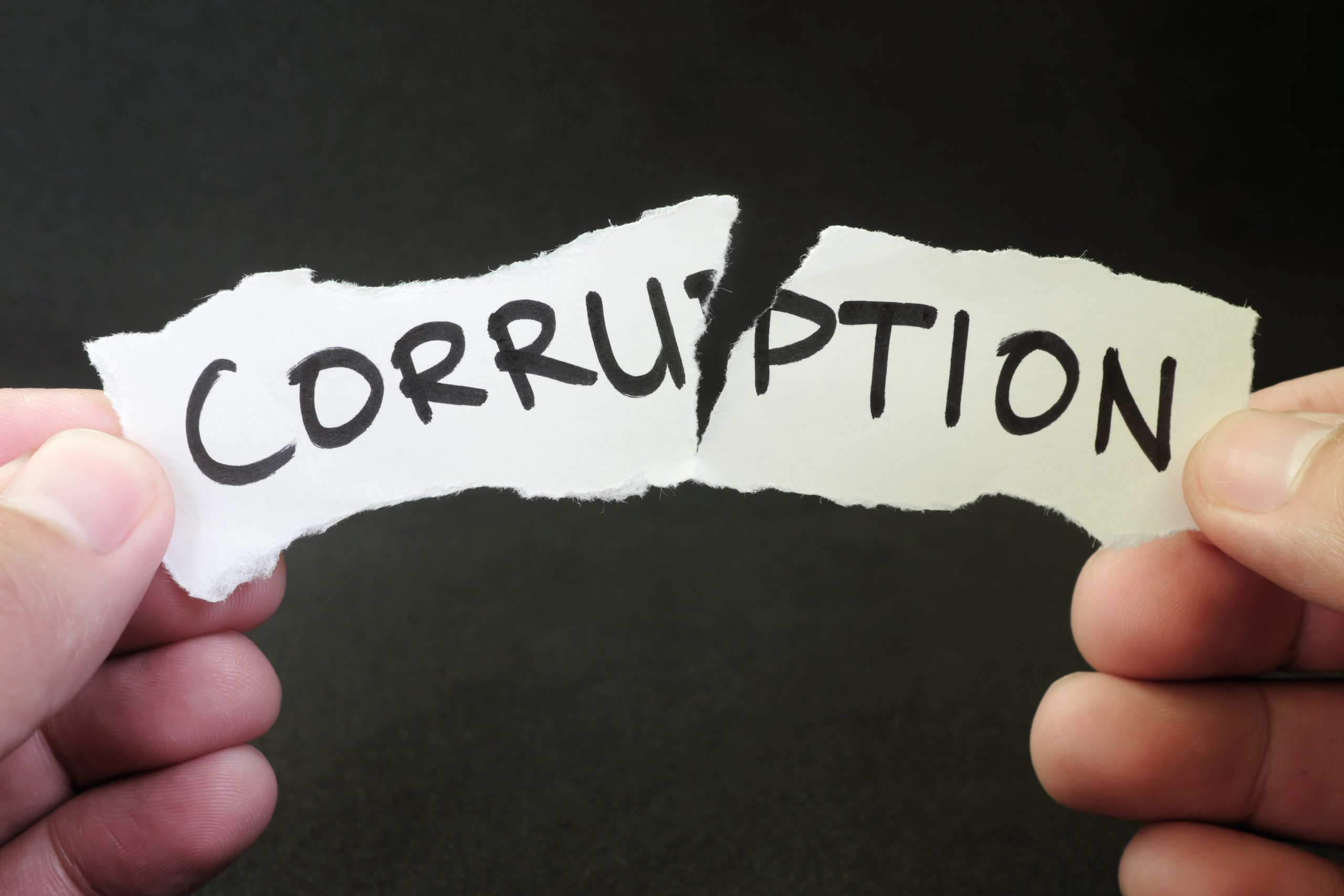
The Malian society is deeply marked by a silent yet devastating plague: the normalization of corruption through so-called “small gifts.” From Bamako’s bustling markets to state institutions, these practices have woven themselves into daily routines, creating a paradox where what was once considered immoral is now accepted as inevitable.
the roots of corruption in malian daily life
In Mali, the term “bonya” (respect), “woro songo” (cola price), or “buru songo” (bread price) often serve as euphemisms for the exchange of small, unofficial payments that grease the wheels of bureaucracy. These transactions, though seemingly minor, represent a systemic issue that erodes public trust and undermines institutional integrity.
According to Transparency International, corruption is defined as “the abuse of entrusted power for private gain.” In Mali, this manifests in various forms, including bribes, favoritism, and undue influence across public services, educational institutions, and private sectors.
real-life testimonies: when corruption becomes a routine
Myriam, a commercial director in Bamako, shares her frustration: “Every time I secure a contract, the representatives of the contracting agency demand a percentage for themselves. It’s take it or leave it.” Her ordeal reflects a widespread issue where extortion has become an unspoken condition for business success.
Similarly, entrepreneur Omar Keita recounts spending an entire day in line at a fuel station, only to be forced to pay 10,000 FCFA to the attendant who refused to serve him without a “gratification.” This incident, triggered by a fuel shortage exacerbated by terrorist attacks on supply routes from Senegal and Côte d’Ivoire, left him feeling violated—but also powerless in the face of entrenched corruption.
the cultural and economic dimensions of corruption
Corruption in Mali is not merely a legal or political issue; it is a sociological phenomenon deeply rooted in societal norms and economic hardship. Mohamed Abdellahi Elkhalil, a sociologist specializing in Sahelian security, argues that corruption has normalized to the point where it threatens the very foundations of democracy and economic stability. He attributes this normalization to the desire to live beyond one’s means, which fuels unethical behavior across all strata of society.
Oumar Korkosse, a member of the Réseau des communicateurs traditionnels pour le développement au Mali (Recotrade), highlights how poverty and unemployment act as catalysts for corruption. “When salaries are low or irregular, small acts of corruption become a survival strategy,” he explains. This reality forces even the most principled individuals to compromise their integrity to meet basic needs.
institutional failures and the cycle of impunity
The lack of stringent regulations and enforcement mechanisms further exacerbates the problem. Sibiri Diarra, a retired international civil servant, recalls that in systems like the United Nations, gift-giving is strictly regulated to prevent corruption. However, in Mali, where such guidelines are virtually unknown to the public, the door is wide open for abuse.
Data from Afrobarometer reveals that judges, businesspeople, tax officials, police officers, and customs agents are perceived as the most corrupt sectors in Mali. The survey also shows that many citizens have resorted to paying bribes to access essential public services, further entrenching the cycle of corruption.
Mali’s perceived corruption levels remain alarmingly high. According to the Transparency International Corruption Perceptions Index (CPI) 2024, Mali scored 27 out of 100, ranking 135th out of 180 countries. The 2025 report maintains a similar score of 28, underscoring the persistent challenge of tackling corruption. The Worldwide Governance Indicators by the World Bank also highlight Mali’s weak institutional capacity to combat corruption, with a score of -0.86 in 2023—far below the global average of -0.04.
breaking the cycle: calls for moral and civic awakening
The Association Malienne de Lutte contre la Corruption et la Délinquance Financière (AMLCDF) emphasizes that addressing corruption requires more than legal reforms—it demands a moral and civic awakening. Through citizen awareness campaigns, educational programs, and religious discourse, the organization advocates for a society founded on ethics, responsibility, and respect for the common good.
Me. Soumaré Boubacar, a lawyer at the Bamako Bar Association, echoes this sentiment: “When a large portion of the population doubts the integrity of institutions, corruption becomes a survival strategy. If everyone is doing it, why shouldn’t I?”
The fight against corruption in Mali is not just a matter of policy or governance—it is a collective responsibility that calls for a fundamental shift in societal attitudes and behaviors.