the invisible hand behind Congo’s power struggles
From 1960 to 1997, the Democratic Republic of the Congo did not see power transitions unfold in parliament or through elections. Instead, it was seized in the shadows—by figures who operated beyond public scrutiny, beyond legal oversight, and often beyond morality. The country’s intelligence services were not mere state apparatuses; they were the state itself, wielding influence that made palaces tremble and ministers fall silent.
This is the story of how three men—each with a chilling nickname—built a system of fear that defined an era. Their names became synonymous with control, manipulation, and the unspoken rules of power in Kinshasa.
the rise of the shadow state
When the Congo gained independence on June 30, 1960, the nation was barely three months old. Within weeks, Mobutu Sese Seko staged his first coup. Between these two events lay a vacuum—one that the newly formed Sûreté Nationale quickly filled. Officially tasked with intelligence gathering, its true purpose was far more sinister: to protect the leader, surveil everyone, and instill fear.
The Sûreté did not answer to ministers. It answered only to the head of state. A whispered complaint from a senior official could trigger a midnight arrest. A critical newspaper headline might lead to an abrupt disappearance. In a land where coups were frequent and trust was scarce, the intelligence services became the ultimate guarantors of stability—or the architects of oppression.
victor nendaka: the man who taught the Congo to fear
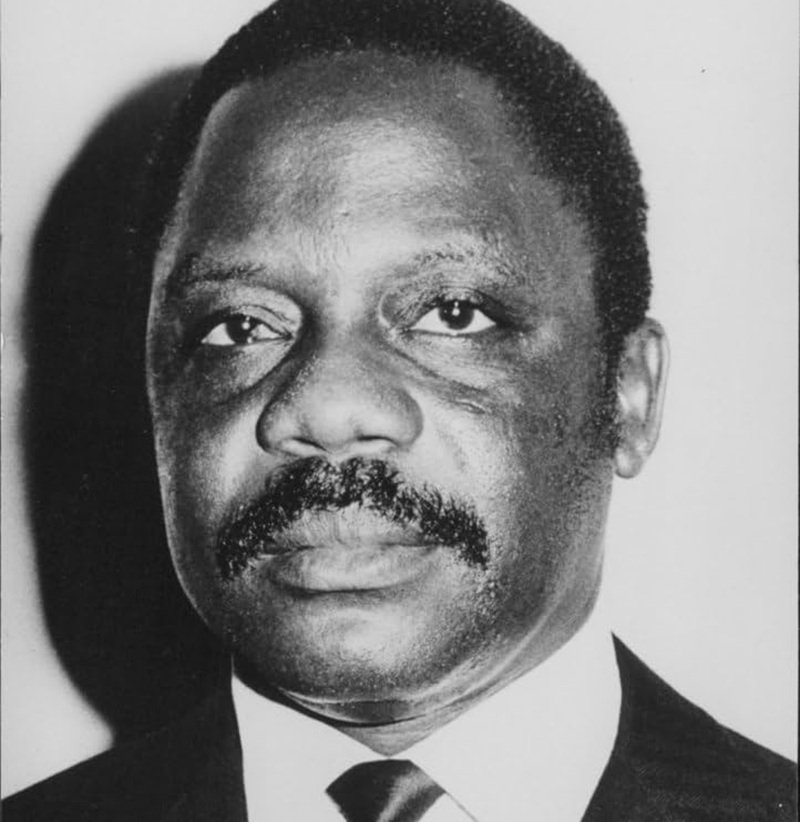
In October 1960, Victor Nendaka Bika—a former nurse—was appointed director of the Sûreté Nationale. Though he wore no uniform, his influence was absolute. He transformed the service from a colonial relic into a political weapon, inventing the playbook that would haunt the Congo for decades.
Nendaka’s first major test came in December 1961. Christophe Gbenye, then Minister of the Interior, attempted to dismiss him. The response was swift: Nendaka surrounded his office with troops, secured Mobutu’s backing, and forced the minister’s resignation. The message was clear: the Sûreté answered to no one.
His role in the transfer of Patrice Lumumba to his executioners in January 1961 remains one of the darkest chapters in Congo’s history. Though he later claimed innocence, documents and testimonies from the era suggest his involvement in orchestrating the fatal convoy. To this day, he is remembered as “the Oufkir of the Congo”—a reference to Morocco’s feared intelligence chief, General Oufkir.
seti yale: the architect of a state within the state
By the late 1960s, Nendaka’s methods had been refined and expanded under Seti Yale, a former schoolteacher turned intelligence strategist. Trained in Israel and the United States, Yale professionalized the Sûreté, renaming it the Centre National de Documentation (CND) and modeling it after the KGB.
Under Yale, surveillance became systematic. Diplomats were monitored. Opposition figures were infiltrated. Torture was institutionalized. The CND evolved into an invisible government, with agents embedded in every ministry and embassy. His reign marked the beginning of a new era: one where intelligence was not just a tool of power, but its foundation.
honoré ngbanda: the terminator who industrialized terror
The final chapter in this dark trilogy belongs to Honoré Ngbanda, known as “the Terminator.” Where Nendaka and Yale laid the groundwork, Ngbanda built a system of industrialized repression. He expanded the CND’s reach into Europe, establishing networks to monitor dissidents abroad. Each government agency had its own spy. Each ambassador’s office housed an informant.
Ngbanda’s methods were brutal but effective. He turned the intelligence services into a self-sustaining machine, ensuring that no single figure could ever control the entire apparatus for too long. Mobutu, wary of rivals, frequently rotated leadership—but the system remained intact.
the legacy that lives on
When Mobutu’s regime collapsed in 1997, the intelligence apparatus did not disappear. It merely changed names: from CND to ANR. The methods evolved, but the core philosophy did not. Today, the shadow of these figures still lingers over Congo’s political landscape. Their ghosts can be seen in the persistence of extrajudicial arrests, the silencing of critics, and the unspoken rules that govern who holds power—and how they keep it.
This is not a tale of coups or elections. It is the story of the men who shaped power from the shadows, long before the world ever heard of Kinshasa.