In any functioning democracy, matters of national defense are often shrouded in a degree of confidentiality. Military operations, intelligence activities, and strategic partnerships are rarely disclosed in full public view. Yet when secrecy becomes the default rather than the exception, particularly on issues of national significance, it risks breeding skepticism rather than trust.
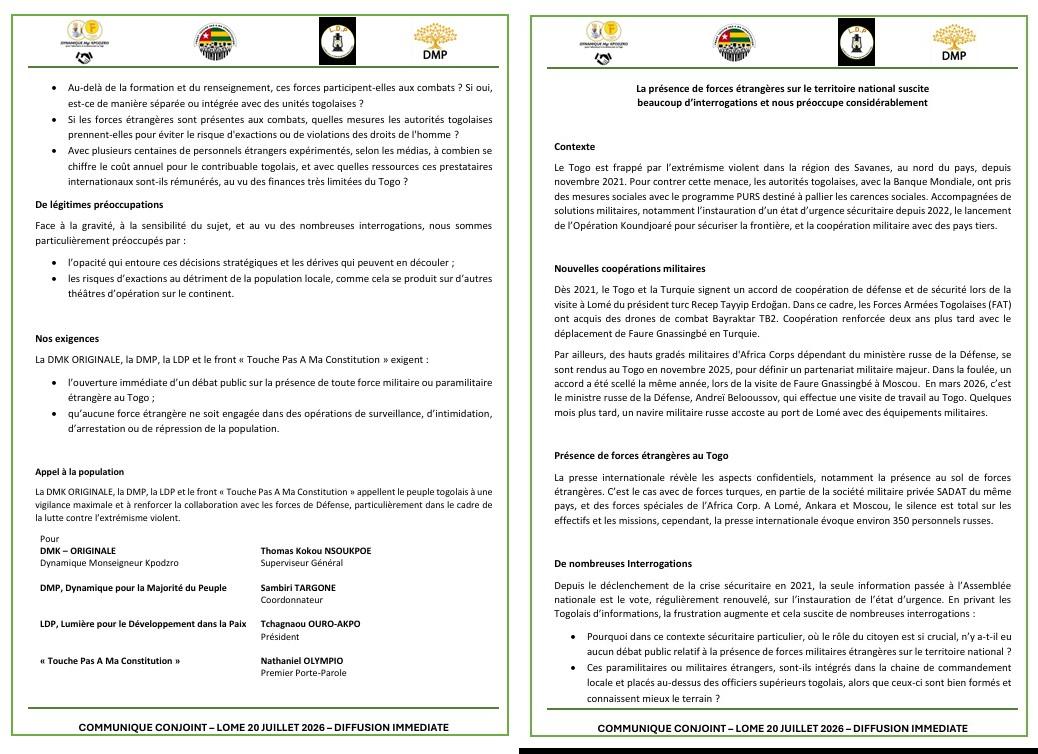
In Togo, reports from multiple observers and media outlets suggest the presence of foreign military personnel within the country’s borders. While specific nationalities have been mentioned—including Russian and Turkish forces—the exact details remain unclear. If such a presence does exist, it raises legitimate questions that demand clear responses from the authorities.
Is the military cooperation a shield against political dissent?
The lack of transparency has fueled deeper suspicions about the motivations behind this engagement. Critics argue that the involvement of foreign military personnel may reflect an underlying insecurity within the government led by President Faure Gnassingbé. Persistent allegations of poor governance, economic strain, and institutional restrictions have heightened concerns about the regime’s stability, both domestically and regionally.
To many observers, these foreign forces are not seen as a safeguard for national security but rather as a lifeline for a leadership determined to cling to power at any cost. The opacity surrounding their deployment only reinforces these perceptions, leaving room for speculation about their true role.
Unanswered questions on operations and legal frameworks
A key issue remains unresolved: what exactly are these foreign military personnel doing in Togo? Are they involved in training local forces, intelligence gathering, strategic advising, or perhaps the maintenance of military equipment? Another critical question concerns their operational role—do they participate in internal security operations alongside Togolese troops, or is their presence strictly limited to technical support?
The absence of official clarification has led to widespread conjecture. Without transparent explanations, the public is left to wonder whether these forces are engaged in activities beyond their stated purpose, particularly in the protection of state officials or high-level summits.
Equally important is the matter of legal accountability. When foreign military personnel operate within a country, there should be a clear legal framework defining their rights, responsibilities, and oversight mechanisms. What legal provisions has Togo established to regulate their activities? Are there safeguards in place to prevent abuses or ensure compliance with national and international laws?
The financial burden of secrecy
The cost of this military cooperation represents another area of concern. How many foreign personnel are currently deployed? What is the duration of their mission, and what financial burden does this place on public funds? Are these expenses covered by the Togolese state, partner countries, or through specific cooperation agreements? With taxpayers footing the bill, citizens have every right to demand clarity on these expenditures.
It is worth noting that military cooperation with foreign partners is not inherently problematic. Many nations engage in such partnerships to bolster their defense capabilities against shared threats. Togo, like its neighbors, faces a complex security landscape, particularly the looming threat of terrorism in the northern regions.
Transparency as the cornerstone of public trust
Yet, public trust hinges on transparency. When a government provides clear explanations about the objectives, legal framework, and operational details of foreign military engagements, it minimizes the spread of rumors and misinformation. In a region marked by political instability and shifting security alliances, the most effective response to public concerns is openness.
While national security imperatives must be respected, authorities can still offer sufficient insight to clarify the goals, safeguards, and accountability measures in place. Transparency is not a luxury in governance—it is a necessity for legitimacy. When foreign military presence raises as many questions as it answers, and appears intertwined with efforts to maintain absolute control, it falls upon the government to address these concerns. In a democracy, silence is not a sustainable communication strategy; it only paves the way for doubt.