After massive military crackdown, what’s next for Nigeria’s fight against jihadists?
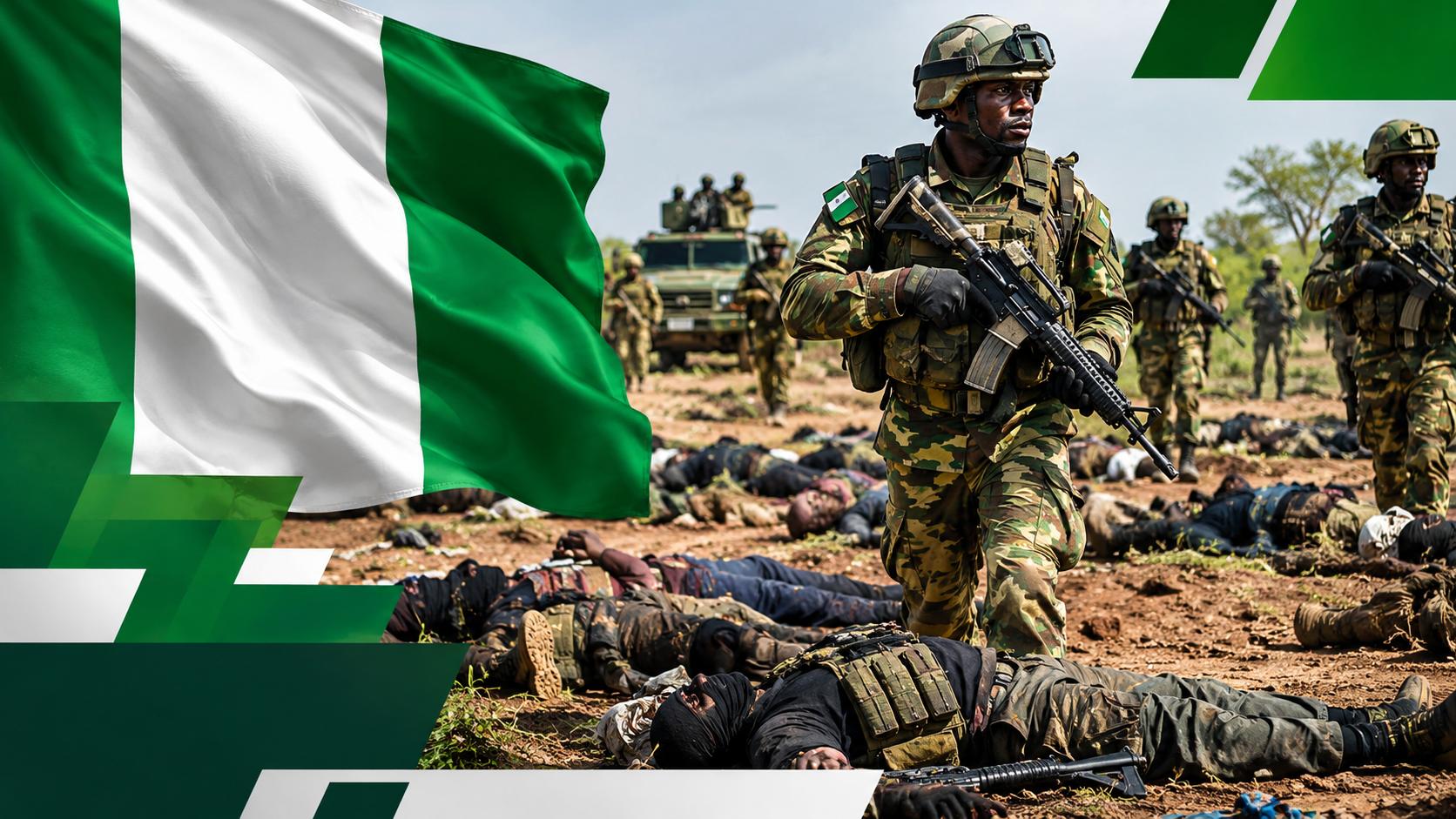
The dust has barely settled on Nigeria’s latest anti-jihadist offensive, and already the nation is grappling with the fallout, recriminations, and the hard questions about what comes next. As Nigeria’s military command undergoes a critical transition, public debate is intensifying over whether the recent surge in operations has finally turned the tide against Boko Haram and ISWAP—or merely set the stage for a new, more dangerous phase of the conflict.
Has the tide truly turned in Nigeria’s jihadist conflict?
At a high-stakes press conference in Maiduguri, outgoing commander of Operation HADIN KAI, Major General Abdulsalam Abubakar, delivered a stark assessment: in just months of intensified ground and aerial strikes targeting Boko Haram and the Islamic State’s West Africa Province (ISWAP), Nigerian forces have neutralized over 1,100 insurgents, liberated 638 civilians, and dismantled a sprawling logistical network supporting the insurgency.
But the numbers tell only part of the story. Behind the headlines of battlefield gains lies a fragile reality—one where tactical victories coexist with persistent threats, displaced communities, and simmering public skepticism about the durability of peace in the Lake Chad Basin.
Inside the military’s latest offensive: targets, tools, and losses
Operation HADIN KAI’s recent blitz has focused on key insurgent strongholds: the dense Sambisa Forest, the rugged Mandara Mountains, and the volatile lakefront areas along the Nigeria-Chad border. The crackdown has yielded more than just human casualties—military units recovered 475 firearms, including heavy weaponry, and dismantled 295 improvised explosive devices (IEDs), a major obstacle to civilian and troop mobility.
The offensive also struck at the lifeblood of the insurgency. Military intelligence operations led to the arrest of 758 suspected supporters and logistics operatives—individuals critical to supplying food, fuel, and communications gear to fighters in remote camps. This disruption has reportedly triggered a wave of internal fractures among the jihadist ranks.
Surrenders rise as pressure mounts on insurgents
In response to the sustained military pressure, 969 individuals—comprising fighters and their dependents—have reportedly laid down arms or fled from jihadist-controlled zones. Many are now entering government-run Disarmament, Demobilization, and Reintegration (DDR) programs, a sign that morale within insurgent ranks may be crumbling.
Humanitarian cost and fragile hope for displaced communities
Among the most poignant outcomes of the operation has been the rescue of 638 civilians, including women and children who were abducted from isolated villages during years of terror. These survivors undergo medical and psychological screening before being handed over to civil authorities and humanitarian groups for reintegration support.
Yet, despite these tangible gains, the broader humanitarian landscape remains dire. Since Boko Haram’s insurgency began in 2009, over 40,000 lives have been lost and over two million people displaced across the Lake Chad region. Many of these communities still live in fear of booby-trapped roads, sporadic ambushes, and the looming threat of ISWAP’s splinter cells regrouping in ungoverned spaces.
The leadership transition: a moment of reckoning
The handover at the helm of Operation HADIN KAI comes at a pivotal moment. The incoming command must now translate battlefield gains into durable stability. The challenge is twofold: securing newly liberated zones against insurgent resurgence and restoring trust in governance so displaced families can return home with confidence.
Can Nigeria trust the peace?
Public opinion is deeply divided. While some analysts hail the military’s recent performance as a potential turning point, others warn that history has shown such gains can be fleeting. The ISWAP’s continued use of ambush tactics and IEDs underscores its ability to adapt and survive—even amid heavy losses.
Local leaders and civil society groups are calling for a more inclusive peace process, one that addresses grievances fueling recruitment while strengthening community resilience. Without this, the cycle of violence may not be broken—only deferred.
What’s next for Nigeria’s counter-terrorism strategy?
As Nigeria charts its path forward, the road ahead remains fraught with uncertainty. The military’s recent achievements, though remarkable, are not a guarantee of long-term peace. For sustainable progress, a coordinated approach involving military precision, humanitarian relief, economic development, and community reconciliation will be essential.
The debate is no longer just about defeating jihadists—it’s about building a future where that defeat endures.