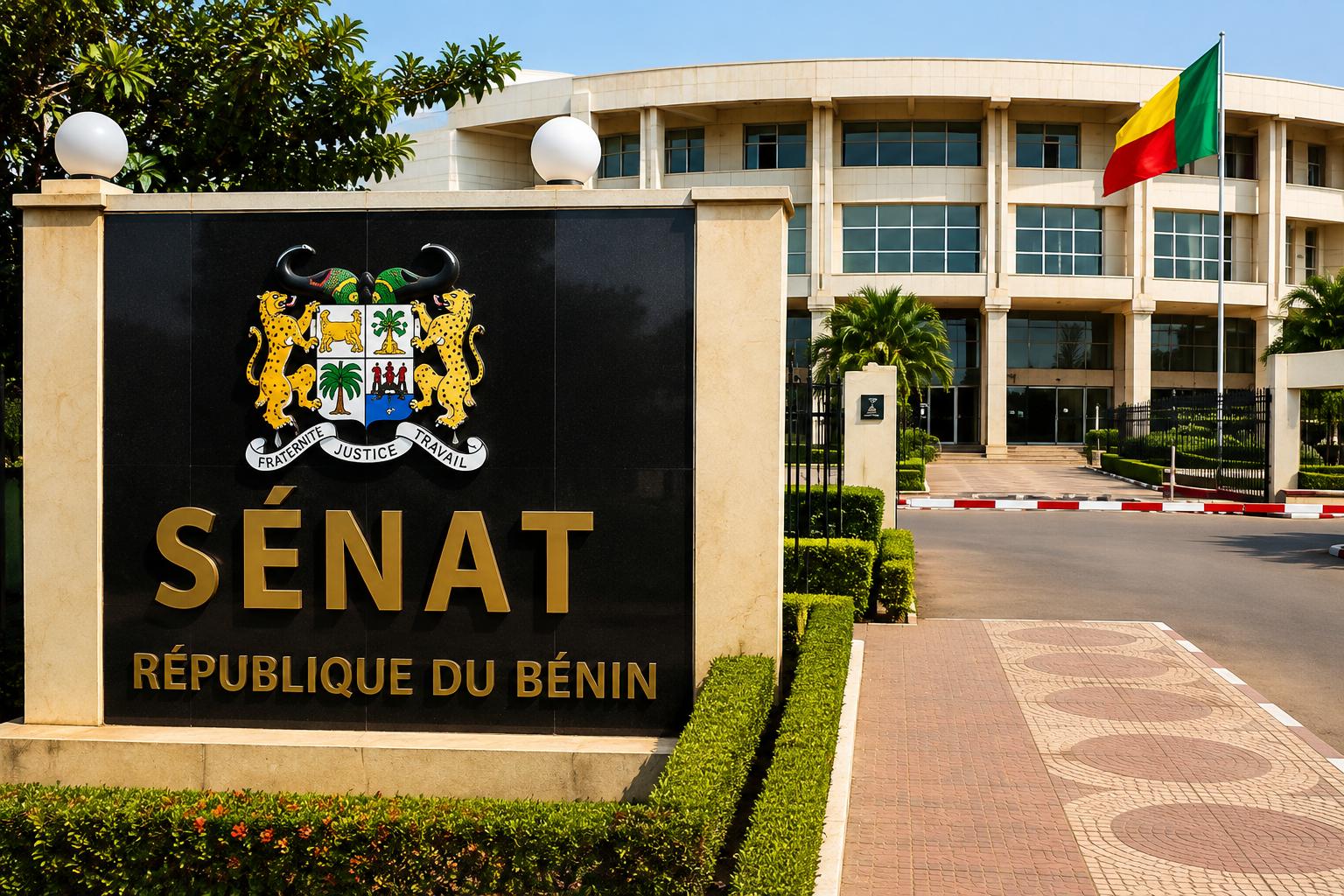
In the heart of West Africa, Benin’s political landscape has undergone a significant transformation with the establishment of the Senate. Yet, a closer look at the constitutional architecture reveals a clear division of powers, where the Executive branch retains full authority despite the appointment of a former president to lead the upper house.
The digital sphere has been abuzz with speculations following the election of Patrice Talon—former head of state—as president of the Senate. While some claim this move could signal a subtle continuation of influence, the facts tell a different story. The Beninese institutional framework is designed to uphold a strict separation of powers, ensuring the Executive maintains its supremacy while the legislative branch, including the Senate, plays a distinct role.
Executive power remains untouched after leadership transition
The 2019 constitutional amendments did not alter the core principles governing Benin’s governance. The elected president continues to hold exclusive executive authority, as enshrined in the Constitution. This means the head of state alone determines national policy, appoints government officials, and oversees public administration. Patrice Talon’s transition from the presidency to the Senate presidency does not grant him any executive powers. The role of Senate president is legislative, not executive—contrary to what some may assume.
The president of the Republic remains the sole commander of the armed forces, the chair of the Council of Ministers, and the ultimate authority over administrative decisions. Financial oversight, public spending, and major policy directives all fall under the president’s jurisdiction. The Senate, on the other hand, does not participate in executive functions. It does not shape government decrees, influence budget execution, or interfere in day-to-day governance.
The Senate: a legislative body with no executive mandate
Misconceptions about the Senate’s role persist, particularly regarding its supposed involvement in executive decisions. The Senate is a purely legislative institution, tasked with reviewing laws, ensuring constitutional compliance, and representing local governments. Its president chairs legislative sessions but has no say in ministerial appointments, policy formulation, or public resource allocation.
Under the current system, the Senate contributes to democratic maturity by providing a second reading of bills and offering expert oversight of government actions. Its members—comprising former high-ranking officials, seasoned politicians, and qualified professionals—bring institutional wisdom to the legislative process. This setup prevents hasty or partisan decisions and fosters long-term stability.
Why Benin is not following Togo’s parliamentary model
Comparisons between Benin’s institutional reforms and those in neighboring Togo are misplaced. While Togo transitioned to a parliamentary system where the Prime Minister—drawn from the ruling majority—holds real executive power, Benin remains a presidential republic. The Beninese president derives legitimacy directly from universal suffrage and retains full executive prerogatives.
The introduction of the Senate does not transform Benin into a parliamentary democracy. Instead, it strengthens the legislative branch by introducing bicameralism, which enhances lawmaking and oversight. The Senate’s role is advisory, deliberative, and stabilizing—never executive.
A Senate that strengthens democracy without altering governance
The Senate’s creation reflects Benin’s commitment to institutional maturity. By entrusting former President Patrice Talon with its leadership, the country gains a figure of experience and credibility who can guide legislative debates without interfering in executive matters. His role is one of counsel, not command—a distinction crucial for preserving Benin’s governance integrity.
This new balance ensures that while the Senate contributes depth and reflection to national policymaking, the president retains full control over administration, defense, and strategic direction. It is a system built on clarity, not ambiguity.
The constitutional clarity surrounding Benin’s power structure is making political discourse more transparent and less prone to rumor. Citizens can now engage in informed debates, free from unfounded assumptions about a blurred separation of powers. The Senate’s role is clear: to legislate, not govern.