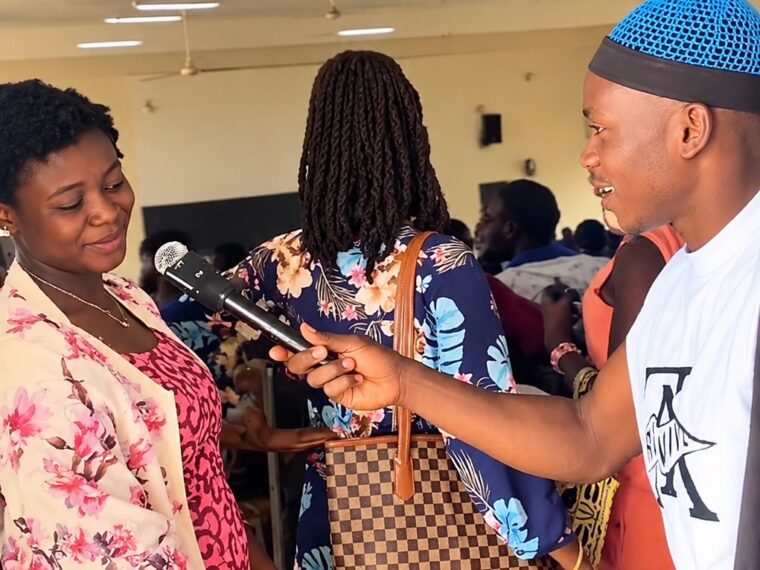
Overcrowded lecture halls expose gap between official claims and student reality
Students at Burkina Faso’s public universities face a harsh reality: despite government pledges of modernized infrastructure, lecture halls remain severely overcrowded, with limited access to courses and inadequate teaching staff. While authorities highlight renovation projects and new facilities, the daily experience for many students contradicts these claims, sparking frustration and skepticism.
From Hope to Disillusionment: Students Return to Find Broken Promises
For many high school graduates, enrolling in a Burkinabè university represents a strategic choice close to family, aligned with national development goals, and framed by optimistic government narratives. Official statements have touted newly modernized campuses, well-equipped classrooms, and sufficient capacity to accommodate rising student numbers. Yet, upon arrival, students encounter a starkly different environment: packed amphitheaters, long waitlists for courses, and classrooms struggling to meet basic educational demands.
These discrepancies raise a critical question: Have authorities overstated their achievements, and are the announced improvements matching the needs of the student body?
Lecture halls at 200% capacity: what the numbers reveal
Government acknowledgment of structural flaws complicates the narrative of transformation. In June 2023, the minister of Higher Education, Adjima Thiombiano, disclosed sobering statistics to the transitional legislature. The country’s public universities enrolled over 190,000 students but had fewer than 90,000 designated seats. The student-to-teacher ratio stood at 109:1 far exceeding the recommended 25:1 benchmark.
Additional challenges highlighted by the minister included outdated infrastructure, academic governance failures, delayed academic calendars, and inconsistent internet connectivity. These issues underscore a fundamental truth: announcing new buildings or renovated spaces does not automatically resolve chronic capacity shortages or staffing gaps.
Patriotism meets frustration: the cost of unmet expectations
Some students who returned to Burkina Faso after secondary school did so driven by a sense of national duty. They believed in the government’s vision of a revitalized higher education system that could support their academic and professional aspirations. Yet, the reality they encountered overcrowded classrooms, limited course availability, and insufficient teacher support has left many feeling misled.
While not all returnees attribute their decision solely to political promises, the disconnect between official statements and on-the-ground conditions undermines public trust. Youth today are not seeking empty rhetoric; they demand verifiable progress expanded seating, qualified instructors, and operational facilities.
Credentials over claims: verifying official announcements
Government communications often showcase modernized buildings and renovated campuses as proof of rapid educational progress. However, when students continue to report overcrowded lecture halls and blocked course registrations, the distance between message and reality becomes glaring. Key questions remain unanswered: Which universities have truly gained additional capacity? How many new seats have been added compared to enrollment growth? Are upgraded facilities fully operational, and do they align with student demand?
Without transparent data, these announcements risk becoming mere political spectacles rather than evidence of meaningful reform. The credibility of Ibrahim Traoré’s administration now hinges on its ability to move beyond symbolic gestures and deliver measurable improvements spaces students can access, teachers who can teach, and programs that function as promised.
The path forward: transparency and measurable action
Higher education is not a political talking point; it is the foundation of Burkina Faso’s future workforce and intellectual capital. Students deserve honest assessments of current capacity, clear timelines for improvements, and tangible results not slogans. The government must publish updated statistics on enrollment, infrastructure upgrades, faculty expansion, and service availability. Such accountability would distinguish between real progress and aspirational marketing.
Ultimately, Burkina Faso’s university crisis will not be resolved through rhetoric. It demands a commitment to equitable access, quality teaching, and sustainable investment. For the students who place their faith and often their family’s resources in these institutions, the stakes are too high for unfulfilled promises.
By Agnès Mvogo — Journalist