France and three West African nations launch a landmark multinational military exercise in November 2026, signaling a strategic shift in regional security cooperation. The GEX 2026 initiative, spanning from Côte d’Ivoire to Gabon, represents a bold redefinition of military partnerships in the Gulf of Guinea.
Unprecedented military partnership reaches new heights with GEX 2026
The Grand Multinational Inter-Armed Forces Exercise (GEX 2026) brings together over 2,000 military personnel from France, Côte d’Ivoire, and Gabon in a two-phase operation designed to reshape defense cooperation across West Africa. This is not just another military drill—it marks a fundamental change in how these nations approach shared security challenges.
The exercise unfolds in two distinct phases: FANGHA 2026 in Côte d’Ivoire (November 7-14) and WAIYA 2026 in Gabon (November 24-29). Côte d’Ivoire leads with 1,181 troops, while France contributes 850 personnel and Gabon fields approximately 100. Observers from Benin, Guinea, Liberia, and Senegal will monitor the operations, signaling growing regional interest.
Military interoperability takes center stage in Gulf of Guinea
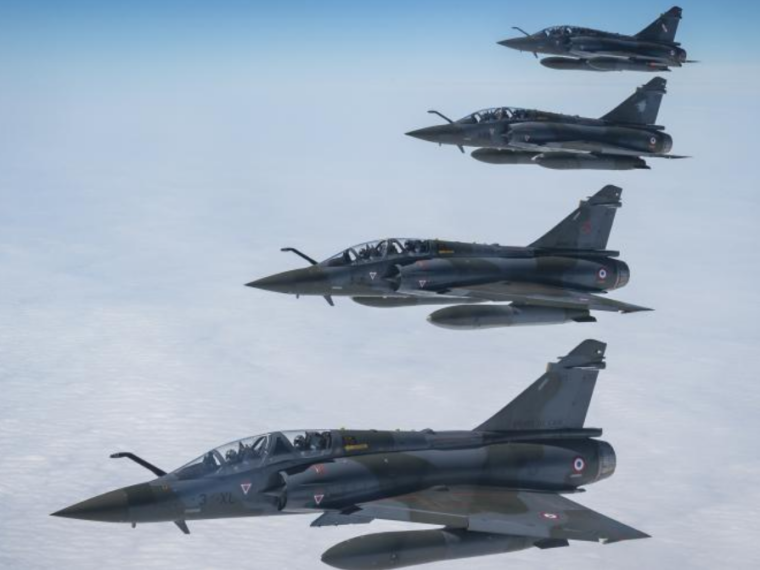
GEX 2026 focuses on testing and strengthening cross-border military coordination, particularly between land, air, and naval forces. French assets like the Mistral amphibious assault ship and Mirage 2000 fighter jets will support complex scenarios including amphibious landings, air support, and combined ground operations.
For West African militaries, the training provides critical opportunities to:
- Master multinational operational procedures
- Improve tactical communications
- Develop joint intervention protocols
- Enhance regional response capabilities
The Gulf of Guinea—home to vital maritime routes and energy resources—faces escalating threats from piracy, illicit trafficking, and regional instability. By conducting operations across multiple theaters, GEX 2026 addresses these challenges through a unified, multi-domain approach.
France adapts its African military footprint with GEX 2026
This exercise arrives at a pivotal moment as France restructures its African military presence. Following withdrawals from Mali, Burkina Faso, and Niger, Paris now emphasizes partnership-based cooperation over permanent bases. The 2025 handover of Port-Bouët camp to Côte d’Ivoire exemplifies this new model.
The GEX 2026 deployment—featuring France’s most advanced naval and aerial platforms—demonstrates ongoing capacity for regional intervention while promoting self-sufficient defense capabilities in partner nations. The exercise serves both French strategic interests and the sovereignty goals of Côte d’Ivoire and Gabon.
Regional security architecture emerges from GEX 2026
The participation of observer nations suggests a broadening security alliance in West Africa. Success will depend on transforming temporary drills into lasting mechanisms for:
- Intelligence sharing
- Maritime domain awareness
- Sustained personnel training
- Operational coordination
Key challenges include:
- Balancing foreign expertise with local command structures
- Avoiding historical patterns of dependency
- Ensuring long-term funding and political commitment
The GEX 2026 framework could establish the Gulf of Guinea as a model for modern military cooperation—one that prioritizes shared threats over traditional alliances.
Strategic implications for West African security
For Côte d’Ivoire, the exercise strengthens northern border defenses against Sahel spillover. Gabon, meanwhile, secures its maritime approaches critical to oil exports and regional stability.
Both nations seek to diversify partnerships and reduce reliance on external security guarantees. The GEX 2026 model—if successfully implemented—could replicate across the region, offering a scalable template for resilient, locally led security cooperation.
The verdict on GEX 2026 will come not from the maneuvers themselves, but from how these nations sustain the momentum beyond November 2026. Will this be the beginning of a new security era—or another temporary display of cooperation?