With the 2027 dual elections looming, economist Serge Alain Godong dissects Cameroon’s political standoff
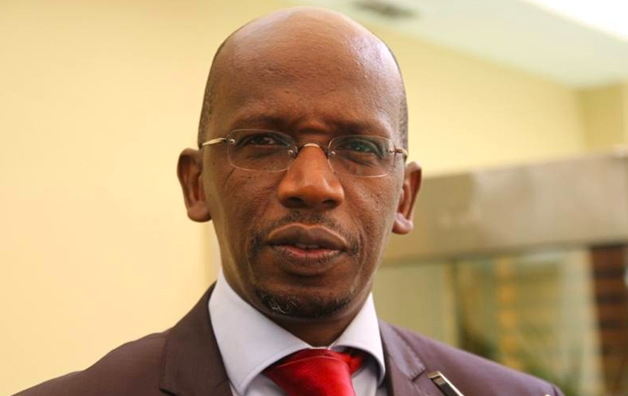
Using the lenses of game theory and the prisoner’s dilemma, Serge Alain Godong, a seasoned economist trained at Sciences-Po Paris, EHESS, and Paris X, delivers a blunt assessment of Cameroon’s political landscape. He argues that Maurice Kamto’s 2018 bid was doomed—and faces even steeper odds in the upcoming race. In his sharp analysis, Godong paints a regime at a crossroads, where voters cling to the familiar over the unproven.
« The openly twilight nature of the four-decade-old regime now shapes the public sphere’s push for continuity or change,» Godong writes. He anchors his argument in 2018, when the shock of Kamto’s claims of a « penalty scored » against him faded. Since then, Paul Biya has been sworn in for another term, the MRC has been sidelined, and most Cameroonians have accepted the quiet continuation of power in Etoudi.
Game theory and the voter’s calculus
Godong’s framework hinges on two core ideas: humans act as rational actors, and they crave information to secure their interests. Elections, in his view, are a moment when a leader offers a social contract for the future. Yet Kamto’s proposal fails to outshine the status quo. « The 8.5 million Cameroonians heading to the polls next year will only back Maurice Kamto if they’re convinced he can better safeguard their future than Paul Biya,» he contends.
He estimates 16 million « winners »—civil servants, formal private-sector workers, professionals, and their families—who collectively share over 1.5 trillion FCFA annually in salaries, public contracts, and flagship projects. « These Cameroonians—and their networks—will vote for the RDPC with full awareness of the stakes,» he explains.
The prisoner’s dilemma at the ballot box
This creates a classic prisoner’s dilemma: without clear evidence of superior gains, voters default to the known. « Cameroonians recognize the current system’s flaws, yet many prefer its predictable deficits over an uncertain, albeit potentially better, equilibrium,» Godong notes. The lack of coordinated information leaves them trapped in a cycle of risk aversion.
His analysis then pivots to what he terms the « Bamiléké problem,» borrowing from Meredith Terretta’s « gung » (territory) and « lepue » (freedom). This duality fuels an economic and social Darwinism among the Grassfields’ inhabitants, he argues. As a result, Kamto isn’t seen as an alternative—he’s perceived as a « malignant avatar » executing a sinister plan.
« Eating together »: the system’s hidden logic
Godong describes a culture of « eating together »—a web of small-scale graft where everyone extracts from their neighbor. « Winners are those who eat; losers are those who go hungry,» he states. This Machiavellian equilibrium leaves little room for reform, regardless of the election outcome.
« The victor will have no choice but to act swiftly and decisively,» he warns. Speed is critical for redistribution; strength is essential to pivot the economy into the driver’s seat. Growth targets of 6%, deficit reduction, and anti-corruption drives aren’t just aspirations—they’re urgent necessities. « Cameroon needs a strong, engaged Paul Biya to navigate the aftermath,» he concludes.