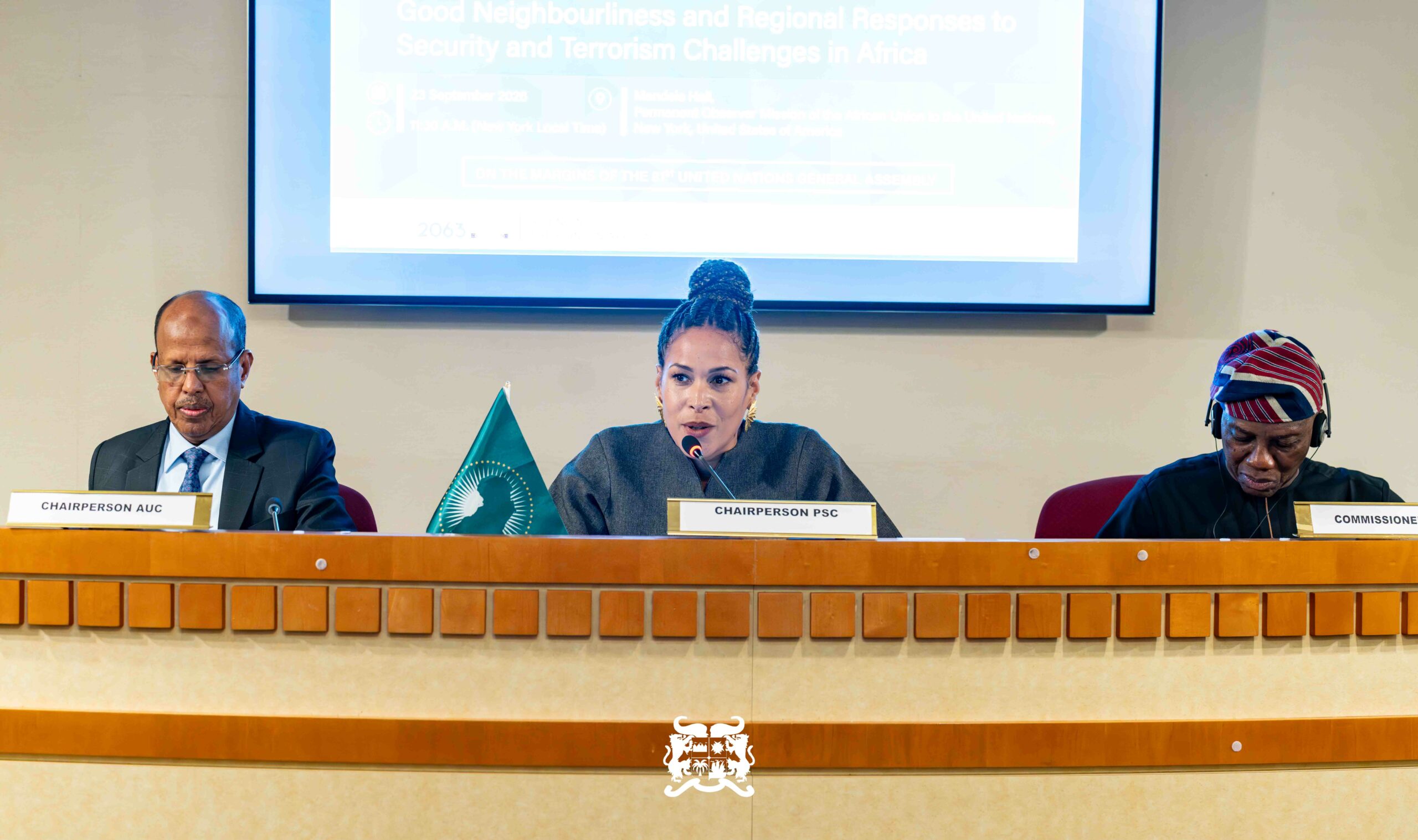
During the 81st session of the United Nations General Assembly, Benin led a pivotal discussion at the African Union’s Peace and Security Council (PSC) in New York on September 23, 2026. The high-level ministerial meeting, chaired by Foreign Minister Corinne Amori Brunet, brought together African Union Commission Chairperson Mahmoud Ali Youssouf and AU Commissioner for Political Affairs, Peace and Security Bankole Adeoye, along with representatives from AU member states, regional organizations, and international partners.
The session centered on a critical question: How can good neighborliness reshape Africa’s approach to security threats and terrorism?
From borders to bridges: why cooperation is Africa’s strongest defense
Minister Brunet opened the dialogue by emphasizing that while national borders define sovereignty, they also serve as lifelines for millions who live, work, and trade across them. Families, markets, and communities transcend these lines—so when insecurity takes root, its impact is never confined to one country.
For Benin, the solution lies not in erecting barriers, but in building partnerships. The country advocates for tangible collaboration: robust state presence in border areas, rapid information sharing between security forces, seamless judicial cooperation, and safeguarding legitimate cross-border trade that sustains local economies. This strategy reflects Benin’s broader neighborhood diplomacy, championed by President Romuald Wadagni, which prioritizes dialogue, regional security, and cooperation as pillars of the nation’s foreign policy.
Can cooperation endure even during political tensions?
Benin’s approach challenges the assumption that diplomatic strains between neighboring countries must stall security efforts. Instead, the focus should be on strengthening existing mechanisms, not creating new ones. The goal isn’t to replace frameworks, but to adapt them to the realities of each border region—ensuring that peacebuilding remains a shared priority, regardless of political climates.
Empowering border communities—and women in particular
The meeting also spotlighted the indispensable role of borderland communities, especially women, in sustaining peace. Their deep understanding of local dynamics, access to grassroots networks, and ability to detect early warning signs are invaluable in conflict prevention and strategic decision-making. This conversation built directly on Benin’s second high-level ministerial seminar on “Women, Peace, and Security,” held in Cotonou earlier in September 2026, which highlighted the need to amplify women’s voices in security governance.
What’s next for Benin’s regional leadership
This ministerial session marks a milestone in Benin’s September presidency of the AU Peace and Security Council, which has emphasized crisis prevention, field-based realities, heightened women’s participation, and stronger interstate cooperation. The diplomatic momentum continues on September 28, when Minister Brunet is set to address the UN General Assembly, further advancing Benin’s vision for a secure and collaborative Africa.