Senegal’s parliament crisis: will Diomaye Faye force a showdown with Sonko?
What’s at stake when the president keeps the dissolution card in play
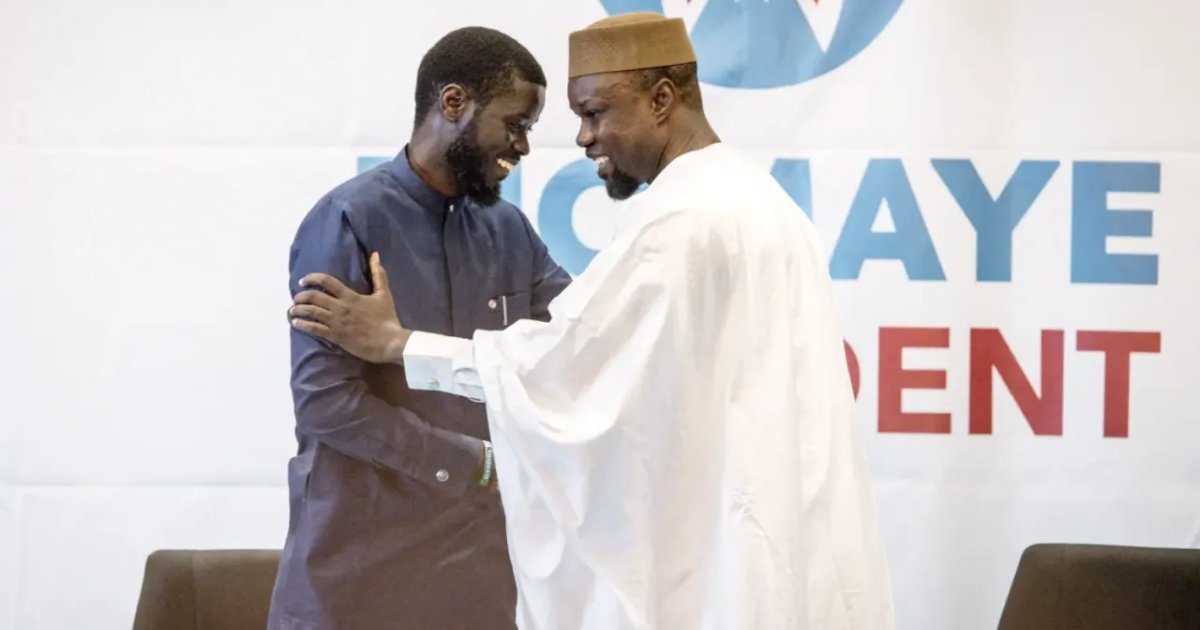
With his former ally Ousmane Sonko now presiding over Senegal’s National Assembly, President Bassirou Diomaye Faye has signaled he won’t rule out dissolving parliament—a move that could reshape the country’s political landscape. Speaking in New York on Thursday, the president framed the constitutional prerogative as a strategic lever rather than a rushed decision, leaving the door open for what could become a high-stakes gamble.
From partnership to confrontation: how trust eroded between Faye and Sonko
Bassirou Diomaye Faye didn’t mince words when explaining why he removed Ousmane Sonko as prime minister in late September. He cited “persistent disagreements on key issues” that had undermined trust between them. That rupture, now confirmed by both sides, came at a pivotal moment—just as the government prepares to defend its midyear budget adjustments before a National Assembly now led by the former premier.
Sonko’s elevation to the Assembly’s top post gives him decisive influence over whether—and how—executive proposals are debated, amended, or rejected. Fayee, in response to concerns over a possible rejection of the supplementary budget, underscored institutional boundaries: “Each branch carries its own responsibilities; the people will ultimately decide the outcome.”
Constitutional tool or political trap? Dissecting the dissolution option
When pressed on whether he would dissolve parliament, Faye reframed the question around constitutional authority and timing. “Why rule out a power granted by the Constitution?” he asked, before adding, “Everything depends on necessity, context, and what lies ahead.” The response left analysts parsing every word: no date set, no announcement made—but no door closed either.
That ambiguity underscores a delicate balance. A dissolution could reset the political map and reshuffle alliances, but it also carries risks—parliamentary gridlock, economic uncertainty, and the potential for deeper fragmentation within the ruling coalition. The president’s measured tone suggests he’s weighing options, not rushing to act.
From debt talks to diplomatic gambits: Faye’s endgame beyond local politics
Days before the New York interviews, Bassirou Diomaye Faye publicly backed former president Macky Sall’s bid to become the next UN Secretary-General. Citing Sall’s international resume and Africa’s need for stronger representation, Faye argued that Sall’s experience—amid Senegal’s ongoing debt challenges—makes him the best candidate to push for reforms in global finance architecture.
While not the focus of his remarks, the endorsement highlights a broader strategy: positioning Senegal at the center of pan-African debates while navigating internal divisions. Whether this gamble pays off remains to be seen, but it signals a president determined to shape both domestic policy and international perceptions.
The opposition’s next move: budget showdown and beyond
The immediate flashpoint will be the supplementary budget. With Sonko’s party controlling key votes, the Assembly could either approve the measures, force extensive changes, or reject the bill outright—a scenario that would test Faye’s resolve and could accelerate any dissolution decision.
Meanwhile, reactions within Sonko’s former party continue to roil the political scene, with some members accusing the president of betrayal. Faye’s response was defiant: “The only oath I could betray is the one I swore to serve Senegal.” As the standoff intensifies, the coming weeks will reveal whether Faye’s constitutional tool becomes a political lifeline—or a gamble that backfires.