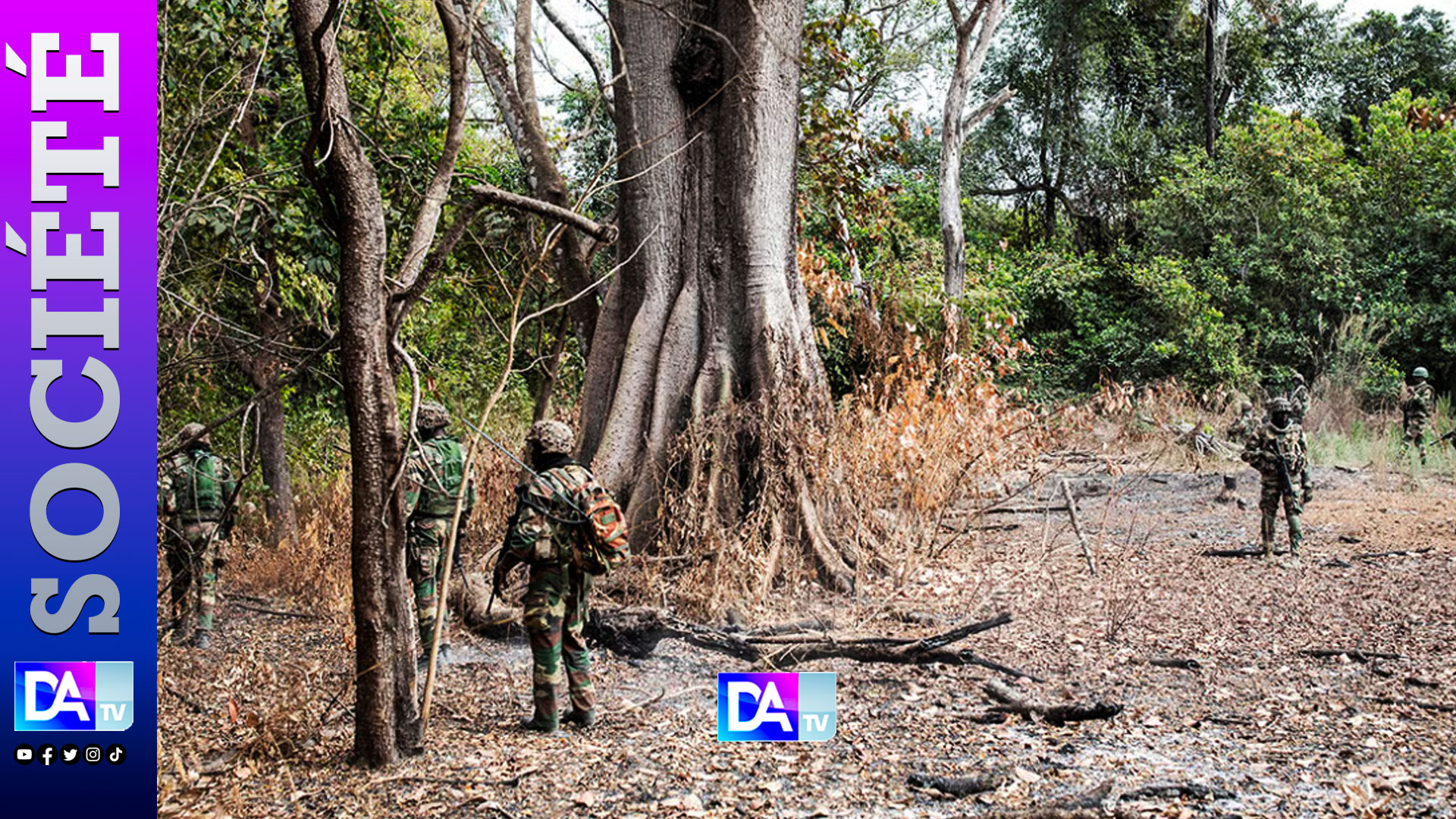
In early May, Senegalese military forces, supported by detection dogs, conducted a major operation in Casamance, destroying cannabis cultivation sites. This latest military action marks yet another chapter in one of Africa’s longest-running conflicts—a 43-year-old low-intensity struggle in southern Senegal, despite the weakened state of the separatist rebel group behind it.
The operation took place near the Gambian border, where fighters from the Movement of Democratic Forces of Casamance (MFDC) have been active since December 1982, advocating for the region’s independence from Senegal, separated by Gambia. According to Colonel Cheikh Guèye, regional army commander in Ziguinchor—one of Casamance’s three administrative zones and the conflict’s epicenter—“the mission was completed without major obstacles.” Authorities reported 14 arrests, the seizure of military-grade weapons, and over six tons of cannabis.
The MFDC, once a formidable force, now faces near-collapse. Military experts describe the rebel group as severely weakened, with dwindling recruitment, aging fighters, and internal divisions plaguing both political and military factions. Supply lines for arms and ammunition have been disrupted, particularly since neighboring Gambia and Guinea-Bissau—historically used as rear bases—have increased cooperation with Dakar to curb rebel activities.
Loss of local support has further eroded the rebel movement. Civil society leaders in Casamance note that the MFDC’s once-strong political and emotional base among local communities has crumbled. “Decades of struggle have led to disillusionment,” explains a prominent local figure. “People now prioritize peace over rebellion.”
The rise of political leaders from Casamance in national governance—including Prime Minister Ousmane Sonko, head of the country’s majority party—has also contributed to easing tensions. “Many former supporters see this as Casamance’s political comeback after years of exclusion,” the source adds. Sonko has repeatedly emphasized that while dialogue remains open, Senegal’s territorial integrity is non-negotiable.
rebel group’s fading ambitions and cannabis-driven survival
In mid-March, Sonko addressed a gathering in Ziguinchor, stating that the MFDC had failed to control even a single village in over 40 years of armed struggle. His remarks came shortly after a tragic incident on March 17, when an accidental explosion during anti-cannabis operations killed three soldiers and injured three others. Just days earlier, on March 11, another soldier was killed, and six were wounded in clashes.
In November 2025, a soldier held captive by armed factions for seven months was finally released, highlighting the persistent, if diminished, threat posed by splinter rebel groups.
Sonko made it clear: “While some may still speak of independence in principle, the real issue is cannabis cultivation. We will deploy all necessary means to eradicate it.” The drug trade, he noted, provides armed groups with critical funding for their operations. Colonel Guèye echoed this, calling the recent crackdown an effort to “strike at the financial heart of rebel economies.”
The northern Sindian area near the Gambian border remains a hotspot for illicit activities. “Its dense forests and isolation—despite fertile land and untapped agricultural potential—make it a haven for contraband,” says Mamadou Sadio, a former elite unit officer. Local populations, struggling with poverty and lack of infrastructure, have increasingly turned to cannabis farming. Some have even sought religious guidance, asking religious leaders whether Islamic law permits such cultivation.
fragile peace amid partial disarmament
Efforts to restore stability in Casamance have seen mixed results. In February 2025, a peace accord was signed in Bissau with another rebel faction, building on a three-year-old agreement celebrated near Ziguinchor this week. However, not all factions have adhered to ceasefires, and some continue to resist disarmament.
Despite these challenges, progress is evident. “Refugees and displaced persons are gradually returning to their villages as hostilities ease and partial disarmament takes hold,” reports the civil society leader. Yet, she cautions, “the path to full pacification remains uncertain as armed elements remain reluctant to lay down their weapons.”