Côte d’Ivoire’s future hinges on balanced growth and inclusive governance
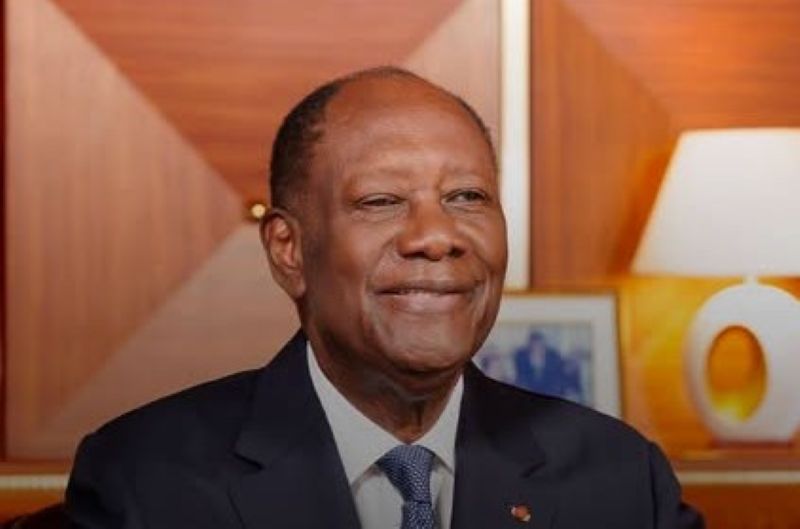
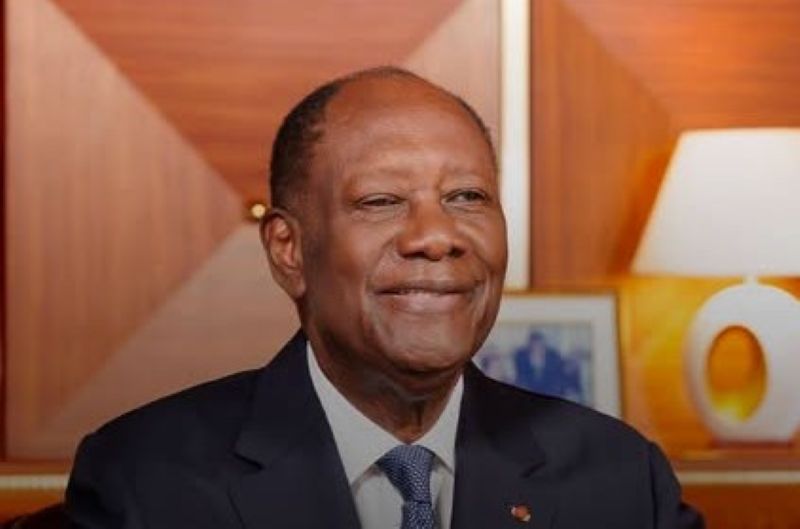
As Côte d’Ivoire marks another milestone in its post-independence journey, President Alassane Dramane Ouattara is charting a course that transcends conventional political narratives. His address to the nation goes beyond economic metrics or security assurances, instead weaving together two critical pillars that will define the next chapter of the country’s development.
At the heart of this vision lies the dual challenge of accelerating structural transformation while deepening the rule of law. The concept of the «Great Côte d’Ivoire» is not merely a slogan—it represents a fundamental question: How can economic progress and political stability translate into tangible benefits for every citizen?
From ambition to collective action
The president’s call for a unified national effort is unprecedented in its scope. Institutions, business leaders, political parties, civil society, traditional authorities, religious communities, and the diaspora are all summoned to contribute to what he terms the «Great Côte d’Ivoire.» This framing shifts the narrative from government-led initiatives to a genuinely participatory national project.
This vision arrives at a pivotal moment. With a robust economic trajectory and substantial investments in infrastructure, transportation, energy, and port capacity, the groundwork is already laid. The 2026-2030 National Development Plan is positioned as the blueprint for this new phase, aiming to propel Côte d’Ivoire to new heights. Yet, the true measure of success will extend beyond skyscrapers in Abidjan or the completion of highways. It will be judged by the ability to bridge regional disparities, create meaningful opportunities for the youth, and ensure that growth translates into lasting improvements in living standards.
The «Great Côte d’Ivoire» will only become a reality if it is also a social reality—one where progress is shared and no community is left behind.
Modernization with accountability
The president’s televised address on Thursday underscored a critical balance. While reaffirming the government’s commitment to addressing flood risks and other disaster-related challenges through targeted interventions, he drew a firm line against administrative overreach. Operations conducted outside legal frameworks, particularly those reported in Koumassi, are under scrutiny and will face legal consequences as prescribed by law.
This distinction is pivotal. Urban development and disaster prevention may justify certain actions, but progress cannot come at the cost of creating legal gray zones where citizens face displacement without due process or adequate safeguards. The president’s message reinforces a principle that resonates far beyond this specific issue: A government can be assertive without being arbitrary. It can modernize and secure its territory while remaining bound by the laws it establishes.
The proof lies in coherence
Côte d’Ivoire stands at a crossroads where the demands of growth must align with the imperatives of inclusion. The challenge is not just to build faster or secure more effectively, but to do so in a way that sustains public trust and institutional legitimacy.
The president’s vision hinges on two interdependent pillars. First, the call for national unity must resonate across all segments of society, fostering a shared sense of ownership over the country’s future. Second, the rule of law must be more than a procedural formality; it must be the guiding principle for every action taken in the name of the state.
President Ouattara’s address offers a deceptively simple yet politically demanding roadmap: accelerate development, enhance security, and modernize the nation—but never at the expense of those for whom this transformation is intended. The «Great Côte d’Ivoire» will be measured not by the scale of its infrastructure or the strength of its economy, but by its capacity to harmonize public power, justice, and inclusion. It is this coherence, rather than slogans, that will determine whether the next phase of Ivorian progress represents a true leap forward.