Ivorian President Alassane Ouattara has emphatically reiterated his ambition to steer Côte d’Ivoire towards a path of accelerated development, calling upon all active segments of the nation to contribute to the construction of what he terms the “Greater Côte d’Ivoire.” This rallying cry, issued at the dawn of a new political era, underscores the head of state’s determination to unite administrative, economic, religious, and community leaders around a shared national project. It emerges as Abidjan endeavors to build upon a decade of consistent economic expansion to achieve a new structural benchmark.
A call for cohesion among Ivorian vital forces
The presidential appeal explicitly targets every facet of Ivorian society. Republican institutions, political parties, the private sector, civil society organizations, traditional chiefdoms, and the diaspora are all invited to partake in a collective endeavor. The chosen phrasing reflects an inclusive vision of public action, where the success of the national agenda hinges on widespread support rather than solely on the executive’s initiative. This framework is not arbitrary; it comes at a political juncture where the issues of stability and the continuity of public policies hold particular significance.
For Alassane Ouattara, this approach is a continuation of the core principles he has championed since 2011, centered on industrialization, the opening up of rural areas, and positioning Abidjan as a pivotal regional hub. The president aims to translate favorable macroeconomic momentum, characterized by an average growth rate exceeding 6% in recent years, into more tangible social benefits for households. The rhetoric of the “Greater Côte d’Ivoire” encapsulates this dual aspiration: strengthening economic indicators and enhancing redistribution.
A long-term economic and political vision
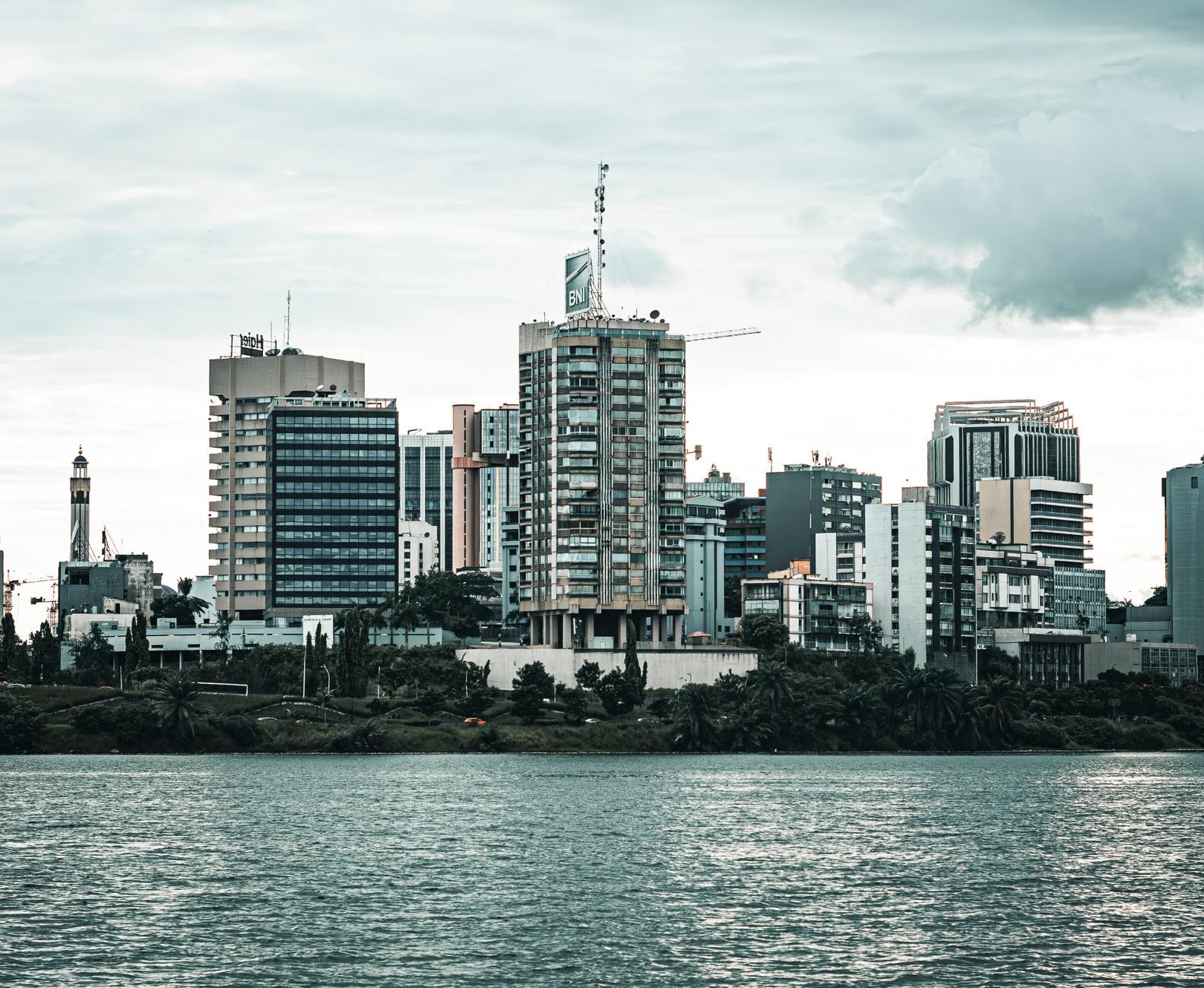
Economically, the promise of an expanded Côte d’Ivoire is linked to several critical structural projects already underway. The Port of Abidjan continues its expansion, while the Port of San Pedro is bolstering its capacity in the mining and agricultural sectors. The highway network is extending northward, connecting towards Burkina Faso and Mali, with the strategic goal of reinforcing West African logistical corridors. The energy sector, identified as a vulnerability following the 2024 supply crisis, is receiving substantial investment to secure production and diversify its energy mix.
Nevertheless, the political dimension holds equal importance. By engaging the nation’s vital forces, the Ivorian president seeks to broaden the base of support for his administration beyond merely the Rally of Houphouëtists for Democracy and Peace (RHDP) apparatus. This rhetorical openness signifies a strategic understanding: major infrastructure and economic transformation projects necessitate a minimum consensus to ensure they are not jeopardized by future political transitions. The emphasis on the nation, rather than the presidential camp, aligns with this long-term strategic outlook.
A method founded on unity
The choice of terminology is deliberate. By speaking of a “Greater Côte d’Ivoire,” the executive aligns itself with a political tradition inherited from founding President Félix Houphouët-Boigny, where national ambition was articulated through mobilizing slogans. This asserted lineage aims to anchor presidential action within historical continuity and to defuse criticisms concerning an excessive personalization of power. Yet, the concrete realization of this appeal will depend on the capacity of institutions to translate the political pronouncement into operational frameworks.
Observers note that the success of such a project requires measurable advancements in governance, the business climate, and the reduction of territorial inequalities. The northern and central regions of the country, less endowed with infrastructure than the coastal lagoon areas, remain priority zones. Furthermore, the issue of youth inclusion, in a nation where over 75% of the population is under 35 years old, represents a significant structural challenge. The presidential appeal will achieve its full meaning if it translates into concrete mechanisms for involving the mentioned stakeholders in decision-making processes.