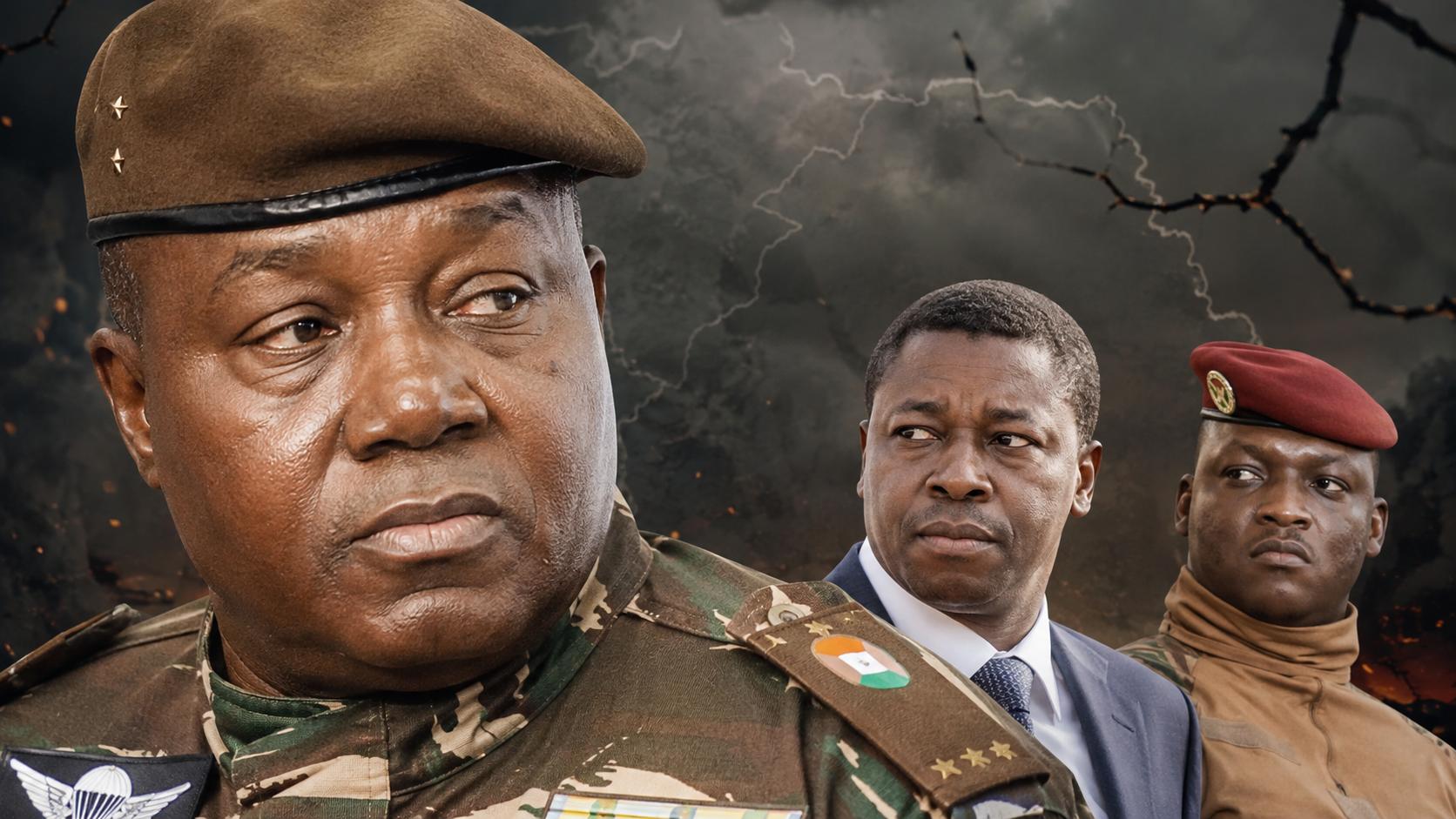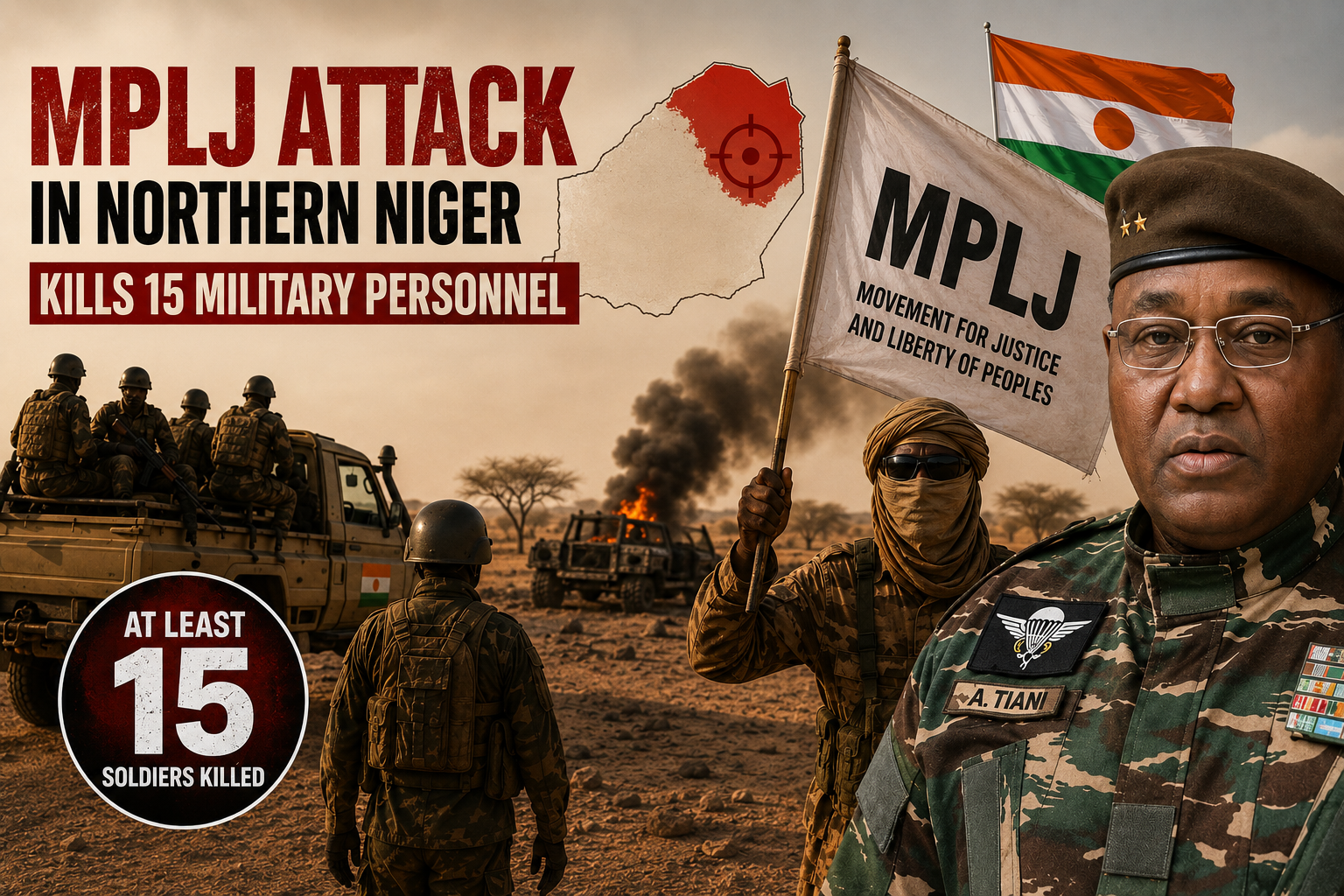
In the vast and sparsely populated regions of northern Niger, the promise of sovereignty championed by the military leadership has collided with a harsh reality. A brazen double assault, claimed by the Movement for the Justice and People’s Liberation (MPLJ), has left at least 15 soldiers dead, underscoring the government’s struggle to fulfill its most basic obligation: safeguarding its citizens and asserting control over its territory.
The attack, which unfolded in a remote desert zone near the borders with Algeria and Libya, serves as a grim reminder of the challenges facing the junta led by General Abdourahamane Tiani. Since seizing power in July 2023, the regime has sought to distance itself from former security policies, emphasizing national sovereignty and rejecting foreign interference. Yet, for the communities living under the shadow of armed groups, the rhetoric has done little to shield them from violence.
Military limitations in a vast and hostile terrain
The Nigerien army faces an uphill battle in policing a sprawling desert landscape that stretches across thousands of kilometers. Long, porous borders with countries already grappling with insurgencies create fertile ground for armed factions to operate, regroup, and strike with impunity. The latest ambush highlights not just the immediate threat posed by the MPLJ but the systemic vulnerabilities in Niger’s security apparatus.
Experts argue that the response to such attacks must extend beyond immediate military retaliation. Effective counterinsurgency demands robust intelligence networks, sustained administrative presence in remote areas, cross-border collaboration, and long-term strategies to prevent the entrenched establishment of armed groups. So far, the military-led government in Niamey has struggled to deliver on these fronts.
Diplomatic shifts fail to translate into local security gains
The junta’s foreign policy pivots—marked by the severing of ties with ECOWAS and the expulsion of French forces—have dominated public discourse. Yet, these moves have done little to address the immediate security concerns of Nigeriens. With accusations now turning toward regional neighbors, the government’s ability to pinpoint external culprits appears increasingly strained.
Questions linger over whether Niamey will redirect its critique toward Algiers, a critical neighbor and strategic partner, or double down on its newfound alliances. The pattern of blaming external actors, however, reveals a deeper issue: a disconnect between geopolitical posturing and the ground-level realities of security.
Security vs. sovereignty: the heart of the dilemma
For the military regime, sovereignty has become synonymous with rejecting foreign influence. But true sovereignty, as defined by effective governance, requires more than defiant rhetoric. It demands the state’s ability to protect its people, secure its borders, and maintain a functional presence even in the most distant towns and villages.
The recent violence in the north exposes a stark paradox: while Niamey boasts of its diplomatic triumphs on the international stage, the very foundations of its authority—the safety of its citizens—remain under siege. The MPLJ’s attack is not an isolated incident but part of a broader pattern of instability that has seen attacks multiply in areas far removed from the capital.
Can the military-led government deliver on security?
The junta’s legitimacy hinges on its ability to deliver tangible improvements in security, yet the mounting death toll suggests otherwise. Each new attack raises the same urgent questions: Where is the intelligence failing? Why do armed groups continue to operate with such ease? And how can the state regain control over its territory?
Critics argue that the focus on new partnerships—whether with regional powers or distant allies—has overshadowed the need for a coherent domestic strategy. A change in diplomatic alignment does not automatically translate into stronger defense capabilities. What matters is results: timely intelligence, preemptive strikes, protection for civilians, and a visible state presence in vulnerable zones.
The cost of diplomatic isolation
Niger’s strained relations with some of its neighbors could further weaken its security posture. Insurgent groups thrive in the gaps created by political tensions, exploiting porous borders to move freely and reorganize. Effective counterterrorism requires cooperation, intelligence-sharing, and coordinated action—tools that become harder to wield when diplomatic ties are frayed.
The government’s response to the latest attack will be closely watched. Will it acknowledge the failures within its own security apparatus, or will it once again seek scapegoats abroad? The distinction is critical. Blaming external actors may provide short-term political cover, but it does little to address the root causes of instability.
Looking beyond the battlefield
The crisis gripping Niger is not merely a military one. It is a test of governance, a challenge to the very idea of state authority. The military leadership must move beyond slogans and deliver concrete results. For the people of Niger, the most pressing concern is not who is to blame but how to restore safety in their communities.
Some analysts suggest that the path to stability may lie in returning to constitutional order—a move that could restore democratic legitimacy and forge stronger regional alliances. Without such a shift, the cycle of violence risks persisting, leaving Niger’s citizens trapped between insurgent threats and a government struggling to protect them.
The MPLJ’s ambush in the north is more than a tragic episode; it is a wake-up call. The military junta’s ability to govern is now on trial, and the verdict will be written not in the halls of power in Niamey but in the dusty roads and remote villages where the fight for Niger’s future is being waged.