Two years of unlawful detention: the case of Niger’s former president
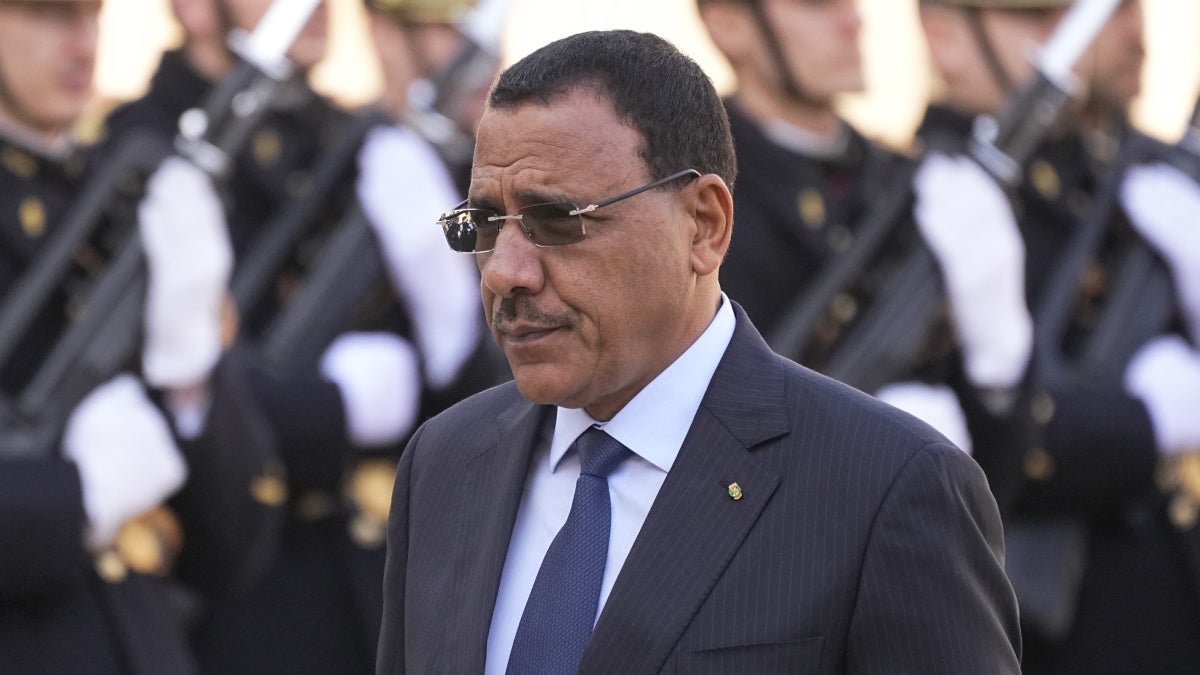
Two years after the military takeover in Niger, former President Mohamed Bazoum remains unlawfully detained. Since the CNSP junta, led by General Abdourahamane Tiani, seized power on July 26, 2023, Bazoum and his wife, Hadiza Bazoum, have been held incommunicado at the presidential palace in Niamey. Despite international condemnation, the couple has no access to family or legal counsel, while the junta prepares to prosecute Bazoum on politically motivated charges.
Legal violations and international responses
In August 2023, the junta announced its intent to charge Bazoum with “high treason” and “undermining Niger’s internal and external security.” By April 2024, a Nigerien court had stripped him of presidential immunity, paving the way for a trial that lacks fundamental fair trial guarantees. The UN Working Group on Arbitrary Detention ruled in February 2025 that Bazoum’s detention violates international law and called for his immediate release.
The ECOWAS Court of Justice also intervened in December 2024, declaring Bazoum’s detention arbitrary and demanding his freedom. However, the junta has ignored these rulings. Meanwhile, Niger, Mali, and Burkina Faso formally withdrew from ECOWAS in January 2025, further isolating the regime diplomatically.
Human rights organizations condemn the junta’s actions
Human Rights Watch and other advocacy groups argue that Bazoum’s prolonged detention reflects the junta’s broader crackdown on political opposition, peaceful dissent, and media freedom. Ilaria Allegrozzi, Senior Sahel Researcher at Human Rights Watch, stated: “The junta’s refusal to release Mohamed Bazoum exposes its disregard for the rule of law and democratic norms.”
Reed Brody, a legal advocate for Bazoum, emphasized: “For two years, Mohamed Bazoum has been held in cruel isolation, denied contact with his children, supporters, or legal team. Despite clear rulings from international courts and the UN, he remains a hostage of an illegitimate military regime.”
Consequences for Niger’s democratic future
Analysts warn that the junta’s actions undermine Niger’s democratic prospects. By delaying a civilian transition and credible elections, the military leadership risks deepening political instability in the Sahel region. Human Rights Watch concluded: “Every day Mohamed Bazoum spends in detention pushes Niger further away from democracy.”
The international community continues to pressure the junta, but so far, the calls for Bazoum’s release have gone unheeded. His case remains a focal point in discussions about human rights and democratic backsliding in West Africa.